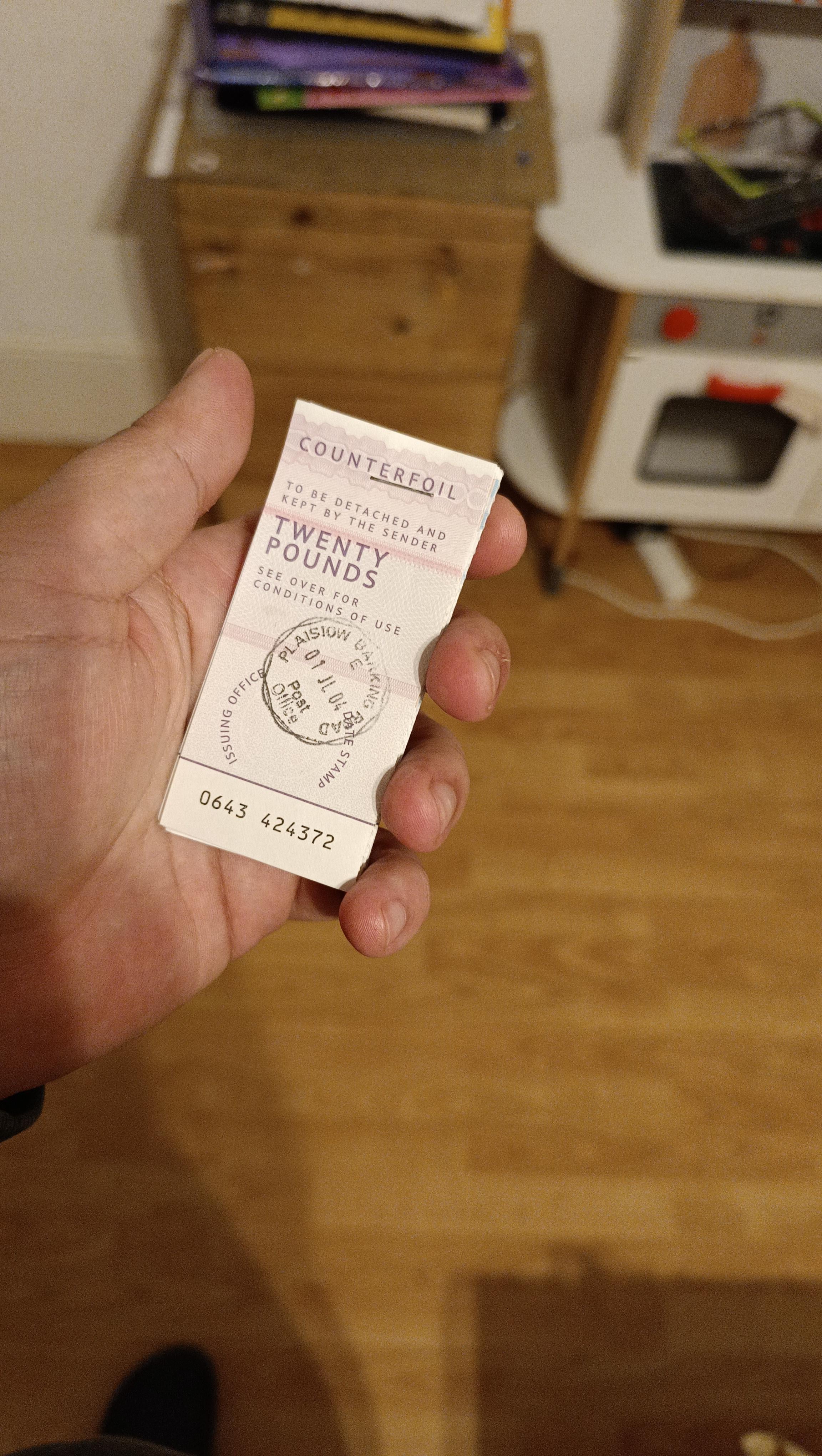
It’s the ‘stub’ or receipt part of a Postal Order. An old way of sending money to someone. Paper based PayPal. You would tear off and send the part on the right to the person receiving the money. They could then cash it. The sender kept this part.
Postal Order counterfoils (receipts).
Back in the day, if you wanted to send someone a payment that was guaranteed to be valid and not cash, you would send them a postal order. Some organisations required you to send them a postal order because cash should not be sent through the post unless by registered post (these days, Royal Mail calls it “Special Delivery”), and cheques might be rejected by a bank when presented for payment (“bounce”). A Postal Order is bought with cash and is drawn on the Post Office’s bank account, which is assumed to be reliable.
Postal Orders were a way of sending money through the post if you didn’t have a cheque book and didn’t want to send cash. The recipient cashed the postal order at a post office or deposited it into a post office savings account.
Wow I was just telling my son about those the other day. He said it’s like money with extra steps lol
I googled to see when postal orders stopped being issued- am amazed to see that you can actually still get them from post offices!

9 comments
Looks like the counterfoil for a postal order. Probably no value as the recipient would have cashed the actual postal order.
Postal Orders : https://en.wikipedia.org/wiki/Postal_order
It’s the ‘stub’ or receipt part of a Postal Order. An old way of sending money to someone. Paper based PayPal. You would tear off and send the part on the right to the person receiving the money. They could then cash it. The sender kept this part.
Postal Order counterfoils (receipts).
Back in the day, if you wanted to send someone a payment that was guaranteed to be valid and not cash, you would send them a postal order. Some organisations required you to send them a postal order because cash should not be sent through the post unless by registered post (these days, Royal Mail calls it “Special Delivery”), and cheques might be rejected by a bank when presented for payment (“bounce”). A Postal Order is bought with cash and is drawn on the Post Office’s bank account, which is assumed to be reliable.
Postal Orders were a way of sending money through the post if you didn’t have a cheque book and didn’t want to send cash. The recipient cashed the postal order at a post office or deposited it into a post office savings account.
Wow I was just telling my son about those the other day. He said it’s like money with extra steps lol
I googled to see when postal orders stopped being issued- am amazed to see that you can actually still get them from post offices!
https://www.postoffice.co.uk/postal-orders
Google it, you nonce.
Postal orders.