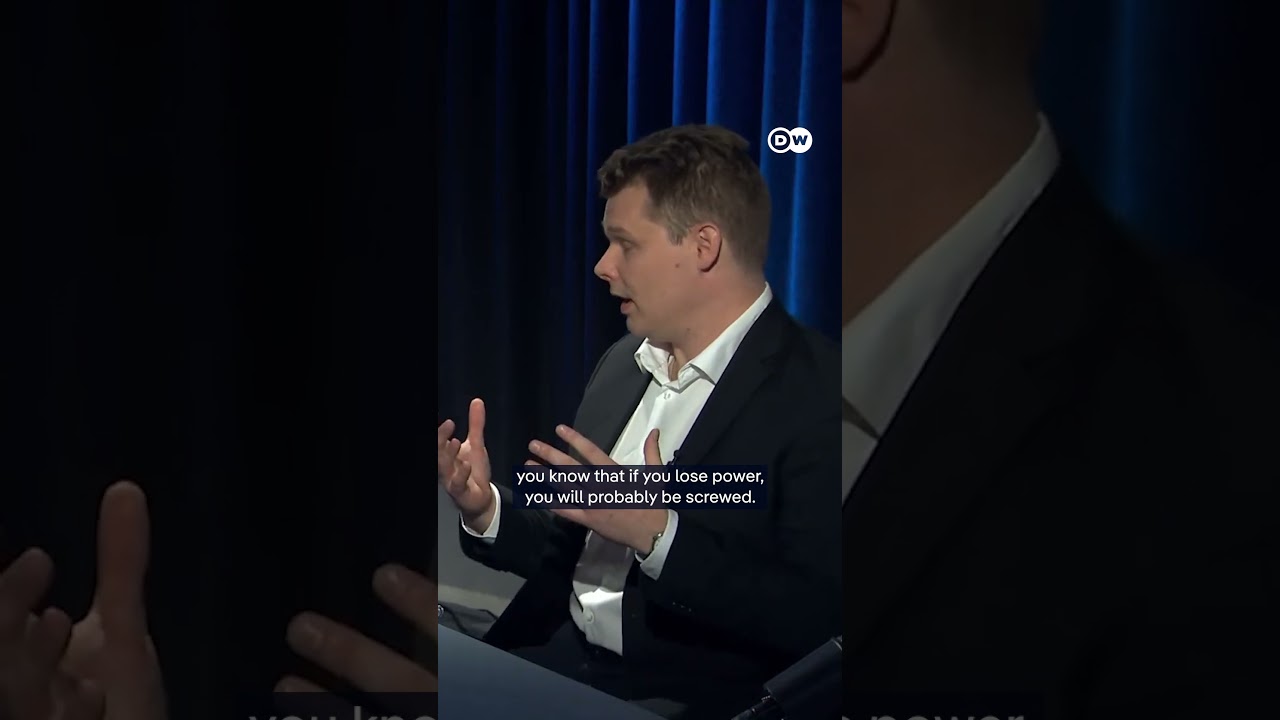
Why does Putin not have a designated successor? | DW News Desk
Many autocratic regimes appear to have an unshakeable grip on power. They also live with the constant fear of losing it. Authoritarians can be ousted in a coup or toppled by mass protests, but once removed, what happens next? This week we talk to political scientist Marcel Dirsus about his acclaimed book “How Tyrants Fall.”
Subscribe: https://www.youtube.com/user/deutschewelleenglish?sub_confirmation=1
For more news go to: http://www.dw.com/en/
Follow DW on social media:
►Facebook: https://www.facebook.com/deutschewellenews/
►Twitter: https://twitter.com/dwnews
►Instagram: https://www.instagram.com/dwnews
►Twitch: https://www.twitch.tv/dwnews_hangout
Für Videos in deutscher Sprache besuchen Sie: https://www.youtube.com/dwdeutsch
7 comments
Because you're not allowed to know
I think it is because once you start to groom a successor, you are seen as potentially weakened. Also, that successor may also just "do away" with the one grooming him[ ie: putin himself].😊
What if he's already created and continues to train his AI self as "successor"? Putin 2.0.
Absolutely right! A peacefull transition of power it's what keeps a country stable and Russia has never had that.
Yeah, we know the so called DW Specialist are trustworthy and reliable.
there are already 2 or 3 lookalikes so who knows which poo tin were looking at?
Just help me assemble my FREE ENERGY design, all calculations correspond to the laws of physics. And then oil will become cheaper 😂😂