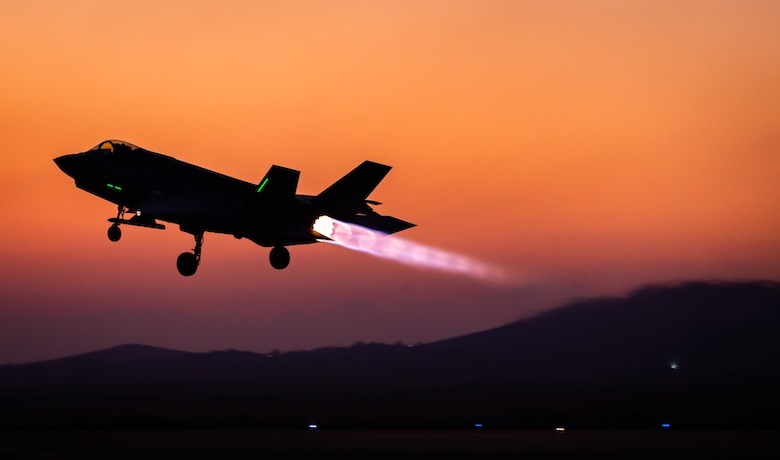
In April 2024, hostilities between Israel and the Islamic Republic of Iran intensified significantly, with both sides engaging in direct military operations within each other’s borders. A bombing near the Iranian embassy in Damascus on April 1st triggered this sharp rise in the conflict. It resulted in the death of a high-ranking Islamic Revolutionary Guard Corps (IRGC) military officer. In response, Iran launched an unprecedented direct assault on Israeli soil on April 13th, deploying a barrage of missiles and drones in a retaliatory strike. This prompted another Israeli precision strike on an Iranian missile platform in Isfahan on April 19th, though Israel has made no direct admission of responsibility.
Following these events in April, there were no reports of direct military operations for about three months. However, in July 2024, Ismail Haniyah, the leader of Hamas’s political wing, was killed in an operation carried out within Iranian sovereign territory. Iran and Hamas have blamed Israel for the targeted killing of Haniyah (for further analysis, see here). Iran refrained from responding to this attack until the leader of another proxy, Seyyed Hassan Nasrallah, was killed in an airstrike in Beirut. This event provoked Iran to launch another missile attack on Israel in October 2024. Israel then responded with a set of strikes against military installations in Iran.
Unquestionably, the military standoff between Iran and Israel from April onwards must be categorized as an international armed conflict (IAC) thereby triggering the application of Common Article 2 of the 1949 Geneva Conventions. The International Committee of the Red Cross (ICRC) in its commentary to Common Article 2 has the following to say about the threshold for the commencement of an international armed conflict: “[A]ny difference arising between two States and leading to the intervention of members of the armed forces is an armed conflict within the meaning of Article 2, even if one of the Parties denies the existence of a state of war.”
It has been rightly noted that the common Article 2 threshold is “remarkably low” (p. 16). As one prominent commentator has argued, “although attacks against the armed forces of a state are clearly sufficient, the target can be anyone or anything that, in the eyes of the attackers, represents the state” (p. 188).
The military confrontations between Iran and Israel meet the low threshold of Common Article 2. However, the conflict between the two States presents another intriguing feature, namely, the intermittent pauses that punctuate the exchanges of fire between these warring parties. This dynamic has culminated in what has been described as a “tit-for-tat exchange.” The situation could lead to a “‘revolving door’ during which the law of armed conflict rules are repeatedly switched on and off.” According to Trial Chamber I of the International Criminal Tribunal for the former Yugoslavia (ICTY) in the Gotovina case, such situations can create “a considerable degree of legal uncertainty and confusion” (para. 1694).
Therefore, an interesting question arises regarding how we determine the termination of hostilities in a conflict where there may be months or even years of intervals between confrontations. This post proceeds on the assumption that the series of hostilities between Iran and Israel represents a continuation of the same conflict, rather than a collection of isolated, short-lived conflicts. This distinction is crucial, especially given that in the past, the concept of “short wars,” as applied in the jus ad bellum dimension of conflicts, has been conflated with jus in bello aspects and the applicability of Common Article 2. Differentiating between the two helps ensure clarity in determining the legal framework governing the conduct of hostilities, particularly in protracted or intermittent conflicts like the one between Iran and Israel.
Military Operations in Context
As Article 3(b) of Additional Protocol I (AP I) to the 1949 Geneva Conventions stipulates, “the application of the Conventions and of this Protocol shall cease, in the territory of Parties to the conflict, on the general close of military operations.” An interesting issue arises as to whether the test of the general close of military operations constitutes a norm of customary humanitarian law. This question is particularly relevant given that neither of the belligerents in the conflict between Iran and Israel is a party to AP I.
While the ICRC has not explicitly recognized the customary status of the “general close of military operations” test, its commentary to Common Article 2 makes clear that the general close of military operations is the only objective standard for determining the end of a conflict (para. 277). This interpretation could serve as a guiding principle even in the absence of direct treaty obligations.
Of equal importance is understanding the meaning of “military operations.” As observed by international humanitarian law (IHL) experts, “military operations cover an extremely wide field of actions, and they must be distinguished from ‘hostilities’” (p. 99). The ICRC’s commentary on Article 3(b) of AP I defines “military operations” as “the movements, manoeuvres and actions of any sort, carried out by the armed forces with a view to combat” (para. 152) (see also travaux préparatoires of AP I, p. 14). “[T]his implies that ‘military operations’” is an “operational-level concept that encompasses attacks as well as other types of military actions such as manouver, securing the area, intelligence gathering that support or enable prosecution of specific offensive or defensive movements in hostilities” (p. 5) (see also here and here).
It has been argued that the “‘end of (active) hostilities’ may occur well before the ‘general close of military operations.’” Therefore, the cessation of active hostilities, as expressed in Article 118 of the Third Geneva Convention (GC III), is a term of art that does not necessarily signify the end of an armed conflict. While it marks the suspension of active combat, it does not imply the complete resolution of the conflict itself, as other aspects of military operations may continue. In other words, the end of hostilities is a necessary but not sufficient precondition for the general close of military operations. However, this does not imply that the test of cessation of hostilities lacks legal consequences. In fact, it is the cessation of hostilities, not the general close of military operations that typically triggers the obligation to repatriate prisoners of war.
To begin, determining the general close of military operations is not always a straightforward task. As has been argued, “this is always a factual assessment, which will vary from case to case, and the exact time at which the IAC ended may be hard to point out” (p. 171) (see also here and here, p. 222). In the armed conflict between Iran and Israel, what we have observed so far consists of a series of sharp, isolated attacks by both parties, followed by momentary cessations of hostilities. It appears that during these pauses in active fighting, there have been no other significant military operations, such as troop mobilizations in foreign territory, maneuvers, or other sustained activities. The question, however, is how these intermittent lulls translate in terms of the “general close of military operations.”
Indicators of General Close of Military Operations
Indicators of the general close of military operations can be varied, but the ICTY provides a basic framework for assessment. As noted by the Trial Chamber, the legal test is whether “the international armed conflict had found a sufficiently general, definitive and effective termination so as to end the applicability of the law of armed conflict” (emphasis added) (para. 1694).
Thus, it is the cumulative assessment of sufficiently general, definitive, and effective termination that serves as the marker of the general close of military operations. This raises the question of what is meant by “sufficiently general, definitive, and effective termination.” It seems that in light of the ICRC’s commentary to Common Article 2, “sufficiently general” refers to the comprehensive cessation of hostilities across the entire theater of conflict. The word “definitive” implies a permanent conclusion of operations, with no reasonable expectation of resumption. Further, “effective” indicates the genuine enforcement of the cessation, with no ongoing or preparatory military actions (here, para. 277).
The ICRC’s commentary to Common Article 2 goes as far as to consider “redeploying troops along the border to build up military capacity” as acts that would fail the general close of operations test (para. 279). This interpretation has been echoed in the legal literature. For example, one scholar argues that “the general applicability of international humanitarian law terminates if active hostilities cease and there is no probability of a resumption of hostilities in the near future” (p. 3). It has been further argued that “a minimum period of time has to elapse before it can be ascertained that an armed conflict has ended. A situation does not go back to ‘normal’ suddenly, but gradually” (p. 100). The challenge here lies in the absence of a universally fixed time frame, as the length of time necessary to assess the end of hostilities will depend on the specific context of the conflict and the actions of the involved parties.
Hostilities in Suspense: The Implications of Rhetoric and Threats
The situation between Iran and Israel is further complicated by Iran’s policy of non-recognition of Israel, which precludes the possibility of a formal ceasefire agreement between the two States. This means that the traditional mechanisms for signaling the cessation of hostilities, such as a ceasefire, are not feasible in this context. Even if a hypothetical ceasefire were concluded, it might not necessarily indicate an effective or definitive termination of hostilities. A historical example of this is Egypt’s 1952 blockade of the Suez Canal, where Egypt cited its belligerent rights despite having signed an armistice with Israel two years earlier (see, e.g., here). Although the UN Security Council ultimately rejected Egypt’s justification, the UK’s Military Manual still references this case, underscoring that the “conclusion of a formal peace treaty” does not automatically signify the “general close of military operations” (p. 33).
The language used by both Iran and Israel in their ongoing conflict has consistently been one of explicit threats and ultimatums (see for example here, here, here and, here). The ongoing threat-laden rhetoric between Iran and Israel, combined with the periodic absence of direct military confrontations, presents a challenging scenario for IHL. If such language persists over an extended period, yet no active military engagements occur, the question arises: does the mere lack of exchanges of fire suffice to declare a “definitive and effective” end to hostilities? In such a situation where the war paradigm persists but without active hostilities, an inconvenient possibility comes into existence, namely a conflict might be deemed to continue indefinitely even after the last shot is fired. In other words, even when actual hostilities come to a halt, the mere rhetoric of war could leave parties trapped in a situation where IHL remains indefinitely applicable due to the mere existence of threats, even in the absence of physical confrontations.
One notable legal consequence of this interpretation of “the general close of military operations” is the complexity it creates around determining the start of the conflict. For example, while the turn of events in April 2024 clearly meets the threshold of Common Article 2, there was already an Israeli airstrike in December 2023 that killed a senior IRGC officer, which did not trigger an immediate Iranian response. Extending this logic further, the sequence of events could be stretched back to May 2018, when Israel’s airstrike on IRGC targets in Syria, in response to rocket fire on the Golan Heights, marked the first direct confrontation between Israel and Iran. If we apply a strict interpretation of “general close of military operations,” it might imply that Iran and Israel have been in an international armed conflict for six years. Though this conclusion may seem counterintuitive, the ongoing nature of the current hostilities, coupled with the absence of a “general close of military operations,” suggests that the conflict did not simply begin in April 2024 and may persist for some time.
Finally, the question of identifying the starting point of a conflict that experiences long intermittent pauses introduces significant complexity in relation to the jus ad bellum. If a conflict has seemingly cooled off for years without a peace treaty and one party reignites hostilities through an operation, such as a targeted strike, the question arises: should this operation be regarded within the jus in bello paradigm as part of a continuing conflict, or should it be viewed as the start of a new conflict under the jus ad bellum? For instance, many decades after the conclusion of the 1967 war, some consider that Israel and Syria are still at war due to the absence of peace treaties (pp. 59-61). The “general close of military operations” test suggests that in the absence of a definitive end, any belligerent act should be seen as part of the ongoing conflict. However, this distinction becomes blurred when long pauses in hostilities lead to the assumption that the previous conflict had ended. Therefore, determining whether hostilities are part of a protracted conflict or represent a new phase can become an extremely challenging task in terms of the jus ad bellum.
***
Masoud Zamani is a lecturer of International Law and International Relations at the University of British Columbia.
Amirabbas Kiani is a collaborating researcher in the Department of Public and International Law at the Shiraz University.
Photo credit: IDF Spokesperson’s Unit