
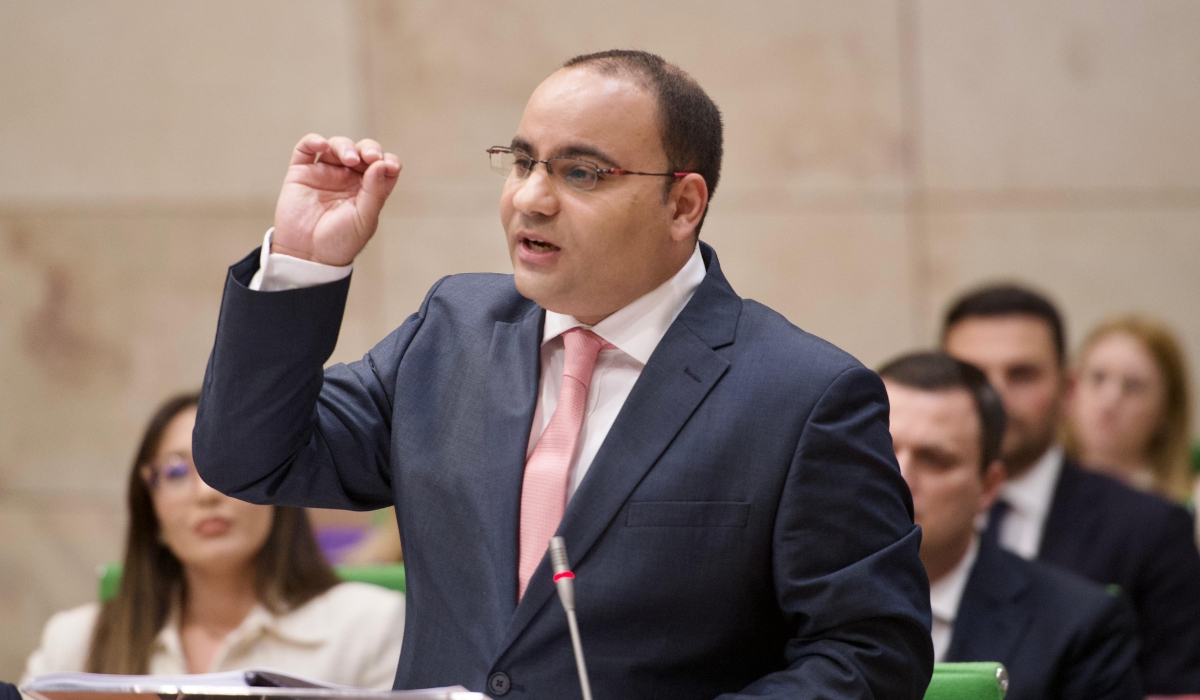
 Photo by Miguela Xuereb
Malta’s central government debt climbed to €10,260.8 million by the end of October 2024, reflecting an increase of €579.9 million compared to the same period in 2023, the National Statistics Office revealed on Friday.
This rise was primarily driven by Malta Government Stocks, which surged by €667.2 million, alongside increases in foreign loans (€71.8 million) and euro coins issued in the Treasury’s name (€4.0 million).
This spike was partially offset by decreases in Treasury Bills (€106.8 million) and the 62+ Malta Government Savings Bond (€25.9 million). Additionally, higher holdings by government funds in Malta Government Stocks contributed to a €30.5 million reduction in debt.
Despite the growing debt, the government reported a surplus of €96.7 million in its Consolidated Fund by the end of October 2024, marking a stark improvement compared to the €155.7 million deficit recorded a year earlier.
This shift was driven by an increase in total recurrent revenue, which rose by €900.0 million to €6,123.4 million. Notable revenue gains came from income tax (€483.2 million), value-added tax (€169.4 million), and social security contributions (€115.3 million).
Total government expenditure from January to October 2024 reached €6,026.7 million, a €647.6 million increase compared to 2023. Recurrent expenditure accounted for €5,190.7 million, with notable increases in programmes and initiatives (€332.1 million), personal emoluments (€111.4 million), and contributions to government entities (€52.3 million).
Significant developments in the programmes and initiatives category included; social security benefits (€140.3 million increase), EU own resources contributions (€62.9 million increase), and national airline restructuring assistance (€50.7 million increase).
On the other hand, capital expenditure rose by €76.3 million, driven by projects such as:eEnhancing uptake of electric vehicles (€23.7 million), road construction and improvements (€19.1 million), and property, plant, and equipment investments (€14.9 million).
Meanwhile, public debt servicing costs totalled €215.0 million, up by €40.1 million from the previous year.
This comes as Malta faces an excessive deficit procedure from the European Commission. With the country’s deficit exceeding the EU’s 3% ceiling, the government is under pressure to implement corrective measures.
While Malta’s debt-to-GDP ratio remains below the EU’s threshold of 60% at 50.4%, the government’s deficit, at 4.9% of GDP, exceeds the EU’s limit of 3%. The European Commission has issued warnings, urging Malta to reduce its deficit or risk financial penalties, including a potential non-interest-bearing deposit of €100 million.
The Malta Fiscal Advisory Council (MFAC) has also raised concerns about the government’s energy subsidy policy, urging an exit strategy from fixed-energy prices that have cost taxpayers €320 million annually.
Although finance minister Clyde Caruana has projected a reduction in energy subsidy costs to €175 million in 2025 (0.7% of GDP), the MFAC stressed the need for more aggressive cuts to stabilise public finances.