 Miguela Xuereb
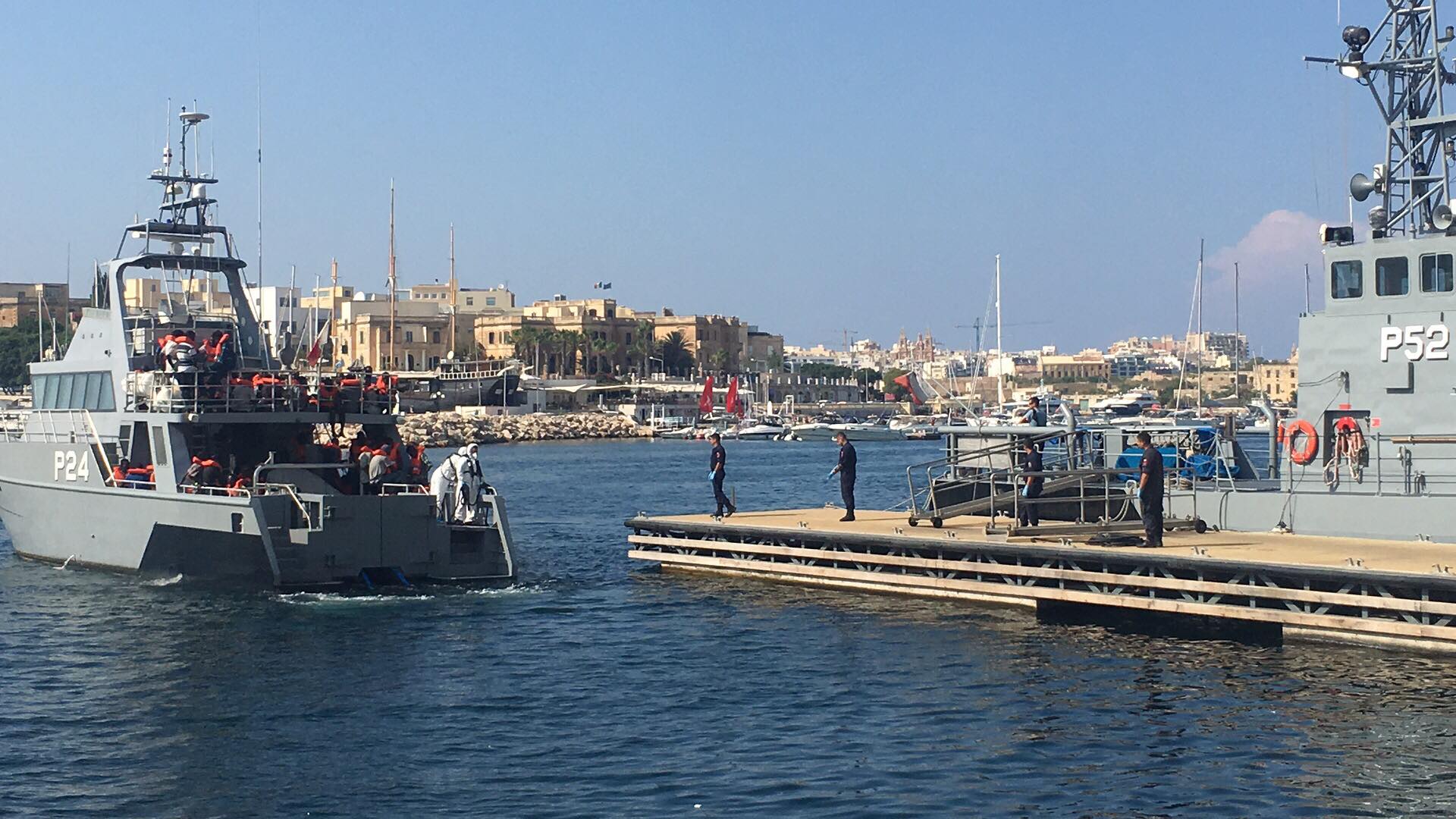
The Armed Forces of Malta (AFM) has disclosed details of a recent disembarkation, revealing that 83 asylum seekers arrived between 1 and 2 December, with initial processing and medical assessments already underway.
In reply to Newsbook Malta‘s questions, the AFM confirmed that all 83 arrivals were male, with 10 individuals identified as allegedly unaccompanied minors who have been transferred to a specialised facility. One migrant received first aid for an injury during the initial stages of disembarkation.
“All the migrants in question have been assessed by the competent medical personnel and in the coming days will be channelled to the asylum or return procedure, as applicable, once their immigration status in Malta has been determined,” the AFM spokesperson said. The nationalities of the rescued asylum seekers was not disclosed.
Despite the frequent lamentations by the Labour government on migration pressures, according to United Nations High Commissioner for Refugees (UNHCR) data, Malta has experienced very low sea arrival numbers in 2024, with just 68 individuals arriving between 1 January and 30 June. In comparison, 2023 saw 380 sea arrivals for the entire year.

However, Malta has faced significant criticism from human rights organisations and NGOs regarding its approach to maritime migration. Allegations include coordinating illegal pushbacks to Libya, a country the UN does not consider a safe port of disembarkation.
Earlier this year, 22 organisations formally urged Malta to cease pushbacks to Libya. Serious allegations have been levelled suggesting coordination with Libyan militias to intercept and forcibly return migrants, to the extent that Malta’s Prime Minister has been reported to the International Criminal Court.
Statistical evidence paints a stark picture of Malta’s maritime rescue performance. In 2022 alone, the country was accused of failing to rescue 7,459 people in distress, according to data compiled by the European Council of Refugees and Exiles. During the same period, 14 pushback incidents were documented, involving 789 individuals.
Rescue organisations like Alarm Phone have consistently highlighted Malta’s perceived failures in fulfilling international maritime law obligations to rescue those in peril at sea. The human cost of such challenges is significant: in 2023, nearly 2,500 asylum seekers died attempting to cross the central Mediterranean, according to the UN migration agency, IOM.
The recognition rate for asylum seekers in Malta remains low, with just 15% of asylum decisions in 2023 resulting in Refugee Status or Subsidiary Protection.