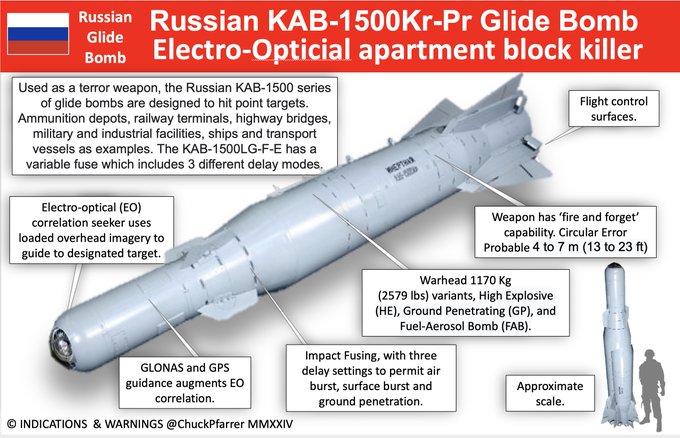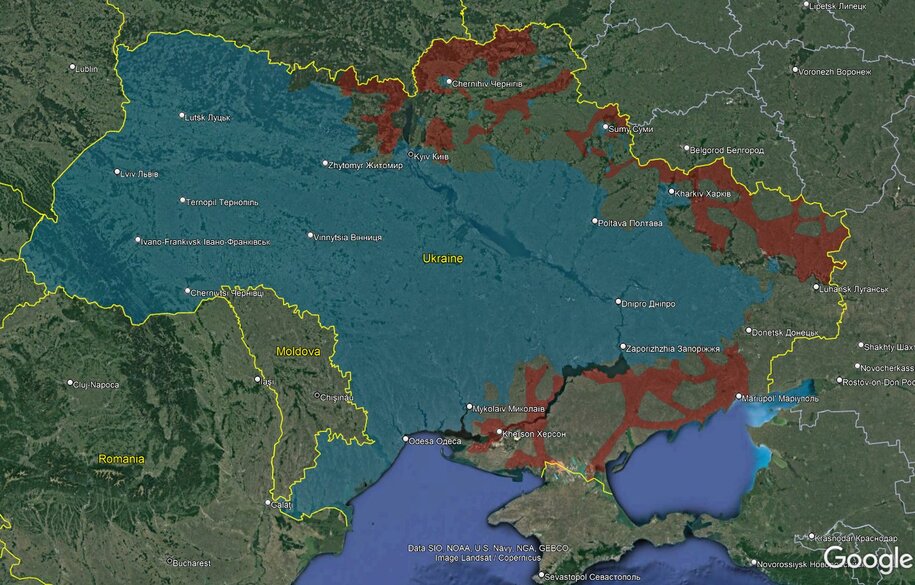
Russian forces conducted a series of drone strikes against Ukraine on the night of December 5 to 6 and missile strikes during the day on December 6.
The Ukrainian Air Force reported that Russian forces launched 53 Shahed drones and other unidentified drone types (likely referring to decoy drones) from Oryol Oblast.[104] The Ukrainian Air Force reported that Ukrainian Forces downed 32 drones over Kyiv, Kharkiv, Poltava, Sumy, Chernihiv, Cherkasy, and Zhytomyr oblasts as of 0700 local time; that 16 drones were ”lost,” likely due to Ukrainian electronic warfare (EW) interference; and that two drones flew towards Belarusian air space. Ukrainian officials reported that a Russian missile strike damaged an administrative building in Kryvyi Rih and killed two civilians.[105] Chernihiv Oblast officials reported that a Russian Shahed drone struck civilian infrastructure in Koryukivskyi Raion and that Russian forces conducted two missile strikes – likely using Iskander-K cruise missiles – against Chernihivskyi Raion overnight on December 5 to 6.[106] Kyiv City Military Administration Head Serhiy Popko stated that Russian drones damaged the windows of a non-residential building and that drone debris fell on a road in Kyiv City.[107]
Mykolaiv Oblast Military Administration Head Vitaly Kim stated that Russian forces launched a Kh-59/69 cruise missile strike and that falling missile debris damaged civilian and energy infrastructure in Voznesensk on the afternoon of December 5.[109]
Ukrainian Air Force reported that Ukrainian Forces downed 32 drones over Kyiv, Kharkiv, Poltava, Sumy, Chernihiv, Cherkasy, and Zhytomyr oblasts as of 0700 local time

Western sanctions are reportedly degrading the overall quality of Russian drones, indicating that targeted sanctions are having some negative effects on the Russian defense industrial base (DIB). The Washington Post reported on December 5 that Western sanctions are forcing Russia to purchase poorer quality steering motors for drones from the People’s Republic of China (PRC), which is increasing the failure rate of Russian-produced Shahed drones as they have in-flight maneuverability issues.[29] Soldiers told the Washington Post that Russian Shaheds have started to spin out of control after making sharp turns, causing some of the drones to crash. ISW has observed Ukrainian official reports of Russian drones increasingly becoming “locally lost” during Russia’s almost daily overnight strike series against Ukraine, and the reported lower-quality steering motors may be contributing to this phenomenon.[30]
Russia is reportedly also struggling to procure sufficient quantities of basic supplies, such as high-performance lubricants needed for operating tanks in colder weather or computerized machine tools necessary for building drone airframes and missiles.[31] ISW previously reported on Russia’s increasing efforts to expand bilateral relations with the PRC in order to circumvent Western sanctions, with Ukrainian officials stating that the PRC provides approximately 60 percent of all the foreign components found in the weapons that Russia uses against Ukraine.[32] ISW previously assessed that Russia is prioritizing materiel quantity over quality and that Russia’s increased DIB production is likely not sustainable in the medium- and long-term as Russia is unable to completely compensate for the military and dual-use items it can no longer acquire due to sanctions.[33]

The deployment of the Oreshnik missiles to Belarus does not significantly increase the immediate risks of intermediate-range ballistic missile (IRBM) strikes against Ukraine or NATO states despite the Kremlin’s intensified nuclear saber-rattling. Putin once again tried to flaunt the Oreshnik missile and Russian missile capabilities during the Union State Supreme State Council meeting as part of the Kremlin’s reflexive control information operation. Russian Foreign Minister Sergei Lavrov similarly attempted to frame the Oreshnik strike against Dnipro City on November 21 as Russia’s readiness to use any means to prevent the West from strategically defeating Russia in an interview with an American media personality on December 5.[18] ISW continues to assess that the Kremlin’s constant flaunting of the Oreshnik missile is unlikely to presage the development of particularly novel Russian deep-strike capabilities.[19] Russia’s deployment of Oreshnik missiles to Belarus does not significantly change the threat to Ukraine or NATO given that the Russian military has long had nuclear weapons in mainland Russia and the enclave of Kaliningrad capable of striking targets in Ukraine and NATO. Russian forces fire nuclear-capable Iskander ballistic missiles, Kinzhal hypersonic ballistic missiles, and nuclear-capable Kh-101 cruise missiles against Ukraine on a regular basis.[20]


The Hajun Project, an independent Belarusian monitoring group, reported on December 6 that 10 Russian Shaheds flew into Belarusian airspace from Ukraine and Russia on the night of December 5 to 6.[108]


Sky News Arabia reports that Putin has informed Bashir al-Assad that he will only provide limited assistance as Russia now has ‘other priorities’; al Assad’s Syrian army is collapsing, abandoning Iranian and Russian equipment. Russia announced it is evacuating its citizens. Russia previously evacuated its Naval facility at Tartus, which will complicate evacuation operations. Bashar Assad stayed in Syria Friday, while his family traveled abroad—his wife and children to Russia and brothers-in-law to the UAE.

Russian forces have not yet evacuated the Russian naval base in Tartus, Syria as of December 6, but it remains unclear whether Russia will keep its vessels at the port as Syrian rebels continue to advance swiftly across regime-held territory. Former Norwegian Navy officer and independent OSINT analyst Thord Are Iversen assessed that the Russian Novorossiysk Kilo-class submarine, a Gorshkov-class frigate, the Admiral Grigorovich Grigorovich-class frigate, and possibly the Vyazma Kaliningradneft-class oiler have returned to the port in Tartus based on satellite imagery collected on December 6.[1] Satellite imagery collected on December 3 showed that Russia had removed all of its ships stationed at Tartus – the Admiral Grigorovich frigate, the Novorossisysk submarine, the Admiral Gorshkov and Admiral Golovko Gorskhov-class frigates, and likely the Vyazma oiler and the Yelnya Altay-class oiler – from the port sometime between December 1 and 3.[2] The Russian Ministry of Defense (MoD) claimed on December 3 that ten Russian naval vessels, including the Admiral Gorshkov and Admiral Golovko frigates and Novorossiysk submarine, participated in hypersonic and cruise missile launch exercises in the eastern Mediterranean Sea, and Russian Chief of the General Staff Army General Valery Gerasimov reportedly informed the US about Russian exercises in the Mediterranean during a call on November 27.[3] It is unclear if Russia removed the Admiral Grigorovich and the two oilers from Tartus as part of the exercise as well. Some of the vessels that Russian forces removed from Tartus between December 1 and 3 have not returned to port as of December 6.
Bloomberg reported on December 6 that a person close to the Kremlin stated that Russia does not have a plan to save Syrian President Bashar al Assad and that Russia is unlikely to create such a plan as long as pro-regime forces continue to abandon their positions.[4] The Russian Embassy in Syria notably announced on December 6 that Russian citizens living in Syria should leave the country on commercial flights due to the “difficult military and political situation” in Syria.[5] It remains unclear whether Russia plans to continue to maintain all of these vessels at Tartus or is planning to evacuate all or some of them elsewhere.


Russian forces have not yet evacuated the Russian naval base in Tartus, Syria as of December 6, but it remains unclear whether Russia will keep its vessels at the port as Syrian rebels continue to advance swiftly across regime-held territory.
Russia appears to be redeploying at least some of its air defense assets that were defending Russia’s Khmeimim Air Base in Syria, but the reason for this redeployment remains unclear at this time.
The Kremlin continues to advance its strategic effort to de facto annex Belarus and further expand the Russian military’s presence in Belarus through the Union State framework.
Lukashenko is likely trying to preserve Belarusian sovereignty against Moscow by advocating that Belarus control Russian weapons deployed in Belarus – an endeavor Lukashenko has historically failed at.
The deployment of the Oreshnik missiles to Belarus does not significantly increase the immediate risks of intermediate-range ballistic missile (IRBM) strikes against Ukraine or NATO states despite the Kremlin’s intensified nuclear saber-rattling.
The Kremlin is scapegoating former Kursk Oblast Governor Alexei Smirnov for Russia’s failure to adequately respond to Ukraine’s incursion into Kursk Oblast.
Russian Foreign Minister Sergei Lavrov used his interview with an American media personality to reiterate Kremlin talking points that are intended to shape American foreign policy and achieve a US-Russia reset detrimental to US interests and on the Kremlin’s terms.
Western sanctions are reportedly degrading the overall quality of Russian drones, indicating that targeted sanctions are having some negative effects on the Russian defense industrial base (DIB).
Russian forces recently advanced near Toretsk, Pokrovsk, Kurakhove, and Vuhledar.
The Russian military continues to lose parts of its officer corps, a resource that is difficult to replenish, as part of Russia’s ever-increasing casualties.

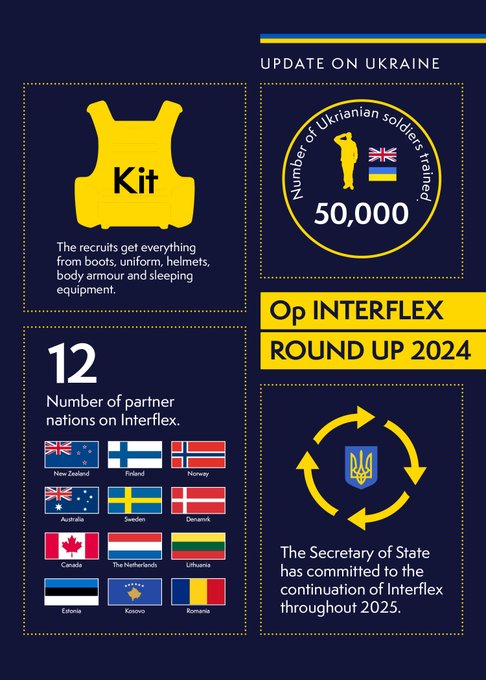

Ukrainian and Russian forces continued to fight in Ukraine’s main salient in Kursk Oblast on December 5 and 6 but there were no confirmed changes to the frontline. Russian sources claimed that Russian forces secured positions up to the Psel River and entered Plekhovo (north of Sudzha) and that elements of the Russian Airborne Forces (VDV) are pushing Ukrainian forces out of Martynovka (northeast of Sudzha).[34] ISW has not observed visual confirmation of these claims, however. Ukrainian forces reportedly counterattacked near Novoivanovka and Darino (both southeast of Korenevo) on December 5 and 6.[35] A Ukrainian Special Operation Forces (SSO) unit reported that it had ambushed a Russian naval infantry platoon and destroyed two Russian armored personnel vehicles by tricking the Russian military command into deploying 20 troops and three armored personnel vehicles to a recently regained Ukrainian position.[36] A spokesperson of a Ukrainian brigade operating in the Kursk direction reported that the brigade captured 11 Russian prisoners of war (POWs) from an assault group of the 11th VDV Brigade, all of whom were recently released prisoners with only a few days of training.[37] Elements of the Russian 83rd Separate VDV Brigade reportedly continue to operate in the Kursk direction, and elements of the “Press” Joint Artillery Group (Chechen “Akhmat” Spetsnaz) are reportedly fighting near Sudzha.[38]
A Russian Telegram channel claiming to be a Russian special services employee published geolocated footage on December 6 purportedly showing the aftermath of a Ukrainian drone strike overnight on December 5 on the headquarters of the 3rd Motorized Rifle Division (20th Combined Arms Army [CAA], Moscow Military District [MMD]) in Boguchar, Voronezh Oblast.[39] The Telegram channel reported that Ukrainian forces launched three drones, of which two drones struck the headquarters building and one fell onto the roof of the four-story barracks.