
This article by Yale Climate Connections is published here as part of the global journalism collaboration Covering Climate Now.
In Atlanta’s Cascade neighborhood, a Black church has operated a community center next door for decades. The recently renovated space is simple inside — white walls and gray carpet — but that’s where the magic happens. There, the congregation runs a weekly food pantry where they feed up to 400 predominantly Black families a week. Now, with financial help from the Inflation Reduction Act, a landmark climate law passed by Democrats during the Biden administration, the church is offering even more services — by making the center the first community-owned resiliency hub in the city.
The Vicars Community Center, which held its ribbon-cutting ceremony in July, is outfitted with solar panels and battery storage that can provide enough energy to power the building for three days should there be a blackout and no sunlight. The center is prepared to serve as an emergency shelter for locals in the face of a power outage. In the era of fossil fuel-powered hurricanes and heat waves, frontline community members need a safe place to turn when the lights go out.
“It really fit into what we’re already trying to do,” said Pastor Kevin Earley of Community Church Atlanta, which worked with the clean energy nonprofit Groundswell to develop the resiliency hub in its community center. “We want to be the place that people turn to in the good times and the bad.”
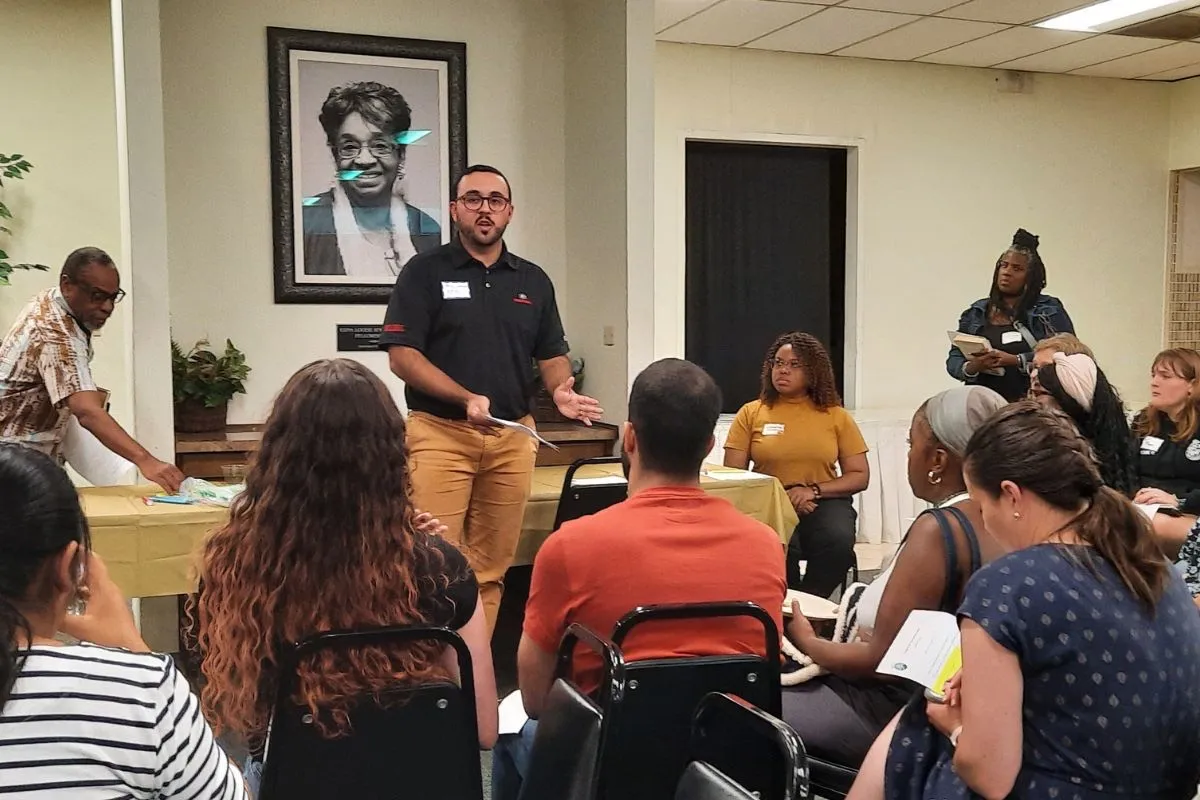 A group meeting at the Vicars Community Center.Robbie Hunter. Courtesy of Yale Climate Connections
From 2000 to 2023, extreme weather caused 80% of power outages, according to the research and communications group Climate Central. Just last September, Hurricane Helene knocked out power for some 5.5 million people in the Southeast and Midwest. Some families were left in the dark for three weeks.
Thanks to federal tax credits from the Inflation Reduction Act, or IRA, people in the Cascade neighborhood will now have a place to charge their phones, refrigerate their medicines, and plug in life-saving medical devices if an extreme weather event cuts electricity off to their homes. What’s more, the center’s solar panels reduce planet-warming emissions — and save the center $6,000 a year in energy costs.

Trump is threatening to unleash pollution, increase emissions and incapacitate the most robust EPA in a generation.
Despite President-elect Donald Trump’s promise to slash the law that helped make the resiliency hub possible, developers don’t expect the new administration’s plans to affect them. Even if Trump kills the extremely popular direct-pay tax credits program, where the federal government issues payouts to entities that have built qualified clean energy projects, the team in Atlanta will be filing for the IRA credits by May 2025 for the 2024 tax year.
It would be an unlikely logistical nightmare for the president-elect’s administration to attempt a tax restructuring that would repeal credits retroactively, explained Friends of the Earth climate and energy justice deputy director Lukas Shankar-Ross. However, other communities of color hoping to tap into IRA dollars to fund similar safety nets in their hometowns may have limited time to take advantage of the law’s full benefits before Trump and his allies in Congress cut them.
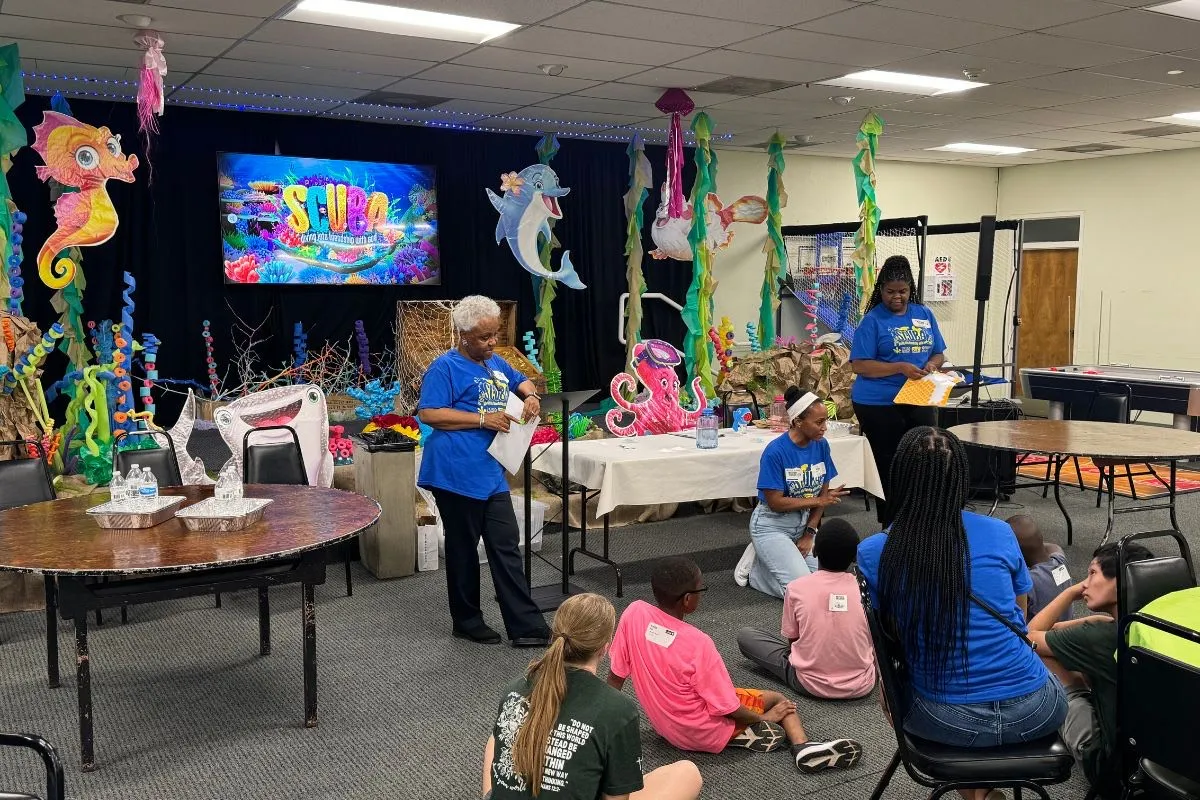 Vacation Bible school at the community center. Pastor Kevin Earley. Courtesy of Yale Climate Connections
“It is now our responsibility to shout from the mountaintops how good and impactful these tax credits are for local community and economic development,” said Matthew Wesley Williams, senior vice president of community development at Groundswell. The organization partnered with the church to raise money for the solar panels and find the capital needed to own the setup without additional debt. “Organizations that support community resilience like churches, small municipalities, and rural utilities need these resources to stand firm and sustain their local impact.”
The effort to create the resiliency hub came together in 2023 when Groundswell reached out to Pastor Earley after activists identified Community Church Atlanta as a key resource during local info-gathering meetings. At the height of the pandemic, Vicars Community Center offered COVID-19 tests and vaccines. It hosts meetings for local groups as well as blood drives and low-cost health checks.
Groundswell connected the organization to $225,000 in donated philanthropic funding to upgrade the center with solar panels and batteries. The nonprofit will also soon help church leaders tap into those IRA tax credits. The nonprofit sees Vicarsasa demonstration that can build support for other community-owned, small-scale solar projects, Williams said. Groundswell has been seeding similar resilience hubs elsewhere in Atlanta and Baltimore.
A majority of the residents who live within a half-mile radius of Vicars are Black, according to data from an Environmental Protection Agency mapping tool. Over half are low-income. They also suffer higher rates of asthma, heart disease, and lower life expectancy than the national and state averages. Nearly a quarter lack access to health care or the internet.
“Folks in our neighborhood who can’t drive away or get away now have a place just to even charge their cell phones or get information to be picked up or to receive help,” Pastor Earley said.
Churches are a perfect way to introduce Black residents to clean energy initiatives, said Markeya Thomas, the Black engagement senior adviser at Climate Power, a communications group focused on clean energy.
“All throughout history, Black people have had to rely on the church to be able to survive the world that we are existing in,” Thomas said.
Pastor Earley is planning ahead to ensure the center’s fridges are stocked with food and water for the day an emergency arises. He’s exploring options to protect the building during high winds to make it structurally stronger. The solar panels can provide energy, but that’s only if the building itself remains out of harm’s way. Questions remain over how to make the space a safe overnight facility with cots and security, but the church is starting to map that all out.
Community Church Atlanta has a mission to serve the community, including those who are not of faith. Now their food pantry can expand to feed more families with the money saved from the reduced energy bills. They fed some 32,000 people last year. In the coming years, the plan is to feed even more.
This article is supported by the Solutions Journalism Network’s Climate Solutions Cohort program, of which the author is a fellow.
This story was co-published with Next City, a nonprofit newsroom reporting on solutions for equitable and just cities.
Dear Truthout Community,
If you feel rage, despondency, confusion and deep fear today, you are not alone. We’re feeling it too. We are heartsick. Facing down Trump’s fascist agenda, we are desperately worried about the most vulnerable people among us, including our loved ones and everyone in the Truthout community, and our minds are racing a million miles a minute to try to map out all that needs to be done.
We must give ourselves space to grieve and feel our fear, feel our rage, and keep in the forefront of our mind the stark truth that millions of real human lives are on the line. And simultaneously, we’ve got to get to work, take stock of our resources, and prepare to throw ourselves full force into the movement.
Journalism is a linchpin of that movement. Even as we are reeling, we’re summoning up all the energy we can to face down what’s coming, because we know that one of the sharpest weapons against fascism is publishing the truth.
There are many terrifying planks to the Trump agenda, and we plan to devote ourselves to reporting thoroughly on each one and, crucially, covering the movements resisting them. We also recognize that Trump is a dire threat to journalism itself, and that we must take this seriously from the outset.
After the election, the four of us sat down to have some hard but necessary conversations about Truthout under a Trump presidency. How would we defend our publication from an avalanche of far right lawsuits that seek to bankrupt us? How would we keep our reporters safe if they need to cover outbreaks of political violence, or if they are targeted by authorities? How will we urgently produce the practical analysis, tools and movement coverage that you need right now — breaking through our normal routines to meet a terrifying moment in ways that best serve you?
It will be a tough, scary four years to produce social justice-driven journalism. We need to deliver news, strategy, liberatory ideas, tools and movement-sparking solutions with a force that we never have had to before. And at the same time, we desperately need to protect our ability to do so.
We know this is such a painful moment and donations may understandably be the last thing on your mind. But we must ask for your support, which is needed in a new and urgent way.
We promise we will kick into an even higher gear to give you truthful news that cuts against the disinformation and vitriol and hate and violence. We promise to publish analyses that will serve the needs of the movements we all rely on to survive the next four years, and even build for the future. We promise to be responsive, to recognize you as members of our community with a vital stake and voice in this work.
Please dig deep if you can, but a donation of any amount will be a truly meaningful and tangible action in this cataclysmic historical moment.
We’re with you. Let’s do all we can to move forward together.
With love, rage, and solidarity,
Maya, Negin, Saima, and Ziggy
This piece was reprinted by Truthout with permission or license. It may not be reproduced in any form without permission or license from the source.