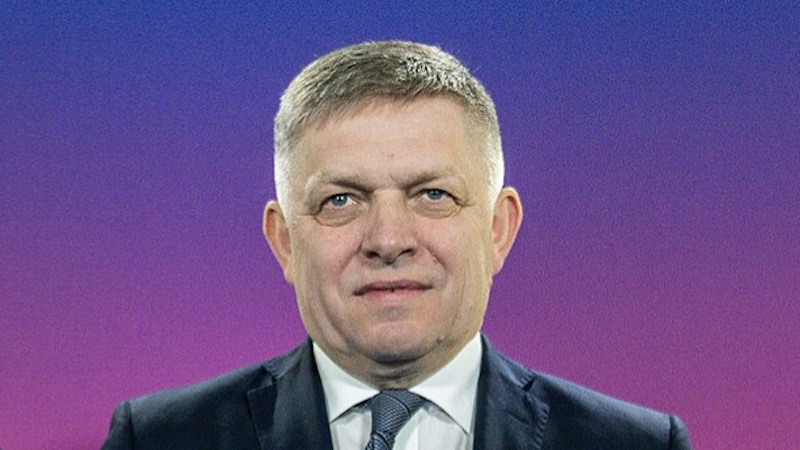
(EurActiv) — Slovakia’s Prime Minister, Robert Fico, proposed a measure to forgive misdemeanours related to the COVID-19 pandemic, covering a period spanning 42 months. The intervention has been approved by the government and is currently pending parliamentary approval.
The Ministry of Interior will reimburse funds for fines imposed by police officers and district offices and meal expenses charged to individuals placed in quarantine facilities.
Fines will also be reimbursed by other institutions that imposed them at the time for violations of anti-pandemic measures, such as regional public health offices, municipalities, and cities.
The Ministry’s preliminary estimates indicate more than 17,000 invoices for meal expenses in state quarantine facilities and approximately 58,000 records of infractions under the Public Health and Civil Protection Acts.
“First and foremost, it should be noted that it is the government that is authorised, under article 90 of the Misdemeanours Act, to grant amnesty in matters of misdemeanours adjudicated by the authorities of the Slovak Republic,” Slovak Ombudsman Róbert Dobrovodský explained to Euractiv.
‘Correcting injustice’
The total amount of fines imposed during the delineated COVID-19 period is € 2.7 million, of which around €989 thousand have been paid. The total amount invoiced for meals is above €1.5 million, with invoices amounting to more than €1.36 million already paid.
The government also approved an amnesty for all unpaid fines imposed for infractions related to anti-pandemic measures during the entire period when a state of emergency or crisis was declared due to the pandemic.
The amnesty also includes an order to halt all ongoing proceedings related to misdemeanours.
PM Fico stated that this was the first step toward correcting injustices. “It was a dark period in terms of the legal order and the violation of human rights,” the PM added.
The proposal is expected to cost the state budget €3.3 million, a sum the Prime Minister deems manageable.
The validity of leniency
Under Article 121 of the Slovak Constitution, the government has the right to grant amnesty in matters of misdemeanours. The government concession is also anchored in the Misdemeanours Act.
According to Dobrovodský, similar to the case of granting pardons by the Slovak President, the decision on the scope and recipients of amnesty for misdemeanours granted by the government is exclusively within the government’s discretion.
“It is established that, in legal theory, amnesty is granted based on generally defined criteria to an unspecified group of recipients. Legally, therefore, the amnesty meets these criteria,” Dobrovodský added.
Amnesty and self-exoneration
According to the Ombudsman, the legal doctrine also states that amnesty is often granted in connection with significant historical events. In the case of pardons, this instrument is used to mitigate the severity or injustice of a law.
“Regarding the question of whether a significant historical circumstance has arisen or whether the law was unduly harsh in penalising individuals who violated COVID-19 measures contrary to applicable and effective rules, the government likely assessed this positively, as it decided to grant the amnesty,” he continued.
“Whether this reasoning is correct and based on solid grounds is not for me to judge, especially since the government falls outside the scope of my authority,” Dobrovodský concluded.
The compensation could also be claimed by the PM’s Smer-SD party, which, while in opposition, violated pandemic measures during a rally in Rimavská Sobota, a town in southern Slovakia, resulting in a €3,000 fine.
The practicalities
The draft law regulates financial reimbursement for individuals who suffered financial damage due to the implementation of pandemic measures. This includes compensation for fines paid for COVID-19-related infractions committed between March 12, 2020, and September 15, 2023.
“The compensation system itself will be set up as reimbursement of paid amounts, based on the submission of an application by an authorised person along with the relevant documents. Once the draft law is approved, the Ministry of the Interior will make a form available for submitting such applications. The anticipated deadline for submitting applications is August 31, 2025,” the Ministry of Interior said.
According to the Ministry, the amounts to be compensated will also include any other verifiable costs incurred by the authorised person in connection with imposing the obligation and executing the decision. For example, expenses related to misdemeanours, court or enforcement proceedings, and late payment interest.
If the application is complete and the compensation conditions are met, the Ministry of the Interior will disburse the funds to the eligible persons within 60 days of receiving the full application.