
With a current fleet of six aircraft, Centrum Air does not immediately scream the same thoughts as the larger airlines in the Middle East specializing in one-stop connections between Europe and Asia. Yet, it hopes to emerge with a competitive edge on speed. Fast connection times combined with an ideal geographical location, make Tashkent transits a worthwhile investment it believes.
At the helm of the company is CEO Hussein Sherif Fahmi, a near 40-year veteran of the airline industry with plenty of experience from his home country of Egypt. Fahmi spoke to Simple Flying’s Dillon Shah in an interview, discussing the carrier’s current and future plans. The CEO reflects on his years of experience, during which there was “not a single thing I missed,” having worked in ”every single aspect of the airline business.”
“I am, by nature, a challenge taker but not a risk taker.”
Who is Centrum Air?
Centrum Air is a hybrid airline, offering a between-the-two product combining certain aspects of the low-cost airline model and those of a premium airline. In many ways, the CEO notes, the model resembles that of several full-service airlines- particularly in Europe- that have begun charging for things like seat selection and other ancillaries.
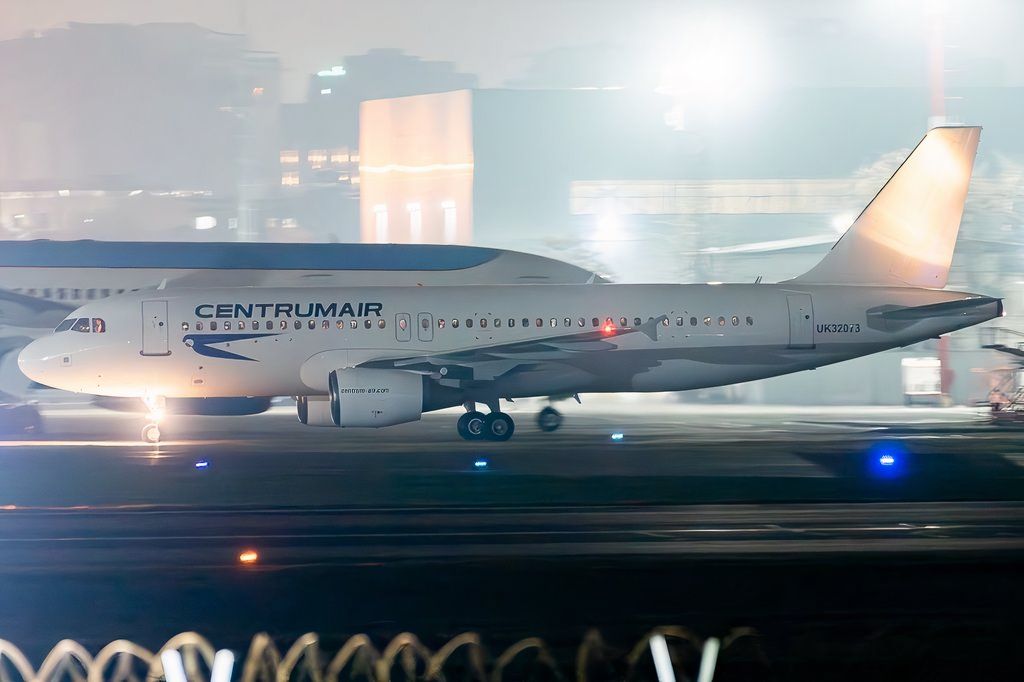
Photo: Centrum Air
On the other hand, the company still offers its own check-in services, and hopes to introduce an extensive hub-and-spoke network based on a mix of point-to-point and transit traffic through Tashkent. Fahmi says:
“We have designed an anticipated network that captures passengers via Tashkent from east to west and from west to east, also from India to Europe as well as to North East Asia. Tashkent was the heart of the so-called Silk Road, which was done by our ancestors 500/600 years ago. And since Tashkent still has its beautifully gifted geographical position, we are creating it to be the Silk Route.”
Currently, Centrum Air operates six aircraft including four Airbus A320ceos and two A321neos (delivered in July and October) across a handful of international destinations in the Middle East and Asia.
An ideal geographical position
Centrum Air hopes to take full advantage of its geographical position. The CEO notes that Uzbekistan is surrounded by 3.5 billion people, of which roughly 1.5 billion in India, 1.3 billion in China and 700 million across Southeast Asia, Russia, Korea and Japan. The plan is to cater to this broader catchment area, offering transit opportunities for destinations worldwide.
“We are six and a half hours maximum to the east and six and a half hours maximum to the west. We are right in the middle.”
In fact, the executive notes that for several flights, traveling via Tashkent is not that much longer than direct services.
“The difference is one hour if you are flying from, for instance, Copenhagen to Bangkok. Let me say, for instance, the direct flight is something like 11 hours. Through Tashkent, it will be 12 hours because we understand that there are some passengers that cannot sustain staying in an aircraft for 10 hours, or something like that. So it is better for them to divide their trip to be five hours, than one hour on ground, then another six hours to Southeast Asia.”
The total elapsed time for the same route on Emirates takes around 15 hours including three hours on the ground. A focus on quick connection times and cheap prices are going to be crucial should Centrum Air want to be successful in the Europe-Asia transit market. The CEO recognizes that it is entering “some markets where there is high competition, but going into such markets, we should have an edge.” For longer connections where one hour on the ground is not feasible, Fahmi even brought up the possibility of quick tours of Tashkent city.
“And if the transit time is four hours, the passenger will be offered a two hours trip into Tashkent. Many, many nationalities can get the visa, either upon arrival or through a very simple visa entry procedures online. Many nationalities as well can get a free entry for 24 hours into Uzbekistan. This is something we are benefiting from, because this is a facility which is not available at many hub points around the world.”
The key transit markets include Europe to the Far East, especially considering local airlines in the EU have slashed service to this area of the world as a result of Russian airspace restrictions and slowing demand. When asked whether Russian airspace restrictions on European airlines are good news for Centrum Air, Fahmi said:
“Yes. We are following what’s going on, and the airlines that were using the Russian airspace (either the trans-Siberian route or the polar route). Since they are not using it, we are the better alternative, and we are offering the unique selling point of being based at Tashkent, which is really halfway between Europe and Asia.”
Other important markets include Europe to the Indian subcontinent, as well as plenty of visiting friends and erlatives (VFR) traffic between the -stan countries, Europe and India.

Photo: Centrum Air
Doubling the fleet with widebodies & A321neos
By July 2025, Centrum Air hopes to have more than doubled its fleet, incorporating a pair of Airbus A330 widebody jets as well, for a total of 13 aircraft. This transition in its strategy, moving from a regional player to a long-haul airline, will allow it to better establish in Tashkent on a global scale. The delivery schedule looks as follows:
Number
Aircraft
Delivery month
2
Airbus A320neo
March & April
2
Airbus A330ceo
January & April
2
Airbus A321ceo
March
1
Airbus A321neo
July
Fahmi says that the company is already in discussions for additional planes as of 2026. The airline hopes to have 24 planes in 2026, with a similar mix of Airbus A320 and Airbus A330 family jets. It hopes to train pilots to fly on both aircraft families, allowing for increased flexibility.
The Airbus A330s will be used for high-demand trunk routes, including to destinations such as Bangkok. They will also be deployed on routes characterized by high seasonality, including religious flights for the Hajj and Umrah to Saudi Arabia. The widebodies will also benefit services that are inaccessible range-wise for the carrier’s Airbus A321LRs.