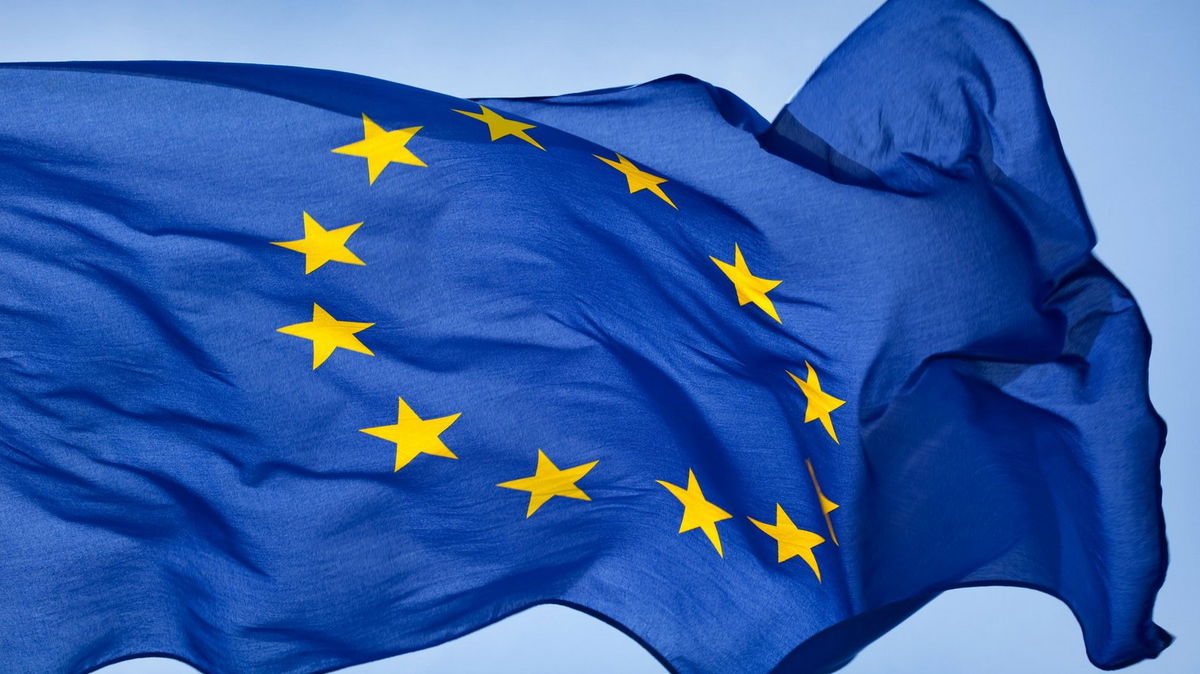
The EU has some serious tests ahead. Credit: BladeoftheS, Twitter.
It will be an intense year ahead for the European Union as challenges remain on the horizon. Nations will need to unite and tackle the surmounting debt issue that plagues the continent, continue to help Ukraine and address the issues surrounding trade policy if they are to ensure a peaceful 2025 for all.
With the damaging socio-economic fragments of the raging war between Ukraine and Russia still plaguing nations of the EU, many believe a revitalised agenda is in order for the newly elected team that makes up the European Commission in Brussels, as Donald Trump threatens to inadvertently put the global economy at risk.
As new president of the European Council Antonio Costa and EU high representative of Foreign Affairs Kaja Kallas add to a completely revamped commission, Steven Everts, the director of the European Union Institute for Security Studies remains somewhat hopeful. “Right now a new leadership is taking office in the EU, so this is the moment where we can rethink, adapt and revitalise EU foreign policy.”
Most Read on Euro Weekly News
Experts within the commission and as part of a wider team of EU members have enlisted a broader plan for 2025, that will cover some major bases.
Help for Ukraine
The EU has planned to transfer over 1.5 billion euros each month from its joint budgets to the state treasury in Kyiv from January, with an additional 50 billion euro loan from the G7 funded by profits from frozen Russian assets.
Defense
Andrius Kubilius, the head of the EU First Commission for Defence and Space insists that offensive war tactics should not be prioritised against Russia, but instead the coordination of armaments and procurement policies of member states of the EU. He comments that many member states are too quick to increase their weaponry inventory or their number of soldiers, but this could prove a hindrance if Trump gets his way with cutting defense budgets.
Debt consolidation
Ifo, a Munich-based economic research institute states Germany alone has a hefty 230 billion euro debt deficit in budget, Italy has 120 billion, and Spain has 80 billion. The EU needs to spread costs continuing to aid Gaza, Syria and Lebanon as well as maintain climate-friendly spending.
Mario Draghi, Italian former head of the European Central Bank has said sensationally that an 800 billion euro investment is needed if the European Union are to compete, requiring much more joint borrowing to finance startups in order to lure in private investors.
Trade policy
The ensuing trade war with China over electric cars remains a threat, and could be further dampened by Trump’s wishes to impose punitive tariffs on Europe, China, Mexico and Canada. Valdis Dombrovskis, EU commissioner for Economic Affairs states: “Trade wars are not good for anyone, Trump has to learn that. We have to show him the numbers. Full scale tariffs could take away 7% of the world’s GDP. It’s comparable to the 30s when isolationism was fashionable.”
There is a glimmer of hope however as the EU signed a trade agreement with the Mercosur Group in South America in early December, but it still needs to be approved.
Maintaining unity
“The EU is no longer the answer to many things. Politics has become more nationalistic. France and Germany are now needed as the leading powers in the EU”, informed Janis Emmanoiilidis, from the European Policy centre. With the flailing budgets of Spain, Italy’s far-right government still in power, Belgium and Austria’s interim leaderships and The Netherlands, Hungary and Slovakia with serious skeptics of the European Union at the helm, 2025 will prove to be a massively challenging year for all, but we must remain positive.