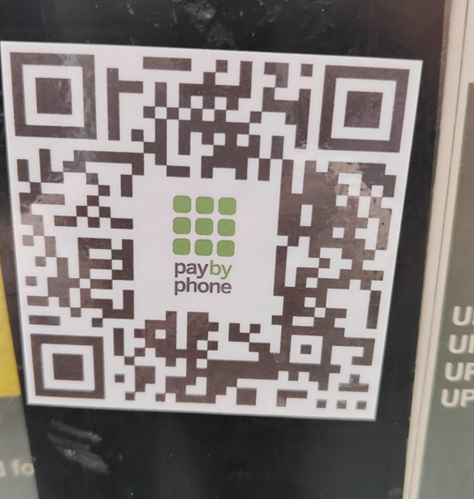
Fake QR codes such as this one are being placed on parking machines in Belgium. Credit: Lpoolcouncil, Twitter.
Residents of Brussels have been warned about active fraudsters in the area, capitalising on accessing the banking details of drivers with fake QR codes placed on parking meters.
Brussels capital police have informed that citizens are to be careful of “ill-intentioned people” who have created specific stickers with a QR code which links to a fraudulent website, aiming to request personal and banking information.
Fake codes normally placed over legitimate ones
The fraudulent move may initially appear as a regular QR code needed to park in a certain area and pay for your ticket, as criminals place the codes over legitimate posters which are normally scanned to park in designated areas legally.
Most Read on Euro Weekly News
Police insist that there are a number of ways to spot these crimes however, and separate a regular, legal parking code from a fraudulent one, as they urge drivers to make friends and family aware of the ongoing issue.
Ways to protect yourself
Check the URL: The website you are taken to when you scan the code should match the official address of the parking bay. Double check closely, as scammers often make the fraudulent sites closely match the official ones.
Avoid downloading suspicious apps: This includes any internet downloads you may be promoted to do after scanning the fake codes – only download regulated apps from the App Store or Google Play.
Inspect the code: Usually, fake codes can be detected by running a hand over the sticker, checking for any unusual bumps, to see if it has been altered in some way, or tampered with. In most cases, fake stickers are placed over existing legitimate ones.
If in doubt, do not proceed: If you have any question marks surrounding your experience with a parking QR code, take the safer option and avoid entering any personal or banking details.
There are a number of things you can do if you think you have been the victim of fraud. Contact your bank immediately, and call the CardStop line at 078170170, and report the incident to local police.
Additionally, if you have any suspicions over a mysterious qr code you may have seen, you should email suspect@safeonweb.be.
Quishing causing major disruption across Europe
The act of ‘quishing’ is not new in Belgium or across Europe, as phishing using QR codes has become dangerously prevalent with the emergence of new global technology. In late October 2024, suspicious codes were noticed on at least 17 cash machines in Bruges, where individuals had their bank details taken by criminals.
And in September of last year, a number of UK towns such as Leicester and Reading saw victims as part of quishing incidents, with QR codes being, again, placed over legitimate ones on pay-and-display machines.
As we enter a new cyber-world, whereby everything can be done on our phones, we are constantly reminded to practice safety to ward off fraudsters.