
Well, it seems like yelling to those freshly arrived in Greece at least, but really, it’s just two Greeks having a perfectly normal conversation about soccer, shopping, or the latest economic upheaval. Pundits try to account for the decibels by claiming sailors and shepherds once required loud voices to communicate. Seems implausible. Anyway, never fear: all those people in cafes aren’t about to punch each other, they just want somebody to pass the sugar.
The terrible booze

Greece’s anise-flavoured national spirit, Ouzo.Credit: Getty Images
Each to their own, but Greek alcohol is flavoured with things many people find horrible. Ouzo has an intense taste of anise or liquorice, hardly universally appreciated. Retsina is flavoured with pine resin, which is used absolutely nowhere else except in Toilet Duck. Then there’s mastika, produced from the resin of the mastic tree. Small wonder the Greeks add honey to many of their spirits: a spoonful of sugar helps the medicine go down.

You’re on Greece time now.Credit: Getty Images/iStockphoto
It takes getting used to, but after a while the languid pace at which things get done in Greece seems the only way to live. Why get flustered or stressed when you can shrug and enjoy the moment? The Greeks have a marvellous way of accepting fate, even when it comes in the form of a cancelled ferry or lost wallet. But alas, although we can understand the benefits of a laid-back attitude, it isn’t easy to adopt.
Fast drivers

A taxi ride in Athens is a white-knuckle affair.Credit: Getty Images
How come the slow pace of Greek life gets lost the minute someone climbs into a car? Your first moment of terror in Greece is when you get hurtled in a taxi from the airport into downtown Athens. There’ll be plenty more white knuckles at every tight corner, mountain bend and urban intersection. If you haven’t moved the millisecond a light turns green, honking erupts. And pedestrians look out: Greek friendliness is abandoned at zebra crossings.
Stray animals
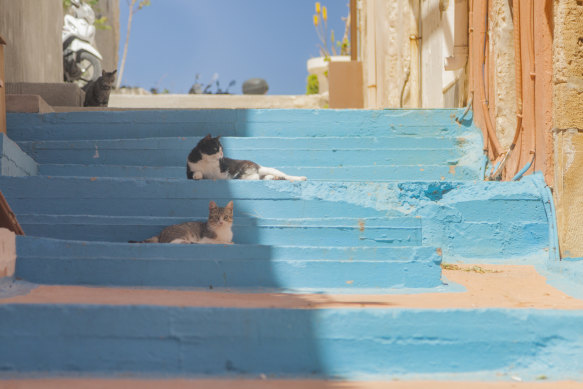
Stray cats are tolerated everywhere.Credit: Getty Images
Are the mangy, one-eyed, limping cats and dogs you see everywhere a sign that the Greeks love animals, or hate them? Who knows? Somehow these feral creatures get looked after in a way, or at least fed. Cats are tolerated everywhere, even in restaurants, but are often sick or injured, and have short lives. Despite much finger-wagging from animal welfare groups, they remain a widespread problem. Your dilemma as a tourist is whether you should interact with them or not.
The showers
You might put up with the trickle of water that comes out of Greek showers by reminding yourself that this country is often short of water. That doesn’t explain the fluctuating temperature though: just as you’re about to rinse off the soap, the water turns freezing cold. And what’s with the shower curtains that end several centimetres short, the shower heads positioned at chest level, and the alarming wiring that seems to promise imminent electrocution?
The smoking

A whopping 40 per cent of Greeks smoke.Credit: Getty Images/iStockphoto
Nearly 40 per cent of Greeks smoke, the highest percentage in the European Union, and although smoking inside public places such as restaurants was banned long ago, the rules are often ignored, especially beyond cities. Nor do they apply to terraces and other outdoor spaces. Why Greeks remain so dedicated to cancer sticks against the trend everywhere else in Europe is anyone’s guess. Prepare for a smoky blast from the past when al fresco dining.
The writer has travelled to Greece courtesy of several cruise companies, and at his own expense.