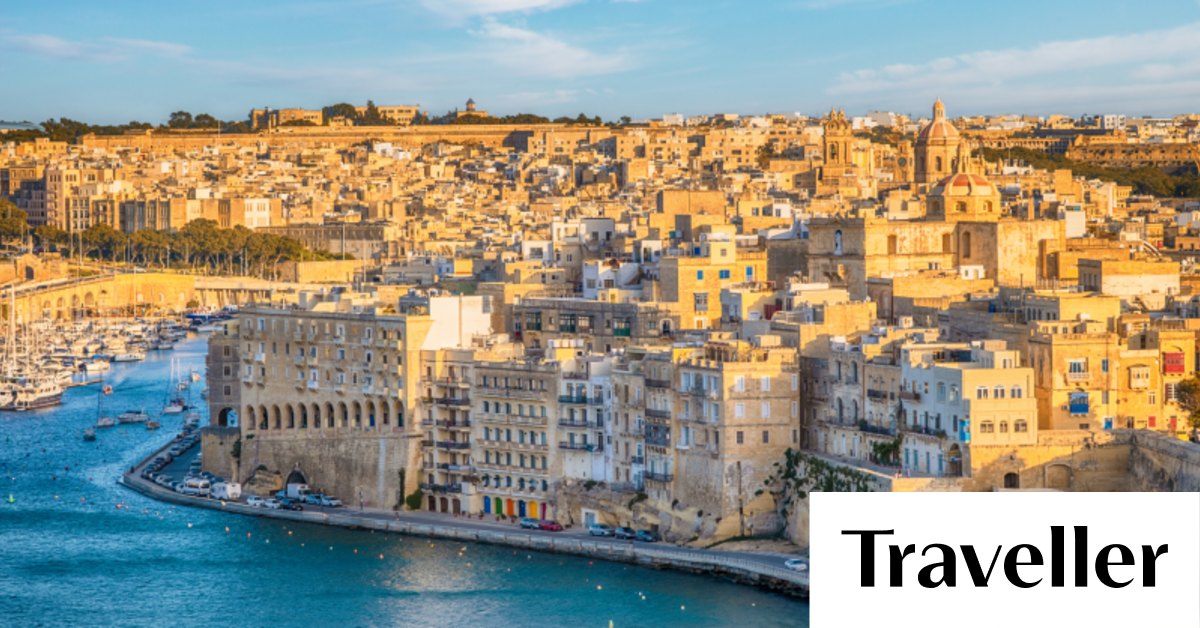
What Europe’s smallest, UNESCO World Heritage-listed capital, with a population of less than 6000, lacks in size is amply compensated for in its wealth of impressive and historical attractions.
1 Visit Valletta’s stunning cathedral museum

St. John’s Co-Cathedral and its spectacular walls and ceiling.Credit: iStock
St John’s Co-Cathedral, built by the Order of the Knights of St John in 1577, is an obvious and stirring starting point. Dedicated to St John the Baptist, the order’s members over the centuries donated the finest works of art to this gloriously gilded church, an official national treasure. Today it’s run as much as a blockbuster, revenue-generating museum and art gallery enterprise as it is a place of worship.

Caravaggio’s “Beheading of John the Baptist”.Credit: Alamy
Michelangelo Merisi, better known as the painter Caravaggio, arrived in Malta in 1607 on the run after killing a man in a brawl in his native Italy. While on the island he painted The Beheading of St John the Baptist, a masterpiece that not only has pride of wall space inside St John’s Co-Cathedral but is the subject, along with another precious Caravaggio, St Jerome Writing, of a superb new EU-funded digital presentation which explains and interprets the works in minute and fascinating detail.
3 Marvel at the Grand Master’s Palace
Nearby to St John’s, as most everything is, and facing St George Square, is this newly restored, 450-year-old Grand Master’s Palace with its impressive wraparound dark green timber gallarija or Maltese-style balcony (see below). It was the first building to be constructed by the Knights of St John in the new capital city of Valletta and once housed Malta’s first constitutional parliament under British rule. Today the seat of the office of the president of this tiny Commonwealth nation, 85 per cent of rooms, corridors and courtyard are open to visitors.