What’s going on here?
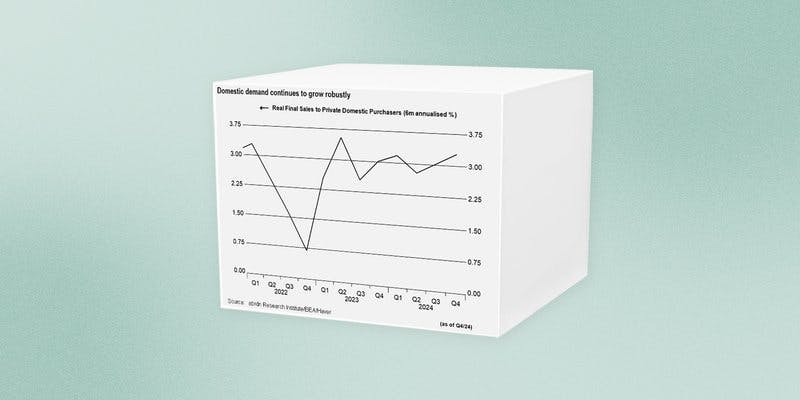
The US economy expanded at an annualized rate of 2.3% in the fourth quarter of 2024, signaling continued health despite a slowdown. Consumer spending, supported by a strong labor market, surged by 4.2%, marking the highest gain in two years.
What does this mean?
While US GDP growth has moderated, robust consumer spending highlights the economy’s resilience. This spending surge reflects solid household finances and employment gains, contributing significantly to the overall economic performance.

Real final sales to private domestic buyers (six months annualized). Source: abrdn, BEA, Haver.
Business equipment investment may be lagging now, but expectations for a Q1 rebound suggest an upcoming recovery. Furthermore, declining unemployment claims, now at 207,000, showcase a recovering labor market, particularly as California’s wildfire disruptions ease. The Federal Reserve, therefore, remains patient about rate cuts, considering strong domestic demand, even as uncertainties in trade and immigration loom.
Why should I care?
For markets: Domestic demand sparks optimism.
Markets can take a breather as robust consumer spending and falling unemployment claims bolster economic confidence. While there’s minimal urgency for interest rate cuts, investors should watch business investment trends closely for signals of future growth. This balance fosters cautious optimism, suggesting markets may find continued support in consumer sectors.
The bigger picture: A resilient economy amidst policy uncertainty.
The US economy’s ability to maintain momentum despite decelerating growth and global uncertainties underscores its resilience. As trade and fiscal policies continue to evolve, their global implications could redefine economic strategies, influencing both government policies and business decisions worldwide.