Share
Tweet
Share
Share
The British monarchy is undergoing a significant transformation, driven by King Charles III’s health concerns and the increasing prominence of Prince William and Kate Middleton. Since Charles was diagnosed with cancer in early 2024, the need for a more structured transition has become evident. At 75 years old, the king continues to fulfill his duties within the constraints of his treatment, but delegating responsibilities to the heir and his wife has become inevitable. This shift reinforces the image of a couple prepared to take on an increasingly active role in the monarchy, ensuring stability and continuity for the institution. William and Kate had already demonstrated their commitment to royal duties over the years, but now, this involvement has intensified strategically. The couple has participated in high-profile political and social events, showcasing a modern and accessible approach that aims to strengthen the monarchy’s connection with the British people.
William’s agenda has expanded significantly, including high-level diplomatic engagements.
Kate Middleton, after recovering from abdominal surgery in early 2024, has gradually resumed her public appearances.
The Impact of King Charles III’s Health on the Monarchy’s Structure
The revelation of King Charles III’s cancer diagnosis was a defining moment for the British monarchy. The transparency in communicating his condition, a departure from the royal family’s tradition of secrecy, reflects an adaptation to modern times and growing demands for openness about monarchs’ health. Unlike previous eras, when royal illnesses and physical challenges were kept private, Charles III’s public disclosure allowed the nation to follow developments and express support for the royal family. This situation has necessitated adjustments to the monarchy’s structure to ensure that official duties continue uninterrupted without overburdening the king.
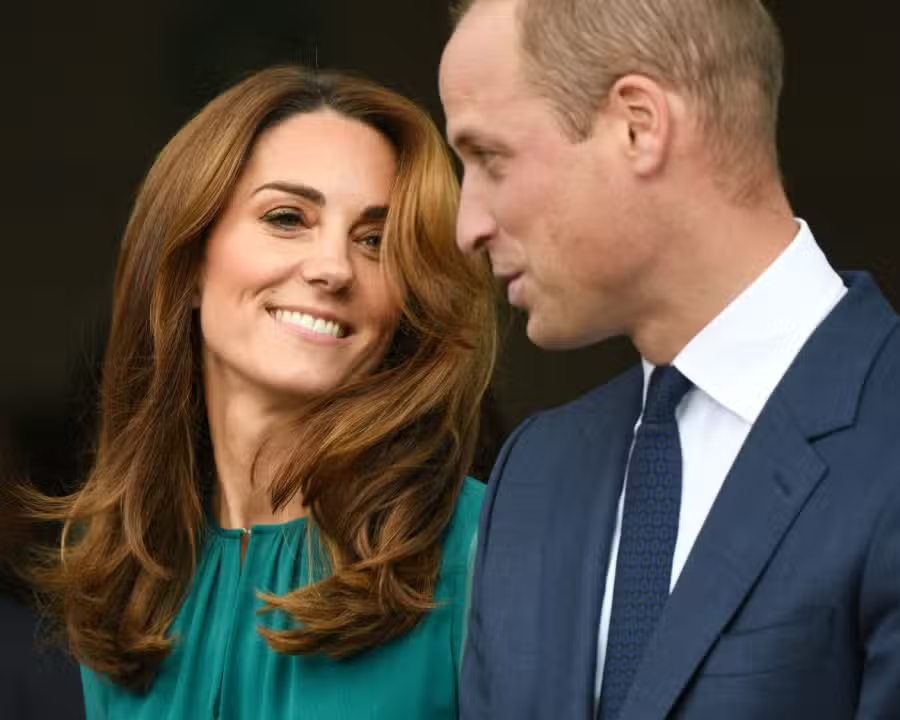 William e Kate – Foto: B. Lenoir / Shutterstock.com
Delegating functions to William and Kate not only reinforces the couple’s growing public presence but also serves as a gradual preparation for an eventual transition. Experts suggest that this reorganization of the monarchy has been planned for years but was accelerated by the king’s health condition. The strategy aims to preserve institutional continuity while minimizing political and social impacts.
The Evolution of William and Kate’s Role in the Monarchy
Since 2023, William and Kate have taken on an increasing number of official engagements. In the past year alone, the couple attended over 250 events, including diplomatic meetings, community visits, and official royal representations. This number marks a significant increase compared to previous periods and underscores the monarchy’s adaptation to present-day demands.
Key areas of the couple’s royal engagement:
Representing the Crown at diplomatic and institutional eventsSupporting social causes, especially mental health and early childhood educationActive participation in environmental and sustainability initiativesStrategic use of social media to enhance public engagement
William’s presence at government meetings and diplomatic summits reinforces his growing influence in British politics. Meanwhile, Kate has solidified her role in projects focused on early childhood education, a subject she considers vital for social development.
Public Confidence in the Future of the Monarchy
Public support for William and Kate has been a crucial factor in strengthening their roles. Recent polls indicate that more than 70% of the British population trusts the couple to lead the monarchy in the future. This approval reflects their ability to adapt to contemporary expectations while maintaining the monarchy’s relevance in a constantly evolving world.
Factors driving William and Kate’s popularity:
Direct communication with the public, reducing excessive formalityActive digital presence, bringing the monarchy closer to younger generationsEngagement in social and environmental causesImage of stability and commitment to tradition and modernity
The British monarchy, historically resistant to change, has found a balance between tradition and innovation in William and Kate. The modernization of communication strategies, including increased transparency and accessibility, strengthens the connection between the royal family and the people.
Kate Middleton’s Influence on the Modern Monarchy
Kate Middleton’s role in the monarchy stands out due to her ability to modernize the royal family’s image while maintaining traditions. Since marrying William, Kate has been one of the most active members of the royal family, with a strong focus on childhood development, mental health, and education.
Key initiatives led by Kate Middleton:
Awareness campaigns on the importance of early childhood developmentMental health support programs, especially for young people and familiesSocial engagement initiatives focused on underprivileged communitiesEducational projects aimed at improving child development
Beyond her social engagement, Kate has proven to be a crucial figure in shaping the monarchy’s new identity. Her constant presence at public events and her charisma reinforce the image of a future queen consort fully prepared for her role.
William’s Preparation for the Throne
From a young age, William has been groomed to take the British throne. His military training, humanitarian involvement, and increasing participation in political meetings indicate a meticulous preparation for his role as king.
Key aspects of William’s preparation:
Military training and service in the Royal Air ForceParticipation in high-level political and institutional meetingsRepresentation of the British Crown at international diplomatic eventsEngagement in environmental and global projects
The combination of these experiences strengthens his leadership abilities and ensures a well-planned transition within the monarchy.
The Impact of the Transition on the British Monarchy
The monarchy’s structure is undergoing a period of adaptation, and the gradual transition of responsibilities highlights the institution’s resilience. With Charles III’s health requiring continuous care, the need for an efficient transition plan has become increasingly apparent, ensuring that the monarchy remains stable and functional.
Essential elements of the transition:
Expansion of William and Kate’s responsibilitiesModernization of the monarchy’s communication strategyAdaptation to public expectations in contemporary societyStrengthened preparation for royal succession
The British monarchy remains one of the most influential institutions in the world, and William and Kate’s role in maintaining this relevance is crucial.