DeepSeek has been dubbed artificial intelligence’s “Sputnik moment” (“DeepSeek’s reckoning for Wall Street”, Due Diligence Newsletter, January 28) but the analogy isn’t quite right. When the Soviet Union launched the first satellite, the US had none in space. Misframing this risks losing important lessons.
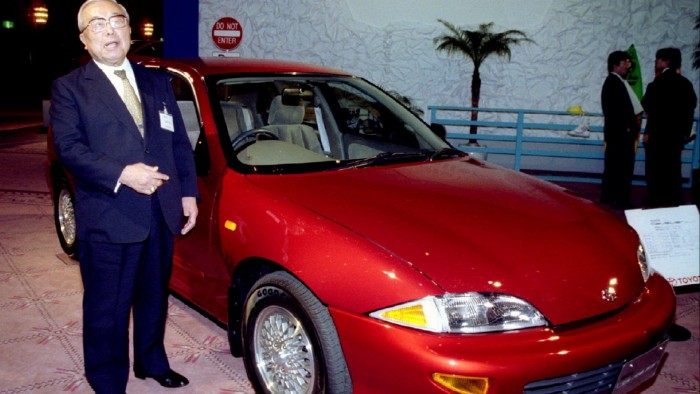
Instead, this is AI’s Toyota moment. Toyota reshaped the American car industry by making reliable cars at lower costs through leaner, more efficient manufacturing. Rather than relying on abundant resources and big factories, Toyota focused on cutting waste and improving processes — setting new standards for precision and efficiency.
So, what can Toyota teach us about DeepSeek and AI’s future?
First, iteration trumps breakthroughs. Toyota didn’t invent the car; it redefined how cars were built. Likewise, China’s AI strategy prioritises efficiency, low costs and refinement. Western AI leaders must seek to match China’s ability to execute at scale, while integrating AI into everyday products and services.
Second, AI industrialisation must be sustained. Toyota didn’t win by making the flashiest, most futuristic cars; it won by building the most accessible, reliable, and scalable ones. Likewise, governments and businesses need long-term AI investment strategies — not just reactive spikes in funding.
Third, DeepSeek is formidable not because it’s the best model, but because it shows China is quietly mastering AI development at scale.
The lesson for the west? The AI race will be won by those who commercialise and deploy AI most effectively — not necessarily those with the most powerful models.
In practice, this means aligning AI with top business priorities, identifying where it can drive meaningful progress, and taking a low-risk approach that feeds long-term ambitions — underpinned by clear regulations.
Marc Warner
CEO & Co-founder, Faculty,
London EC1, UK