Share
Tweet
Share
Share
King Charles III, since ascending to the British throne in September 2022, has played an active role in the monarchy despite facing challenges such as his cancer diagnosis in February 2024. His duties include diplomatic engagements, official ceremonies, and weekly meetings with the Prime Minister at Buckingham Palace. Despite health-related limitations, he gradually resumed public activities, with a notable appearance in Auschwitz in January 2025 to commemorate the 80th anniversary of the liberation of the Nazi concentration camp. Additionally, his visit to a cancer treatment center in April 2024 alongside Queen Camilla highlighted his commitment to both public health causes and his own recovery. His continued participation in diplomatic and institutional events reinforces the stability of the British monarchy, which has undergone significant changes in recent years.
The royal agenda remains intense, including political meetings, receptions for foreign heads of state, and participation in Commonwealth ceremonies. The King continues his daily routine, receiving government documents and signing parliamentary-approved legislation. His presence at events such as Trooping the Colour in June 2024 reassured the public of his leadership. The monarchy’s official commitments are a key component of the UK’s diplomacy, ensuring continuity and global influence.
Royal succession remains a subject of great public interest, with Prince William as the first in line to the throne, followed by his three children. Prince Harry, now distanced from royal duties, retains his position in the line of succession but without direct involvement in monarchy-related activities. These changes reflect a monarchy in transition, striving to maintain its relevance amid evolving political and social dynamics within the UK and the Commonwealth.
 Rei Charles III – Foto: Michael Tubi/Shutterstock.com
King Charles III’s Key Responsibilities in the British Monarchy
King Charles III serves as the head of state for the United Kingdom, though his role is largely ceremonial and symbolic. His main responsibilities include:
Appointing new governments by inviting the leader of the winning party to form a cabinetOpening Parliament with the King’s Speech, outlining the government’s agendaGranting Royal Assent, a necessary step for parliamentary-approved legislation to become lawRepresenting the UK diplomatically by meeting with international leadersConducting official visits abroad to strengthen diplomatic and political tiesLeading national ceremonies, such as the annual Remembrance event honoring fallen soldiers
Additionally, the King is the head of the Commonwealth, an association of 56 countries, including 14 realms where he remains the head of state. This network represents over 2.5 billion people and maintains historical, cultural, and economic ties with the UK.
The Impact of King Charles III’s Health on His Official Duties
Since being diagnosed with cancer in February 2024, King Charles III has partially stepped back from public duties while maintaining essential commitments. His treatment required adjustments to his schedule, yet he chose to continue with constitutional functions, including private meetings with the Prime Minister and signing official documents. In April 2024, he made a public appearance at a cancer treatment center, engaging with patients and medical professionals, emphasizing the importance of cancer awareness.
Throughout 2024, the King balanced rest with strategic appearances at high-profile events. His presence at Trooping the Colour in June symbolized his continued leadership of the monarchy. In October, during a visit to Australia, he faced republican protests, highlighting the ongoing debate about the monarchy’s role in Commonwealth realms. However, Charles III reaffirmed that whether Australia remains a monarchy is a decision for its people, maintaining the Crown’s neutral stance on domestic political issues.
Royal Succession: The Heirs to the British Throne
The British line of succession follows a clear hierarchy, prioritizing direct descendants. The current order of succession is:
Prince William, Prince of Wales, eldest son of King Charles IIIPrince George, William’s eldest sonPrincess Charlotte, William’s daughterPrince Louis, William’s youngest sonPrince Harry, Charles III’s younger sonPrince Archie, Harry’s sonPrincess Lilibet, Harry’s daughter
This structure ensures the monarchy’s continuity, even amidst political and societal changes. Prince William has taken on an increasingly prominent role, accompanying his father in official duties and strengthening his image as the future king. Prince Harry, having stepped back from royal life in 2020, remains independent in the United States, detached from royal functions.
The Popularity of the British Monarchy and Future Challenges
Recent surveys indicate that while the monarchy retains public support in the UK, opinions vary significantly across different age groups and regions. Older generations remain largely supportive, whereas younger demographics are showing increasing republican sentiment. Additionally, countries such as Australia, Canada, and Jamaica have been discussing the possibility of becoming republics and removing the British monarch as head of state.
The monarchy’s popularity is also shaped by internal family dynamics. King Charles III’s public presence, alongside the work of William and Catherine, helps reinforce the institution’s continuity. However, controversies involving royal family members, such as Harry and Meghan’s departure and the scandals linked to Prince Andrew, have impacted public perception.
Royal Finances and the Economy of the Monarchy
The British monarchy is funded through multiple sources, the primary one being the Sovereign Grant, an annual payment from the UK government based on Crown Estate profits. In 2024, this grant amounted to £86.3 million, covering official expenses, travel, and the maintenance of royal properties. The King also receives income from the Duchy of Lancaster, a private estate that generates millions annually.
Prince William, as heir to the throne, manages the Duchy of Cornwall, another major source of royal income. Unlike the Sovereign Grant, which is taxpayer-funded, these duchy revenues are privately managed by the royal family. Despite these financial structures, questions persist about the cost and relevance of the monarchy in modern society.
Royal Residences and Properties
The British royal family owns numerous estates, some of which serve as official residences while others are privately owned. The key properties include:
Buckingham Palace: The King’s official residence in London, currently undergoing a £369 million renovationWindsor Castle: A principal royal residence frequently used for official eventsSandringham House: The King’s private residence, traditionally used for Christmas celebrationsBalmoral Castle: The Scottish estate where Queen Elizabeth II spent her summersClarence House: The current residence of King Charles III and Queen Camilla 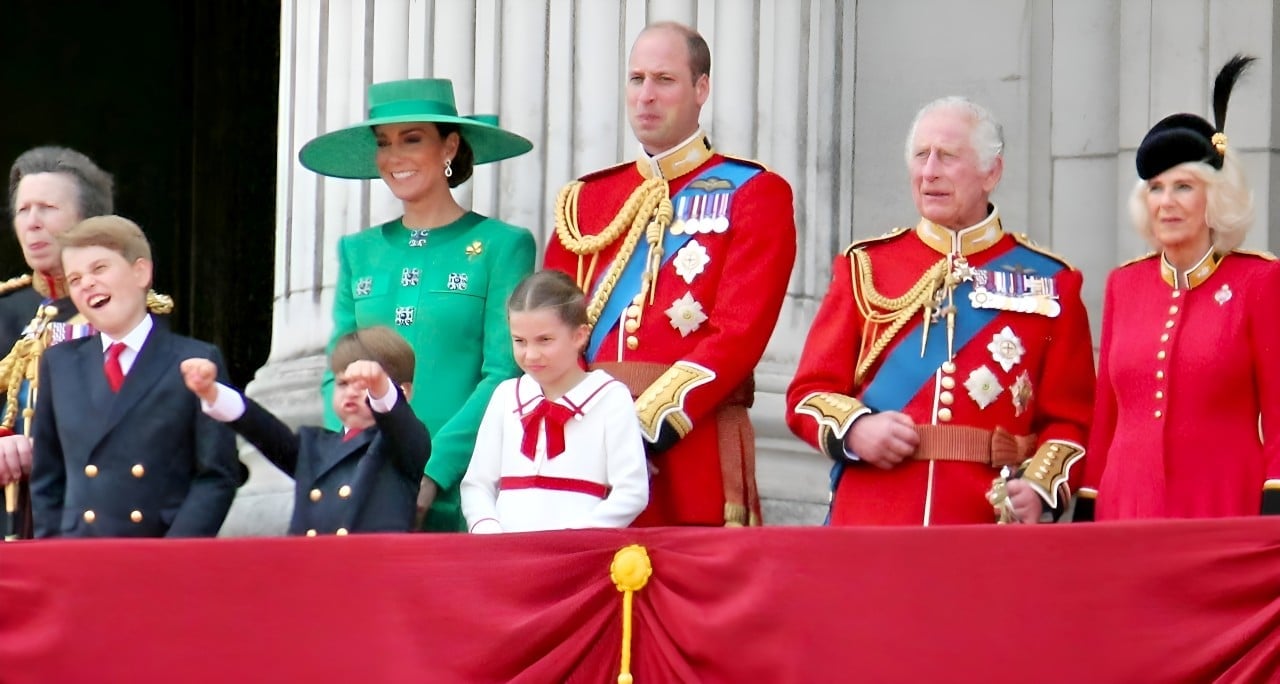 Kate Middleton Familia Real – Lorna Roberts / Shutterstock.com
Additionally, Prince William and Princess Catherine reside at Adelaide Cottage on the Windsor Estate, while other royal family members occupy various Crown-owned properties.