Grade: 3.5/5.0
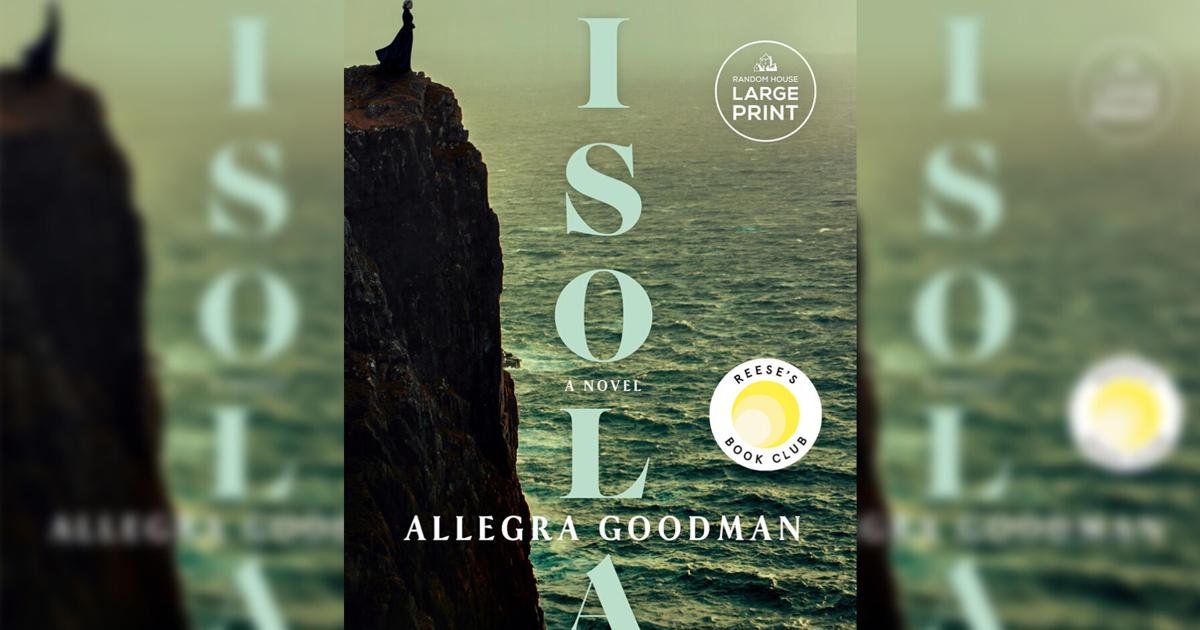
What does it mean to be alone? Is it physical solitude, or mental isolation? Allegra Goodman’s “Isola” asks these questions through the trials of Marguerite de la Rocque de Roberval. Marguerite is controlled by the whims of her guardian, leading her away from home to urban France, onto a ship and eventually leaving her stranded on a desert island. “Isola”is an empowering exploration of femininity and loneliness while also paying homage to the wild savagery of flora and fauna.
Goodman, author of “Sam,”stumbled onto the novel’s inspiration in an account of explorer Jacques Cartier’s travels to Canada. “Isola”is inspired by the true story of Marguerite de la Rocque de Roberval, a 16th century French noblewoman who personally experienced these trials and tribulations. Just two contemporary accounts of her ordeal remain, which inspired Goodman to bring her story to the 21st century.
The novel meets Marguerite as a child. An orphan from childbirth, her uncle Roberval becomes her guardian and her nurse Damienne acts as a mother figure. Roberval is an explorer of the “New World” and Marguerite watches helplessly as he squanders her inheritance, waiting in vain for him to marry her off so she can escape his clutches. Now a teenager, he instructs her to travel with him to New France, or the modern-day Canadian Isles. On board, she falls in love with Roberval’s secretary. Blinded by rage, he retaliates, marooning the happy couple and Damienne on a desert island. Marguerite is forced to abandon her ladylike habits and manners, fighting off polar bears and surviving an unforgiving winter for two years while her nurse and her betrothed wither away.
Despite its perpetual disheartening nature, “Isola”is a pleasure in countless aspects. It is long enough to faithfully respect each part of the story, yet short enough that Marguerite’s perspective does not become suffocating. Goodman manages to avoid unnecessary convolution but keeps it complex in setting and theme.
Just like its main character, the novelnever doubts itself. Goodman paints an expansive world of 16th century France without getting bogged down into detailed questions of religion, colonization or class. Despite its flowery and vintage verbiage, her writing has an air of simplicity, fitting the era without being impossible to understand. It reads like a spoken prayer, giving the reader a god-like point of view. This sense of divinity is emphasized by a 21st century knowledge of places like Canada, and Marguerite’s 16th century perspective on the island’s plants and animals encapsulate a forgotten, pre-colonial time. They give the reader a glimpse into what the world once looked like, channeling Thomas Cole’s painting series, “The Course of Empire,” ripping Marguerite from the urban landscape of “Consummation of Empire,”to the untamed frontier of “The Savage State.”
However, even in the novel’s realism, the grand questions of isolation and femininity feel contemporary five centuries later. Marguerite’s experiences seem almost incomprehensible in the 21st century, but her emotions sparked from this adventure still ring true today. Her isolation seems never-ending and her love for her companions is overwhelming — loneliness and love are clearly ingrained in the human experience.
At points, the book falls into the trope of “she-ro fights the patriarchy” which is due to the uncompromising morality of Marguerite, Damienne and her spouse, while her guardian is endlessly antagonistic. Marguerite and the other forces of good have flaws: too honest, too virtuous, trusts everyone unconditionally. However, this could be due to Goodman’s access to limited source material and a valid urge to honor the true bravery of de la Rocque de Roberval.
“Isola” breathes life into a forgotten history. Goodman memorializes de la Rocque de Roberval and her remarkable valor through masterful writing, reminding the 21st century that strong women have always broken down barriers in the face of misogyny, isolation and polar bears. Power is found within, redefining isolation as a chance to prove your worth.