
xng-usd
Skerdian Meta•Saturday, February 8, 2025•2 min read
 Add an article to your
 Reading List
Register now to be able to add articles to your reading list.
”
aria-hidden=”true”>

Share in Facebook

“>
Natural gas prices bounced higher this week, resuming the uptrend, while Trump and the Japanese PM signed a gas export deal.

Gas prices have been on an upward trajectory for a full year, having nearly doubled from $1.58 in February 2024 to $3.20-$3.30 today. While prices temporarily retreated in recent weeks, they found support around $3.00, in line with the 20 SMA on the weekly chart. This week saw a further rebound, with gas prices reaching a high of $3.40 before closing slightly lower at $3.28. The rally in oil prices has contributed to the sustained increase, reinforcing upward momentum in the energy market.
Natural Gas Chart Weekly – The 20 SMA Helping Keep the Trend Bullish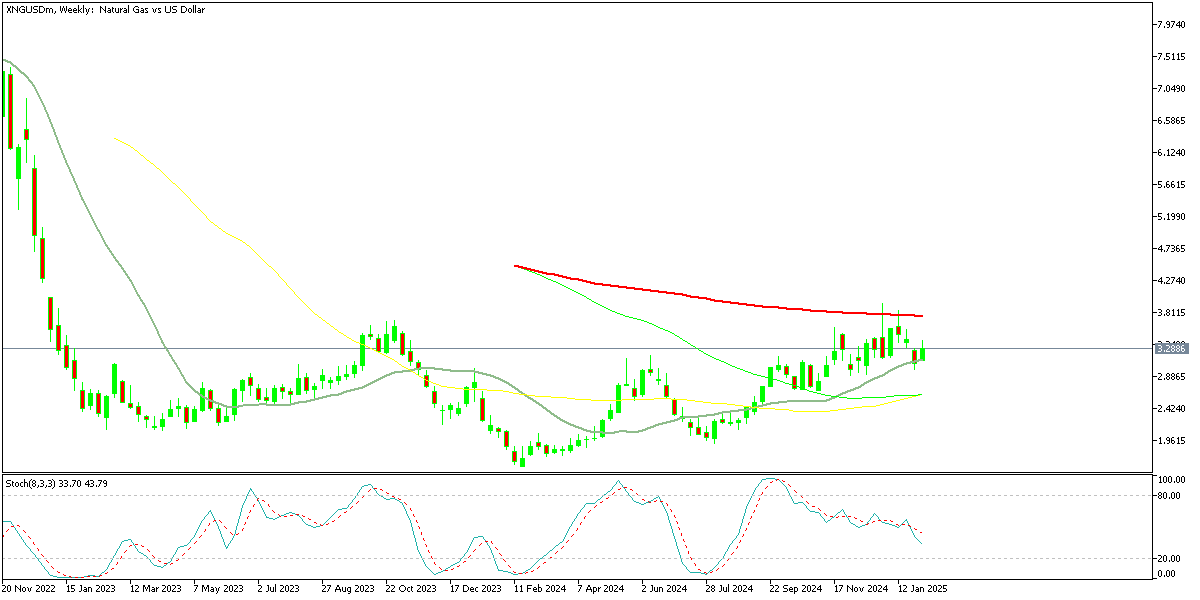
During a meeting yesterday, President Donald Trump and Japanese Prime Minister Ishiba reached an agreement to expand U.S. liquefied natural gas (LNG) shipments to Japan. This deal strengthens energy ties between the two nations and ensures Japan has access to a stable LNG supply.
US-Japan LNG Expansion and Alaskan Infrastructure Deal
Meanwhile, a key infrastructure agreement was finalized in Alaska, where Harvest Alaska, Marathon Petroleum Corporation (MPC), and Chugach Electric Association have agreed to transfer ownership of the Kenai LNG facility from an MPC subsidiary to Harvest. If the deal proceeds, Harvest will develop and manage the terminal, ensuring additional natural gas supplies for Chugach, MPC, and other Railbelt clients. The project aims to prevent potential short-term gas shortages in Southcentral Alaska by utilizing MPC’s existing LNG export infrastructure.
Geopolitical Impact: Gaza’s Gas Reserves and Potential Conflict
President Trump is also exploring ways to increase natural gas production, including taking control of the Gaza Strip. In June 2023, Israeli Prime Minister Netanyahu gave preliminary approval for the development of Gaza Marine’s gas reserves, which are estimated to hold over 1 trillion cubic feet of natural gas. These reserves could provide Europe with a new energy source. However, Trump’s push to accelerate U.S. involvement in Gaza could escalate regional tensions, potentially triggering a larger conflict in the Middle East.

Skerdian Meta
Lead Analyst
Skerdian Meta Lead Analyst.
Skerdian is a professional Forex trader and a market analyst. He has been actively engaged in market analysis for the past 11 years. Before becoming our head analyst, Skerdian served as a trader and market analyst in Saxo Bank’s local branch, Aksioner. Skerdian specialized in experimenting with developing models and hands-on trading. Skerdian has a masters degree in finance and investment.