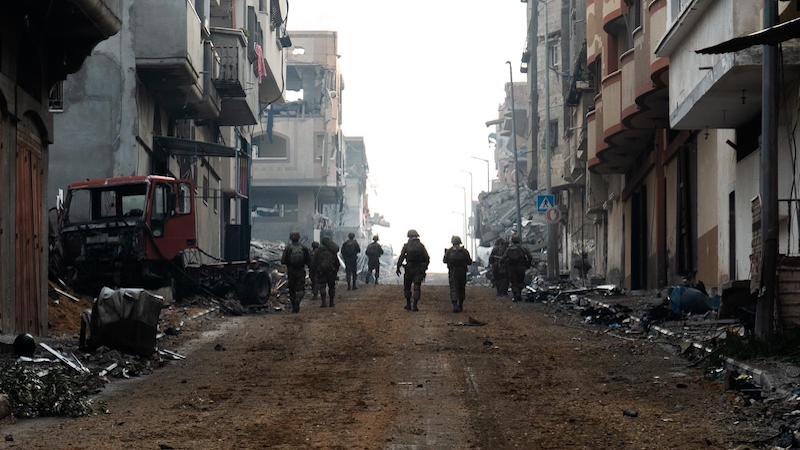
In international politics, ceasefires and peace agreements are delicate and fragile lines that can collapse with the slightest violation or neglect. These agreements not only signal a willingness to maintain peace but also serve as crucial safeguards against escalating conflicts and future wars.
Within the complex crises of the Middle East, Israel—one of the persistent parties in these conflicts—has repeatedly demonstrated a disregard for these fragile boundaries. By continuously violating ceasefires and delaying troop withdrawals, Israel undermines the peace process, posing a significant threat to global efforts to establish stability in the region. Such repeated breaches escalate tensions and deepen crises. In this context, the international community cannot remain limited to verbal condemnations; it must take serious and decisive measures to ensure that Israel not only commits to ceasefires in words but also enforces them in practice. This is an opportunity for the global community to reaffirm that peace agreements must be upheld and that no one should be allowed to violate them without consequence.
After prolonged mediation efforts, a ceasefire was finally established in Gaza and Lebanon. However, these ceasefires remain fragile and unstable. To transform them into lasting peace, all parties must fully respect and adhere to their commitments. Only through the faithful implementation of these agreements can a sustainable future of peace and stability in the region be envisioned. Otherwise, the ceasefire will remain ineffective, and the peace process will fail from the outset. A firm and enforceable ceasefire is the most critical prerequisite for ensuring stability and preventing further escalation.
Israel has a long history of violating ceasefires and peace agreements in the Middle East. From the armistice agreements of the 1948 and 1967 wars to recent ceasefires in Gaza and Lebanon, Israel has consistently ignored its commitments to withdrawing troops and honoring truce terms. For instance, after the 2006 Lebanon War, despite a ceasefire agreement between Israel and Hezbollah, Israeli forces repeatedly violated Lebanese airspace and conducted military incursions. A similar pattern has been observed in Gaza, where, despite ceasefires in 2009, 2012, and 2014, Israel continued bombing civilian areas and conducting military operations while claiming adherence to the agreements. These persistent violations have not only derailed the peace process but have also fueled mistrust and intensified conflicts.
Today, the situation remains unchanged. In Gaza, despite international mediation and declared ceasefires, Israel continues to delay the withdrawal of its forces from occupied territories. In Lebanon, the Israeli military still breaches Lebanese airspace and postpones its troop withdrawals. Additionally, Israel has opened a new front of tensions in the West Bank through military assaults and expanding illegal settlements, blatantly violating past agreements and international resolutions. These actions reaffirm that ceasefire agreements can only be effective if all parties respect them. Otherwise, as history has shown, ceasefires and peace accords will continue to be violated. If Israel persists with this approach, the peace process will collapse, and existing crises will only deepen.
The international community, particularly European and Arab nations, must take a firm and coordinated stance to ensure Israel adheres to its ceasefire commitments. History has shown that Israel’s repeated violations of ceasefires disrupt the peace process and escalate conflicts. No party can afford to remain indifferent. Regional powers, including key Arab and European nations, as well as the United States, must exert diplomatic and economic pressure on Israel to comply with its obligations. Only through a unified and resolute response can Israel be compelled to uphold ceasefires and withdraw from occupied territories. Without such international pressure, ceasefires will remain unstable, and regional peace will continue to be at risk.
Ultimately, enforcing ceasefires is not solely the responsibility of the conflicting parties but also a fundamental duty of the global community and international observers. While the Palestinians have consistently upheld their commitments, it is now the responsibility of the global community to pressure Israel into genuine compliance, transforming ceasefires into lasting peace. Only by ensuring that Israel respects its ceasefire agreements can a full-scale crisis be averted and the path toward lasting peace be secured. This responsibility falls upon those who claim to lead the world in the pursuit of peace and security.
“This is the moment to move from words to action—because history never forgives missed opportunities.”