From the Oval Office to the internet, the question of a possible impending recession has been drawing more and more attention lately. President Donald Trump has declined to rule out an economic downturn in the year ahead. And the word “recession” has been peaking on Google Search.
This is all to say there’s a lot of nervous chatter in the air. But how nervous should we really be?
Before we get into what’s at play in the economy right now, let’s remind ourselves what’s been happening in the last few years — even the last few months.
“A lot of the risks to the economy were to the upside,” said Samuel Zief, a global macro strategist at J.P. Morgan Private Bank.
Upside because since the COVID recession, which lasted just two months, he said the economy’s been hot. Maybe a little too hot — with strong gross domestic product growth, a strong job market and strong consumer spending.
Those measures have continued to mostly hold up. So much so, that in this story about recession indicators, I couldn’t even run through the classic red flags like rising unemployment or an inverted yield curve in the bond market. The hard data actually point to a strong economy.
“Where we are seeing some signs of softening is in soft data. Sorry to use the word twice,” Zief said.
Soft data is more about you, the consumer — how you feel and how you respond to how you feel. Maybe up until recently, you were grumpy about all the inflation stuff. But now, it seems a different kind of anxiety has taken over. As in, Googling “Are we in a recession?” from bed at 2 a.m.
“The risk was there before, but it’s much bigger now because of the tariffs,” said Mark Gertler, an economist at New York University.
He said the risk is less about the tariffs themselves and more about the unpredictable trade policy coming out of the White House. “What’s happened is the craziest period of economic policy I’ve seen in my career,” Gertler said.
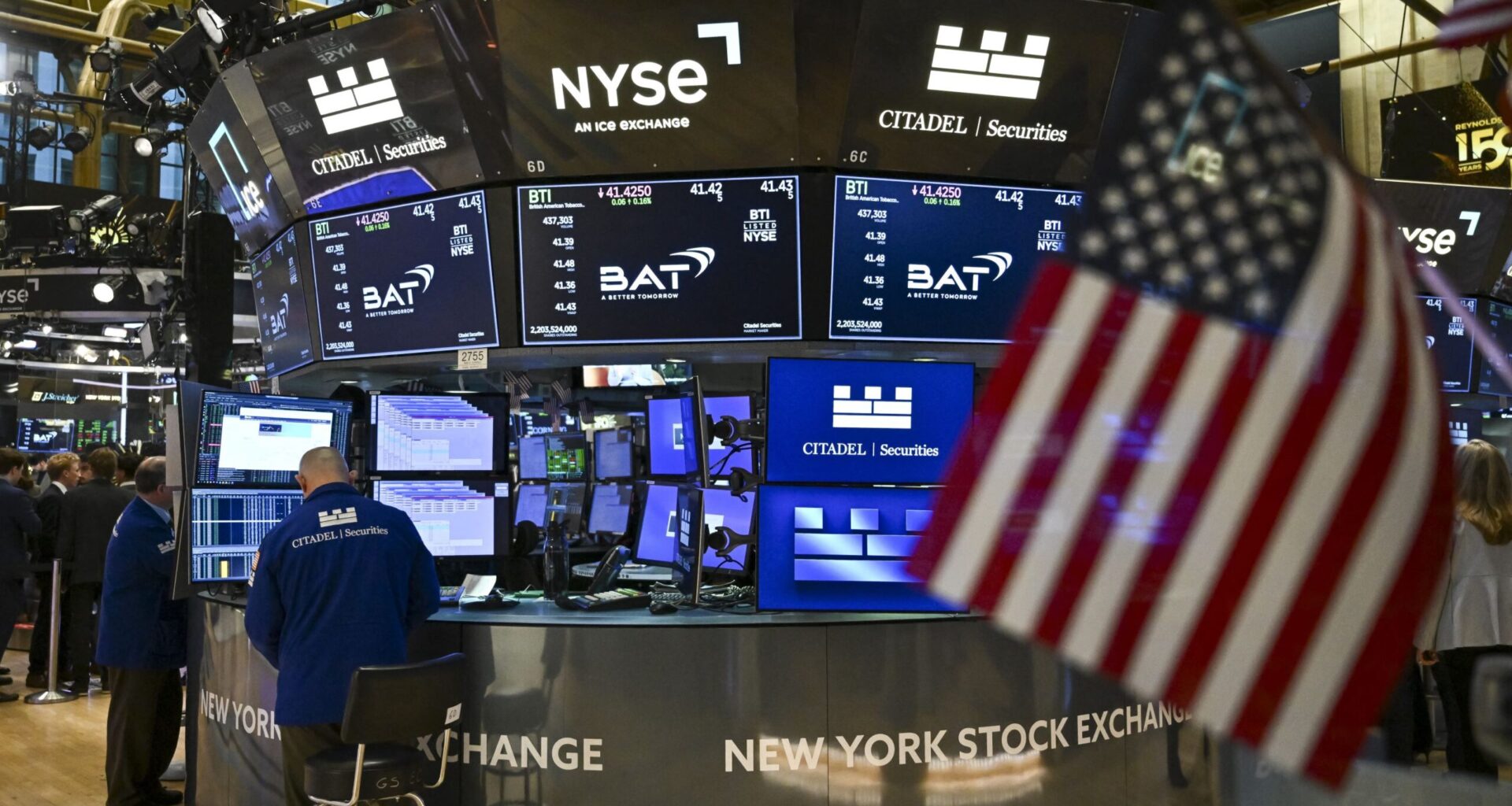
That has, as we’ve seen, sent the stock market tumbling — which alone is not enough to predict a recession. It is enough, though, to make the 60% of Americans who own stocks nervous. Because the stock market is not the economy, as we say, but it is real money.
Those losses can have serious impact. “You lost your down payment or your children lost their down payment for that home they really wanted,” said Beth Ann Bovino, chief economist at U.S. Bank.
Even if you’re not invested, the mood matters. Recent consumer confidence numbers show a sharp drop in expectations.
“Indeed, The Conference Board readings did drop into recession territory,” Bovino said.
Again, no one indicator signals a recession. There’s actually an organization that identifies them: The National Bureau of Economic Research defines a recession as a significant, widespread decline in economic activity lasting more than a few months.
But this so-called soft data is a warning that people are worried. Experts are looking for the signals beyond the hard data that usually has their focus.
Bovino’s version of this is taking a walk and keeping tabs on her town.
“If you start to see more signs of business closures or reduced hours. If you start to see a lot of ‘Sale’ signs,” she said.
It means people and businesses are hunkering down for whatever’s ahead.
There’s a lot happening in the world. Through it all, Marketplace is here for you.
You rely on Marketplace to break down the world’s events and tell you how it affects you in a fact-based, approachable way. We rely on your financial support to keep making that possible.
Your donation today powers the independent journalism that you rely on. For just $5/month, you can help sustain Marketplace so we can keep reporting on the things that matter to you.