Joseph Kennedy III has reminded us in his opinion piece (“N Ireland attests to the power of the transatlantic alliance”, March 17) that every US president since Ronald Reagan has appointed a special envoy to Northern Ireland to support peace and reconciliation, a role Kennedy himself undertook for President Joe Biden.
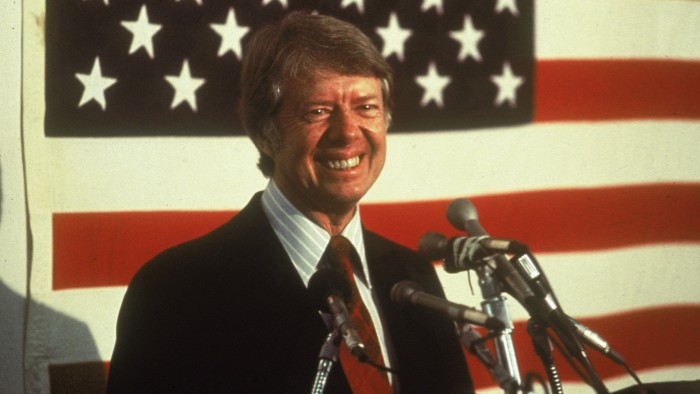
It was President Jimmy Carter, who inaugurated the vital role that US presidents have played with his statement in August 1977 calling for a power-sharing human rights solution for Northern Ireland and for job-creating US investment in the region, while urging Irish-Americans not to support violence in Ireland.
This was the result of a project in 1973 launched by John Hume, leader of the moderate nationalist Social Democratic and Labour party (SDLP) in Northern Ireland with Senator Edward Kennedy and backed by Senator Daniel Patrick Moynihan, Hugh Carey, governor of New York State, and most energetically led by US House Speaker Thomas P O’ Neill.
Hitherto the US had avoided taking any position on Northern Ireland, thus silently endorsing London’s unhappy handling of the crisis. Carter’s initiative was opposed by London, the US State Department, the CIA and the American foreign policy establishment.
Many years later Carter told the author Maurice Fitzpatrick: ‘Well, the state department was not in favour of what I did, as you may know. But I didn’t consult with them too thoroughly.”
I was serving as counsellor (political) at the Irish embassy in Washington and was directed by then Irish foreign minister Garret FitzGerald to negotiate the final text with Robert E Hunter, deputy national security adviser at the White House.
For me and, far more importantly for Hume and his supporters, President Carter’s initiative proved to be a key source of the whole peace process.
Michael Lillis
Foreign Policy Adviser to Taoiseach Garret FitzGerald, Dublin, Ireland