 CMRU
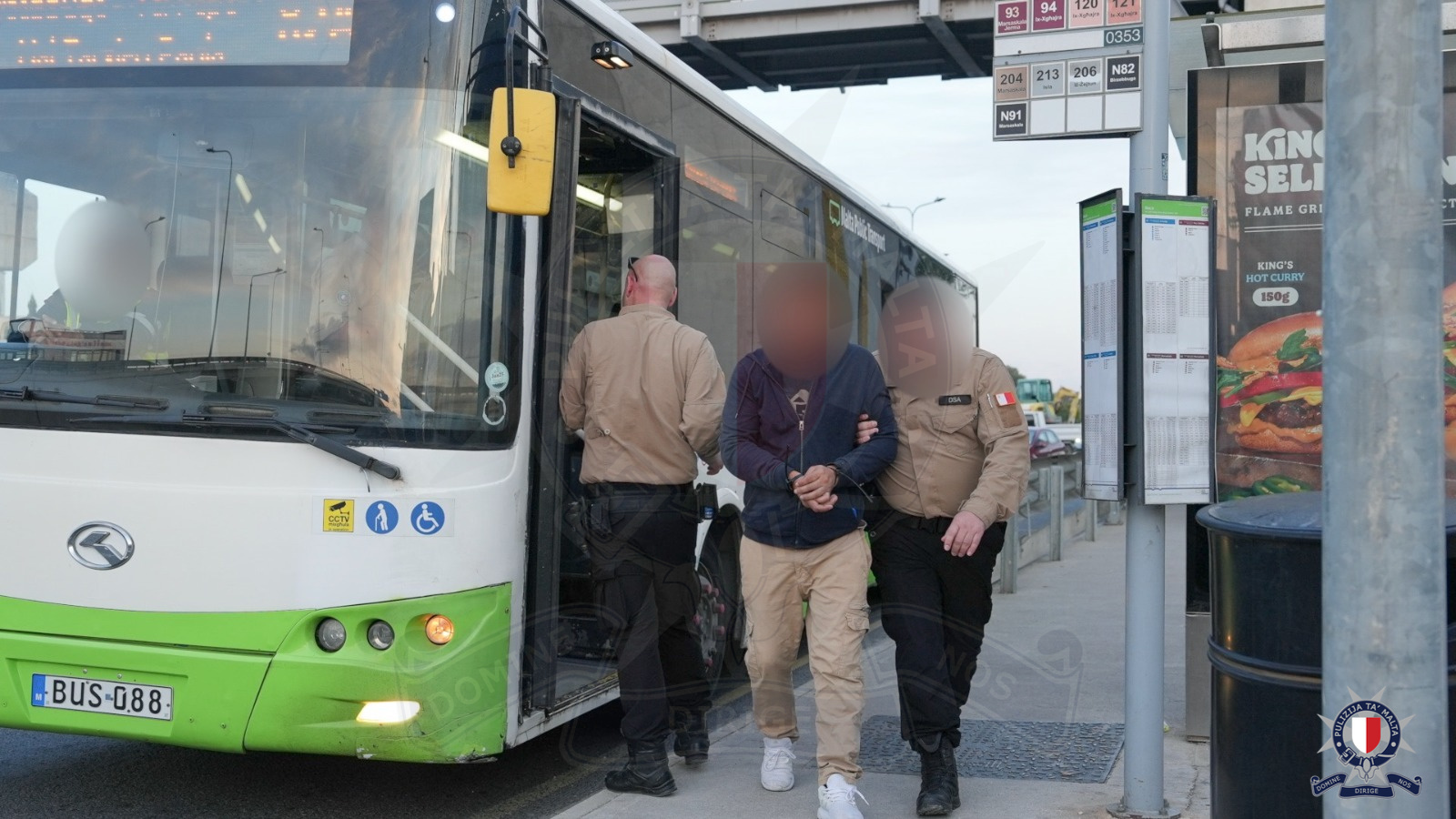
CMRUIn what has become a regular occurrence, the Malta Police Force issued a statement on Sunday boasting of their latest immigration enforcement operation, or systematic racial profiling disguised as routine law enforcement.
The announcement detailed the detention of 35 individuals allegedly residing and working in Malta without proper documentation, yet conspicuously omitted any mention of action against employers and landlords who potentially exploit these vulnerable individuals.
The weekend operation, conducted across public transport services and public spaces in Marsa, as well as during nighttime in Paceville, resulted in the detention of people from twelve nations; Syria, Afghanistan, Ghana, Brazil, Mali, Nepal, Pakistan, Nigeria, Niger, Gambia, Sudan and Côte d’Ivoire.
According to the police statement, all detainees have been issued deportation orders and are being held in detention centres pending their return to countries of origin or to European states where they possess residency rights.
Human rights advocates have consistently raised concerns about the procedural justice afforded to those detained in such operations. Questions regarding access to legal counsel and appeal processes suggest that migrants’ rights may be subordinated to political imperatives, specifically, projecting an image of toughness on immigration that critics argue panders to xenophobic sentiment.

This enforcement action occurs against a backdrop of controversial rhetoric from prime minister Robert Abela, who recently made alarming statements suggesting a willingness to circumvent human rights protections to facilitate deportations.
Abela’s assertion that “failed asylum seekers do not merit having their human rights strengthened” has drawn sharp criticism from human rights organisations, who have accused the Prime Minister of aligning with far-right European leadership rather than upholding fundamental human rights principles.
Particularly concerning is Abela’s apparent admiration for Italy’s contentious, and legally rejected, agreement to deport migrants to Albania, which Italian courts struck down for violating the principle of non-refoulement. This principle, a cornerstone of international refugee law, prohibits returning asylum seekers to places where they face persecution or danger.
The prime minister’s rhetoric presents asylum seekers as an existential threat despite statistical evidence to the contrary. While Malta only processed some 600 asylum applications in 2023, the government simultaneously issued over 33,000 residence permits to foreign workers in 2024 alone, with foreign nationals now constituting 28.1% of Malta’s population.
Moreover, Malta’s government has faced accusations of maintaining agreements with Libyan militias to prevent asylum seekers from departing North Africa, militias implicated in operating detention facilities where migrants reportedly face torture, slavery, and sexual violence. More troublingly, Malta has been directly implicated in illegal pushbacks to Libya, despite clear rulings from the European Court of Justice prohibiting such actions.
But Abela has now formalised his alignment with Europe’s nationalist bloc by joining Italy’s legal challenge before the ECJ, which seeks to weaken migrant protection laws. This positioning follows closed-door meetings with figures like Italian PM Giorgia Meloni and Hungarian PM Viktor Orbán.