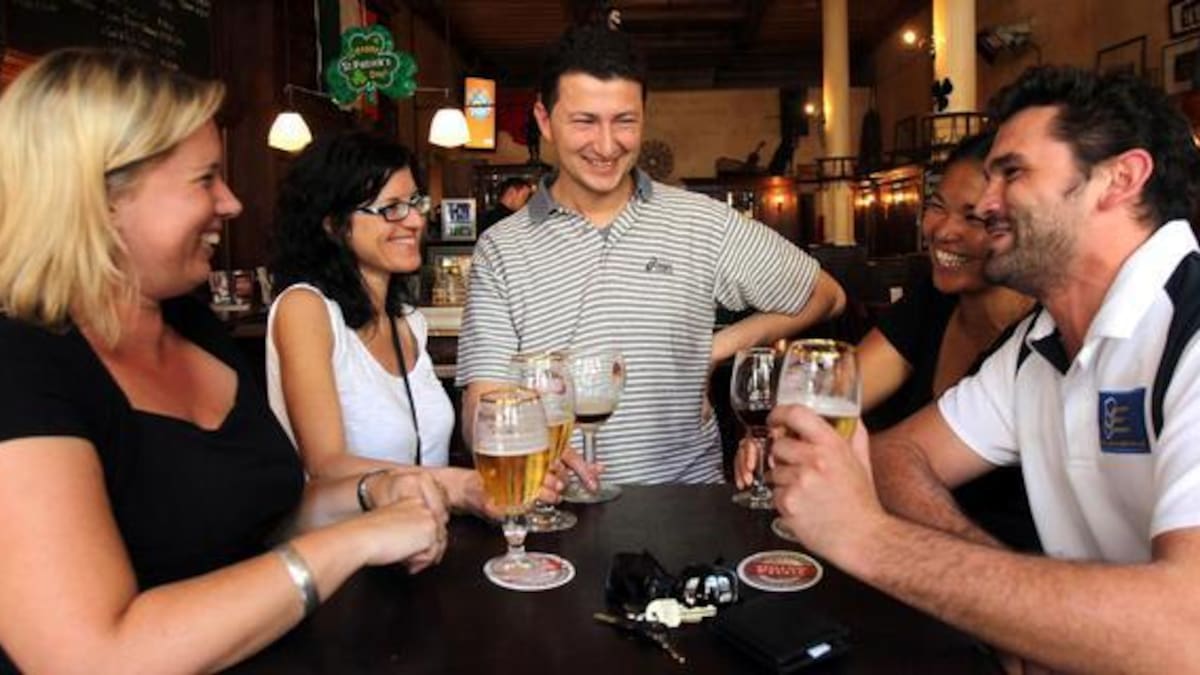
The rules are quite specific in the Sale and Supply of Alcohol Act 2012.
Licence holders cannot sell alcohol to people on their premises more than an hour before they start (or are due to start) eating a meal, or more than an hour after they finish.
Labour MP Kieran McAnulty reckons the “current law is confusing”.
“At Easter, for example, you can purchase alcohol at the pub down the road on Thursday, but not Friday unless you have a meal as well, then you can buy a pint or two again on Saturday, but not Sunday again unless you have a meal,” he said.
“It’s unfortunately hospitality workers who have to monitor this – which can sometimes be difficult – as well as doing their usual jobs.
“RSAs should be able to serve veterans the traditional rum and coffee on Anzac Day morning without having to apply for a special licence.
McAnulty has proposed repealing the sections of the legislation which enacts these rules, saying there is not “any good reason why the law is this way, except that it’s always been that way”.
“That’s not a very good reason to have a law,” the Labour MP said.
When his Member’s Bill went before Parliament for its first reading this month, it was treated as a conscience issue, meaning MPs voted individually the way they wished, as opposed to having to vote as a party bloc.
The groups for and against the legislation were both made up of a mixture of MPs from different political parties. For example, while some Labour and National MPs voted in support of the Bill, some of their colleagues voted against it.
It ultimately passed by 67 votes to 54, meaning the legislation is now before the Justice Select Committee and is open for public submissions until May 22.
The select committee has until October 9 to report back, before the bill goes to a second and third reading where it twice again needs to get majority support to pass into law.
Politicians’ arguments for and against
During the debate on the legislation, McAnulty addressed those concerned about the proposed changes based on their personal religious beliefs.
“Easter is a Christian holiday,” he said. “I am Catholic. I’m not a very good Catholic, but I’m still Catholic. I attend Mass at Easter and at Christmas.
“At no point in my religion, and, in fact, most, the vast majority of Christian religions, does it prohibit you from drinking alcohol on Good Friday or Easter Sunday.”
The Labour MP said he respected some people had views leading them not to consume alcohol on these days, “but what about those people that don’t hold those views?”.
McAnulty also appeared open to making a concession: “If members wish to send this to select committee and they have reservations about Christmas Day, I’m happy to negotiate”.
“We’ve got to be pragmatic. I have no problem with it, but when you look at all the other examples of attempts to change these rules that have failed in this Parliament, we’ve got to try and meet in the middle.”
Among McAnulty’s other arguments was that the current rules encourage stockpiling of alcohol before the Easter weekend and that restrictions may be off-putting to tourists.
Act MP Cameron Luxton supported the legislation, but spent much of his speech questioning why McAnulty hadn’t supported a previous effort by Act to make similar changes.
“An opportunity like this already did happen. There was an opportunity to make that change. Members across the House were given a conscience vote on the issue, and the honourable member [McAnulty] who’s just resumed his seat chose to vote against that change to Easter trading.”
As McAnulty pointed out, the Act legislation also made changes to restrictions on shops’ ability to trade on Good Friday and Easter Sunday, something Labour wasn’t in favour of as the party didn’t want to play with labour laws.
The Shop Trading Hours Act 1990 sets out that most stores must be closed on Anzac Day morning, Good Friday, Easter Sunday and Christmas Day. There is a list of exemptions to this, including restaurants, service stations, and pharmacies.
Luxton said this week he would be campaigning for McAnulty’s legislation, encouraging people to submit on it during the select committee period.
“I’ve been campaigning for Easter freedom for a while now, and finally, a bill to ditch the alcohol rules has passed first reading – but its future is uncertain,” he said.
During the debate, the Greens’ Teanau Tuiono said he wouldn’t be supporting McAnulty’s legislation as the public holidays were “times that we need to be able to put tools down”.
“These are times that we need to be able to relax. We need to actually make sure that we get that balance right. If we’re going to have a big tutū [brouhaha] around with the holidays then that, in my opinion, disrupts that balance.”
Tuiono believed if people could more freely purchase alcohol, “that will mean that more people will have to get rostered on”.
“That means that more people will have to come in to work as well. Everybody that has worked a low paid job knows that it’s very, very hard to turn the boss down.
“It’s very, very hard to turn the boss down when they come and have a chat to you saying that they want you to come in on a shift.”
One of McAnulty’s Labour colleagues, Lemauga Lydia Sosene, explained she was voting against the legislation to reflect what she said was the view of her local Māngerecommunity.
As well as saying that alcohol is a “really major problem”, Sosene said her community had some “very firm religious views” arising from various different faiths.
She said they asked why it was important to loosen the alcohol laws on a small number of days, when “you have over 360 days of the year when you can access alcohol”.
“We have a very diverse community, and they celebrate a lot, particularly on those religious days of Good Friday, Easter Sunday, and Christmas Day.
“For some families in my local community, those are very sacred times, given that AI [artificial intelligence] and technology is a 24/7 thing. Families look to those specific days on which to come together to celebrate the religious holidays and to be together on those days.”
National MP Tom Rutherford said he had “hesitation” about supporting the legislation beyond the select committee stage.
“Why I’m only supporting it to that stage at present is because alcohol is one of the biggest causes of harm in our communities across the country,” Rutherford said.
“I am in favour of the liberalisation around giving people the opportunity to have a choice. I do agree with the member when he talks about what happens on Anzac Day and how many of our RSAs across the country, if not all of them, have to get special permits and licences to allow them to operate and sell alcohol when you could just simply make a small legislative change like this Bill’s doing.”
Rutherford said he was interested in hearing the thoughts of the public at the select committee stage of the Bill’s proceedings.
Another to speak against the legislation was New Zealand First MP Tanya Unkovich. She said non-government organisations she had spoken with didn’t believe there needed to be another outlet or avenue for people to access alcohol.
“During these times – holidays, Easter, Christmas – are times when they notice the mental health issues really do accelerate and it’s the loneliness that kicks in,” she said.
“It’s a reminder that maybe they don’t have a family. It’s many things that trigger people. They have seen that to be able to have more access to alcohol does not serve them or the community. So I’m listening to that issue.”
Unkovich said she was raised in “a very religious life” and was involved in religious communities.
“In my communities, people who I speak to about this, they say, ‘No, it’s not something we want.’ It’s not that we don’t want it, but we want to do everything we can to preserve our family unit and this is one way that we see we can maintain that and not let anything else get in the way.”
Jamie Ensor is a political reporter in the NZ Herald Press Gallery team based at Parliament. He was previously a TV reporter and digital producer in the Newshub press gallery office.