Two Northeast Florida Congressmen are teaming up on the Maritime Fuel Tax Parity Act (MFTPA).
The bill aims to exempt alternative fuels, including liquefied natural gas (LNG), for marine vessels from paying Federal Highway Trust Fund excise taxes.
“Expanding the use of alternative fuels like LNG will strengthen Jacksonville’s maritime industry and allow maritime vessels to use LNG as a fuel source without being penalized by an onerous tax and compliance burden,” said Rep. Aaron Bean. “I thank Congressman John Rutherford for his leadership on this bill, which will modernize our tax code and bring marine fuels into the 21st century.”
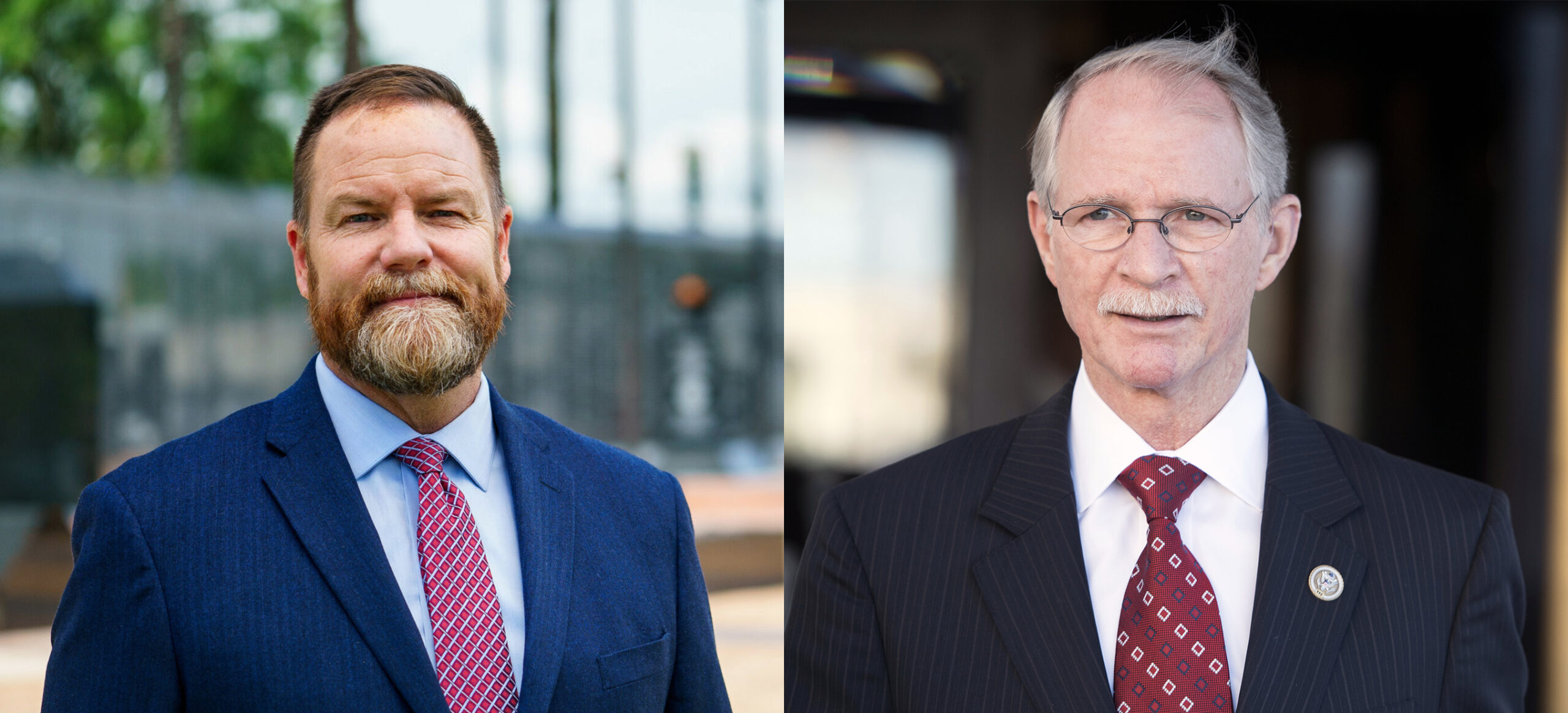 Aaron Bean and John Rutherford introduce Maritime Fuel Tax Parity Act, seeking alternative fuel fairness.
“We should be encouraging, not penalizing, our maritime industry as they find alternative and innovative ways to power American vessels,” said Rutherford. “Jacksonville’s maritime industry leaders made Northeast Florida home to the world’s very first liquified natural gas-powered containership. As the Trump administration unleashes American energy and innovation, I am proud to join a bipartisan coalition to introduce this bill that would afford the U.S. maritime industry the freedom and parity to explore new energy opportunities to fuel American shipping and trade.”
Power play
Essential power and water workers are closer to enhanced protections from physical attack, after legislation tightening penalties against that act has cleared its final Senate Committee.
Fiscal Policy was the third and final stop for SB 1386, which would deem utility workers to be as deserving of protection as an “officer, firefighter, emergency medical care provider, hospital personnel, railroad special officer, traffic accident investigation officer, traffic infraction enforcement officer, inspector, analyst, operator, law enforcement explorer, parking enforcement specialist, public transit employee or agent or security officer.”
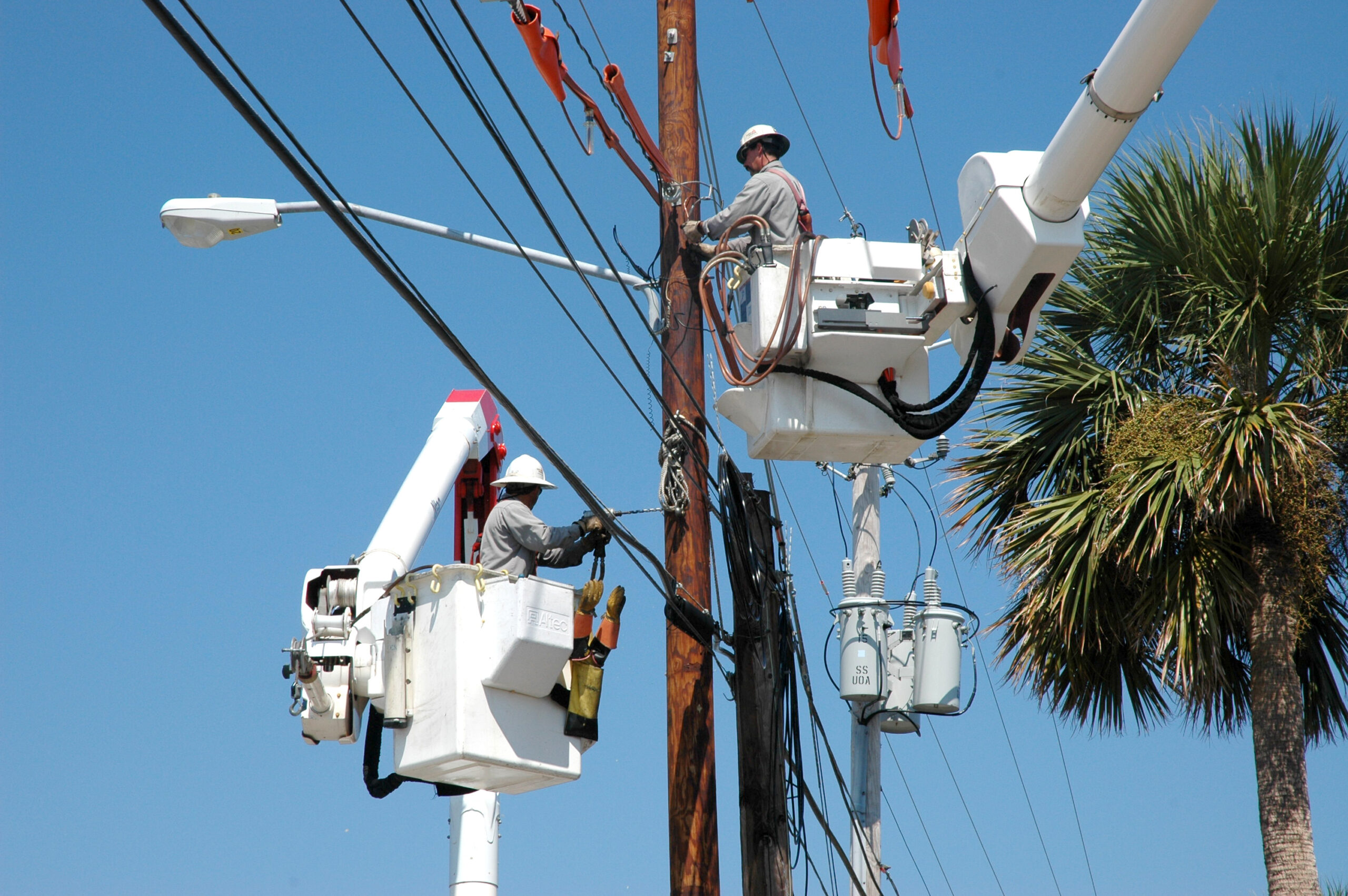 Essential linemen: New legislation advances, enhancing penalties and protections against physical attacks on utility workers.
During his presentation of the proposal, Sen. Tom Leek said the bill follows up on 2024 legislation to protect “critical infrastructure,” noting that assaults on the people who maintain and repair it are also a challenge.
Under the bill, simple assault on a lineman would be reclassified as a first-degree misdemeanor. It’s now a second-degree offense.
Battery against a utility worker is currently a first-degree misdemeanor. Under this bill, it would be a third-degree felony, carrying a prison sentence of at least six months.
Those guilty of aggravated assault would spend three years in prison, and five years would be the penalty for aggravated battery.
The House version of this proposal is on the Second Reading Calendar, meaning it is likely to end up on Gov. Ron DeSantis’ desk.
The Florida Municipal Electric Association, the Florida Municipal Natural Gas Association, TECO, the Orlando Utilities Commission, Florida Public Utilities Company, Florida Natural Gas Association, and Associated Industries of Florida all support the bill.

Gotta have faith
Republican Sen. Clay Yarborough’s measure (SB 820) to codify the Office of Faith and Community in the executive branch is ready for the floor.
Yarborough told the Senate Appropriations Committee that the initiative follows up on Gov. Ron DeSantis’ 2019 launch of “the Governor’s Faith and Community Initiative” to support faith and community organizations serving vulnerable Floridians.
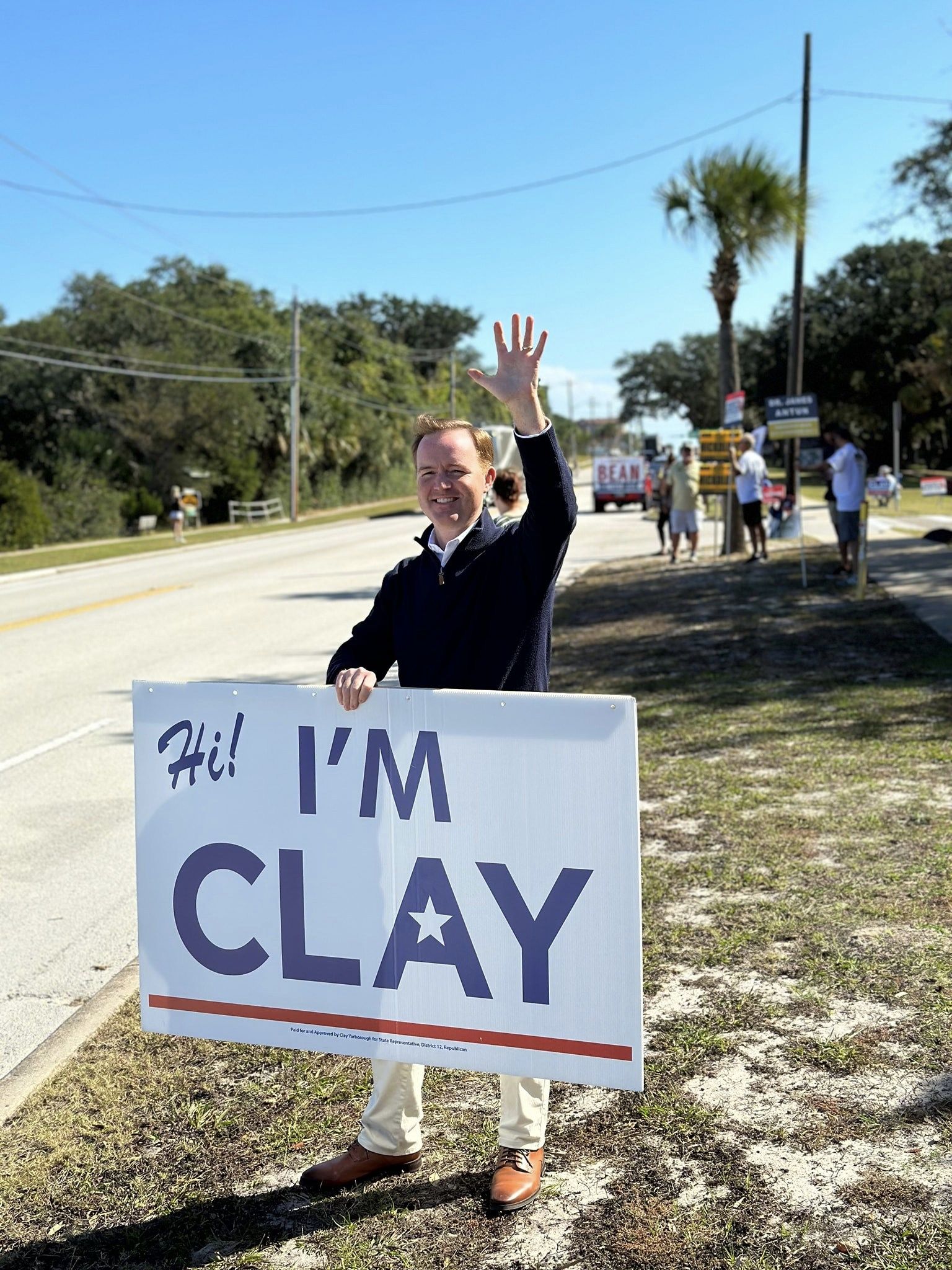 Clay Yarborough’s bill (SB 820), establishing the Office of Faith and Community, is ready for a Senate floor vote.
“This included the administrative establishment of the Office of Faith and Community within the EOG and assigning resources and staff to assist with administrative and programmatic implementation of the initiative,” the Jacksonville Republican said.
The goal of the bill, according to Yarborough, is to “codify the work of the office by defining the purpose of the office of Faith and Community, detailing the establishment of the office, specifying the responsibilities of the Liaison for Faith and Community” and to show “performance and priority of it.”
The office would be headed by “the liaison for Faith and Community or a director appointed by the liaison who reports to the liaison,” according to the bill language.
The Governor would appoint the director.
The goal of the office would be “to better connect with, communicate with, and provide resources to this state’s faith-based and community-based organizations” and to “better serve the most vulnerable persons of this state through more robust and connected Faith and Community networks in coordination with state resources.”
The bill contemplates several ways to make this happen, including advocating for faith- or community-based agencies; establishing and operating the “Florida Faith and Community Phone Line” for those agencies to connect with the Governor’s Office; setting up “meaningful lines of communication” between these groups and the Governor’s Office; and using technology to develop “resources for enhanced connection between civil service systems, state agencies, and faith-based and community-based organizations.”
Out of the picture
Sorry, shutterbugs.
Legislation that would have allowed photography in polling places under certain circumstances is dead for 2025, despite being sponsored by both parties.
SB 1170/HB 109, sponsored in their respective legislative bodies by Sen. Yarborough and Rep. Kim Daniels, was temporarily postponed in the Senate Ethics and Elections Committee this week.
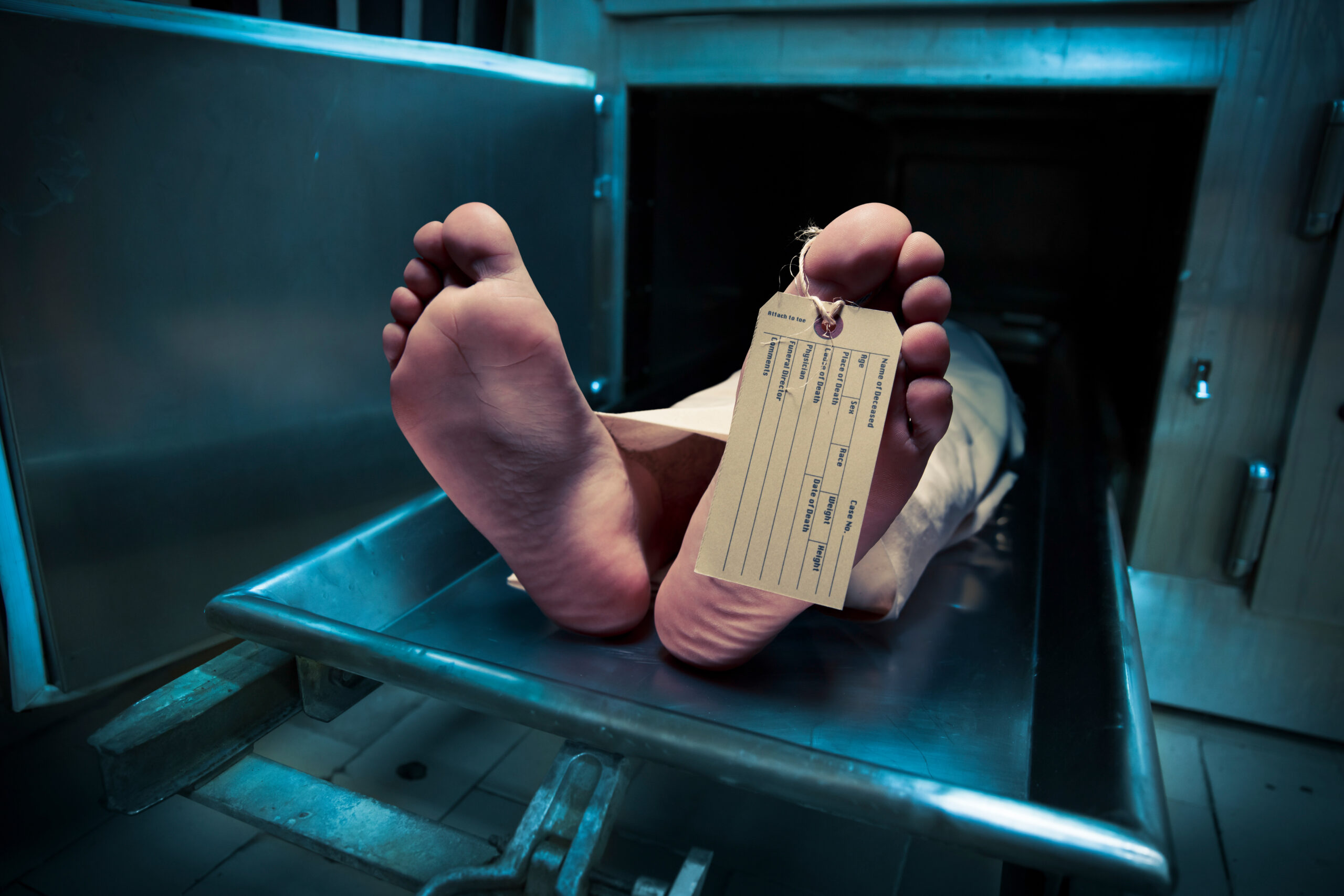 Polling place photography bill (SB 1170/HB 109) dies in Senate committee despite bipartisan sponsorship.
That would have been the Senate version’s first Committee hearing of three to which it was assigned, but it was not heard ultimately because the House version had no path, Yarborough shared on Saturday.
So, the TP is really a PP: a permanent postponement, at least for 2025.
The bill would have allowed “members of the public to photograph in a polling room or early voting area before the polls open and after the polls close when voting has ended,” while banning “the mounting of any camera or recording device that remains inside a polling room or early voting area during the time any voter is voting.”

Sign from God
How will God know Florida students trust him if people can’t see the sign?
That’s one question potentially answered by HB 1009, which refines previous language that “In God We Trust” must be displayed in a “conspicuous place.”
If the bill advanced Thursday by the Education and Employment Committee passes, the slogan must be in “a clearly visible location and public area of the school which is readily accessible to and widely used by students, and in a clearly visible location and public area of each building used by the district School Board.”
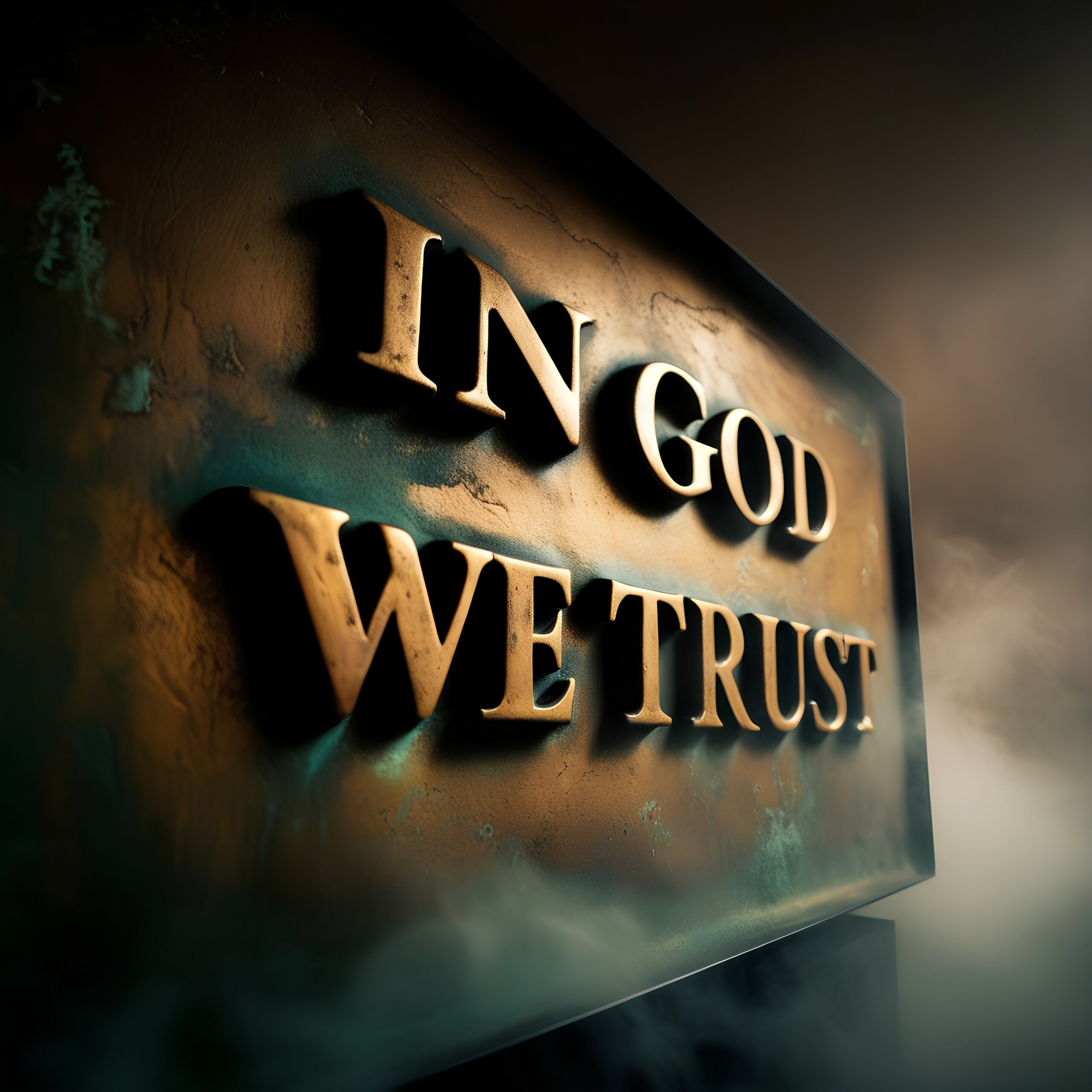 ‘In God We Trust’: Bill HB 1009 mandates more prominent display in visible, accessible Florida school areas.
Rep. Daniels, a Democratic preacher from Jacksonville who has championed the display of Florida’s theistic state motto, noted it’s on our “flag and our money” during her presentation of the bill.
Democratic Rep. Yvonne Hinson cautioned that in some school districts, people don’t believe in God or believe in other Gods.
Daniels countered that the bill isn’t about “religion,” but about people “knowing their rights.”
Republicans Rep. Kiyan Michael, also from Duval County, lauded Daniels’ “strength and courage for bringing the bill forward.”
The bill also requires the Department of Education to “ensure” that people are aware of laws protecting voluntary religious expression in schools.
Kathleen Murray, state education director of Citizens Defending Freedom, praised the bill for defending “foundational rights.”
“Religious freedom belongs in the public square and that includes the classroom,” she added.
Christian Family Coalition of Florida and Moms for Liberty like the legislation. The Florida Policy Institute and the American Civil Liberties Union oppose the bill.
The companion bill did not get a Senate Committee hearing, narrowing its path, but the House is moving it ahead.
DOGE dollars
The Jacksonville City Council’s DOGE Committee thinks $17 million can be swept from capital projects.
“This is a clear example of what happens when we take a closer look at how our tax dollars are being managed,” said City Council member and Chair, Ron Salem. “Through smart governance and oversight, our City Council Committee has identified real dollars that can now be put to better use for the people of Jacksonville.”
 Jacksonville’s DOGE Committee identifies $17 million from capital projects for potential reallocation and smarter spending.
The next move: figuring out how to reallocate the money.
“This is about more than just numbers; it’s about public trust,” Salem continued. “Our residents deserve to know that every dollar spent by the city is being spent wisely and effectively.”
If you have suggestions on how to allocate this money, please contact the Committee at [email protected].
The Mayor’s Office has a suggestion of its own, meanwhile, regarding the ongoing Council probe.
“The Deegan administration has been working for over a year and a half to close out dozens of completed capital projects that are still on the books. These significant cost savings have already been realized. Once again, the DOGE Committee is playing catch-up, engaging in a performative and duplicative action while Mayor Deegan has been leading since Day One on government efficiency.”
DOGE doubts
The Spinnaker, a student paper for the University of North Florida, is pushing back against the Governor’s DOGE efforts that are an “encroaching investigation into the university’s finances,” claiming they are an attempt to compensate for his failure in last year’s presidential campaign.
“It certainly feels like DeSantis wants to seem cool after an overwhelming rejection of his presidential campaign. And for the Governor, using domineering, impersonal threats, styled after the Trump administration, is a last-ditch effort to both exert control over knowledge and try to regain public favor,” an op-ed asserts.
The opinion piece notes that two letters sent to President Moez Limayem were not personalized, but addressed to “university president,” a tactic the writer sees as a way to “make everyone feel just a little bit less important” while requesting an “overwhelming amount of records.”
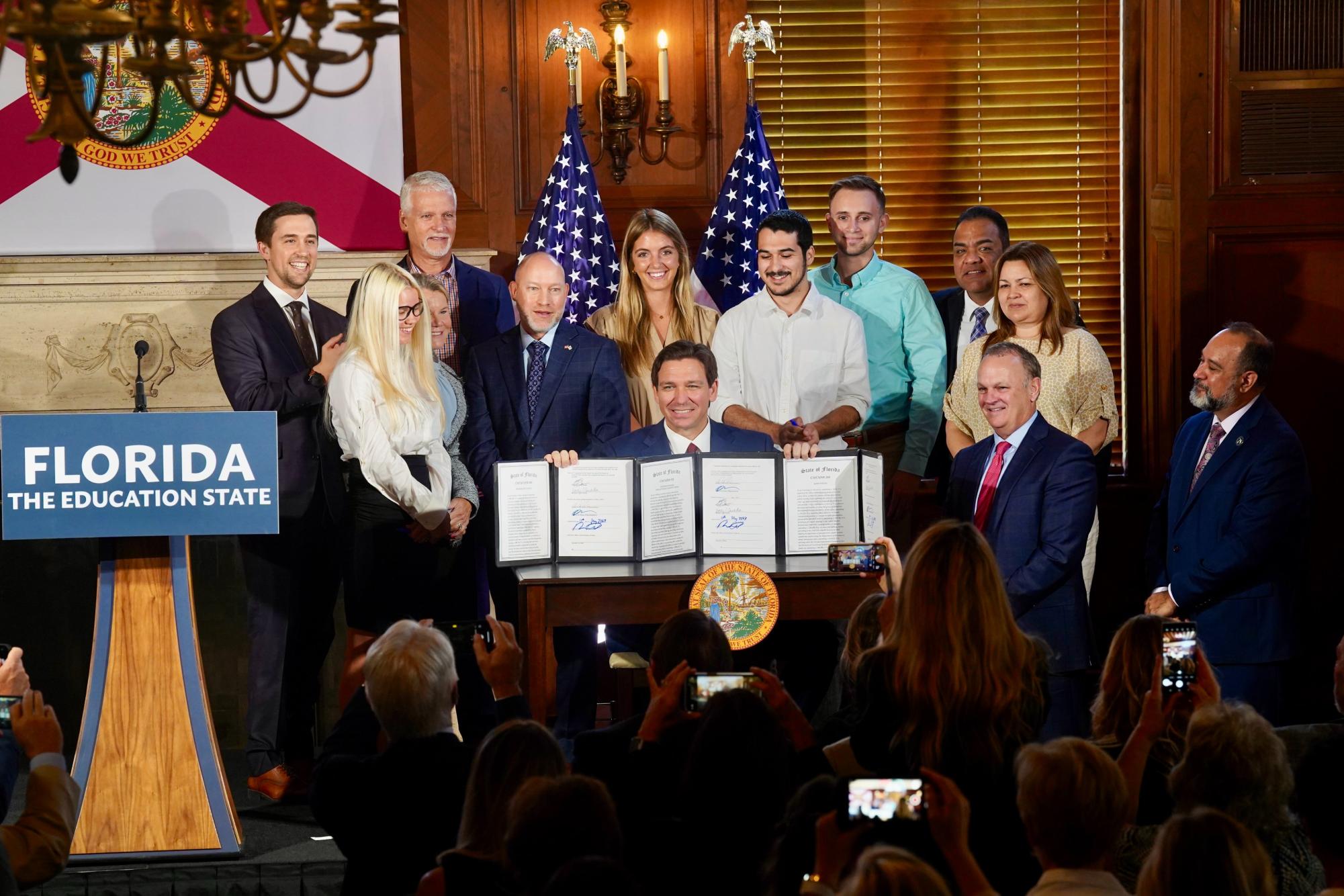 UNF student paper slams DeSantis’ university finance probe as a post-campaign intimidation and control tactic.
In addition to DOGE swooping in for “site visits” to judge compliance with the executive order that began the state effort, the letter to university staff said the team will be “assessing your publicly available information over the coming weeks and months” and “will partner with the Board of Governors and Florida College System to request additional necessary information from each institution.”
This includes institutional budgets and subfunds, the “structure, staffing, budgets and functions of administrative offices and administrator roles,” along with “facility usage reports; Course codes, descriptions and syllabi; Full detail of all centers established on campus” and the “closure and dissolution of DEI programs and activities, as required by law.”
DeSantis told the Board of Governors last month that DOGE will probe some familiar topics, including diversity, equity and inclusion initiatives that theoretically have been ferreted out, courses deemed to be too ideological and administrative bloat.
“But as we’ve seen, you know, you kind of burrow in and rename, do what you want. And there is some sense in some quarters that whatever the law in the state of Florida is, it just is not obligatory on them and they can kind of do their own little fiefdom. That’s not going to fly here.”
Autonomous action
The Jacksonville Transportation Authority (JTA) officially opened its new Autonomous Innovation Center (AIC) this month.
JTA officials formally cut the ribbon on the center at 650 W. Bay Street in the LaVilla area of downtown on April 17. The facility is also the hub for the JTA’s new autonomous vehicle called NAVI, which stands for Neighborhood Autonomous Vehicle Innovation.
The autonomous vehicle is circulating in downtown and urban core neighborhoods on a 3.5-mile route. The vehicle is designed to connect residential areas to central business districts and the sports and entertainment districts east of downtown near EverBank Field, where the Jacksonville Jaguars play.
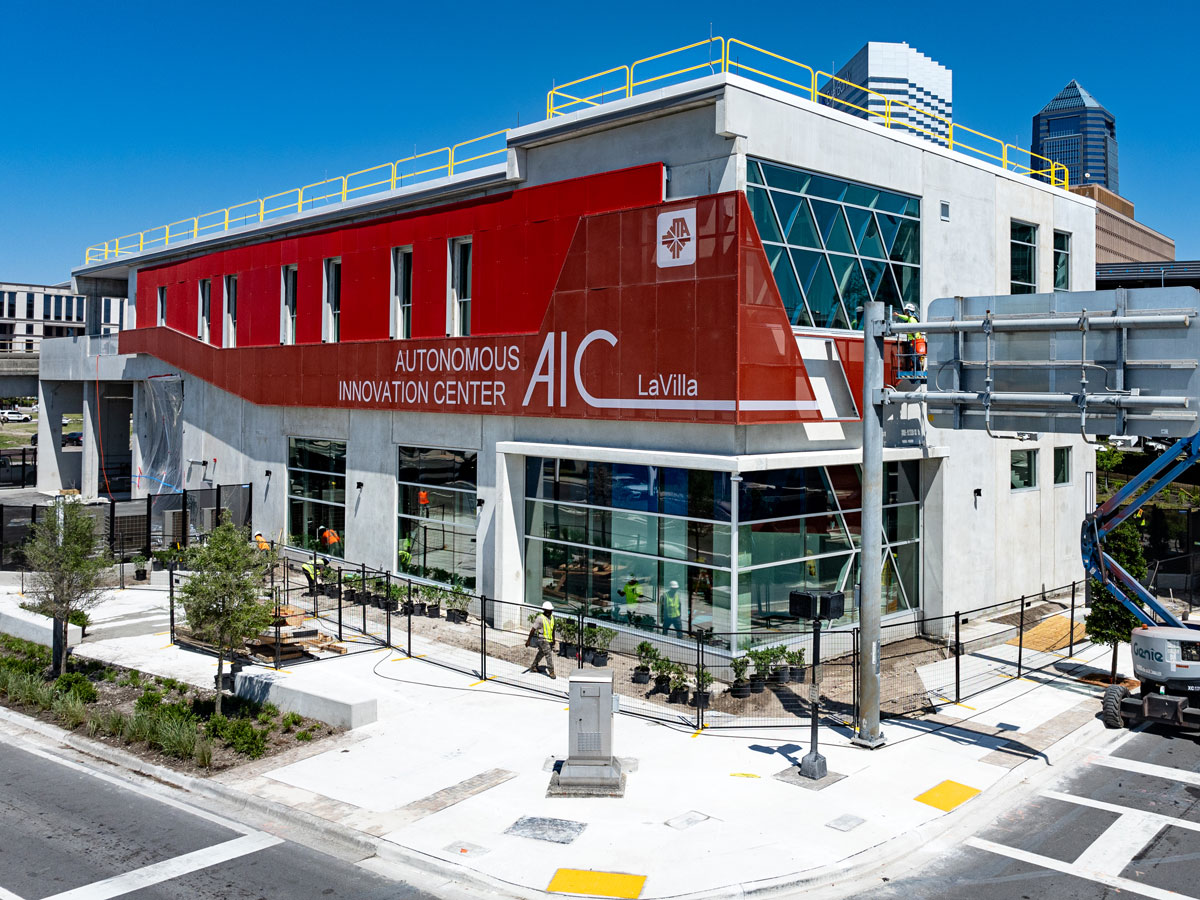 JTA opens Autonomous Innovation Center, launching NAVI autonomous vehicles connecting downtown Jacksonville neighborhoods and districts.
“The JTA’s AV program will be the first-of-its-kind, fully autonomous public transportation system network in the United States,” said JTA CEO Nat Ford. “The opening of the AIC is one of the final milestones before introducing NAVI to our transportation system. This state-of-the-art facility lays a strong foundation for the operation of the AV fleet and supports the vision of a better-connected, vibrant downtown Jacksonville.”
The two-story hub for the AV housing covers approximately 18,800 square feet and features areas for maintenance crews and parking for electrically charged vehicles. The facility is 100% powered by electricity from 129 rooftop solar panels located in the area of Jefferson Street, near the entrance and on ramps to the Acosta Bridge, as well as ramps leading to Riverside Avenue.
Housing discussion
The Jacksonville Human Rights Commission is getting ready for Saturday’s “Housing is a human right” symposium.
Doors open at 9:30 a.m. at the Main Library, and the event runs from 10 a.m. to 2 p.m.

“There will be plenary panel sessions with local housing experts that address challenges, solutions and resources applicable for attendees, lunch will be provided, and afternoon workshops will showcase some of the incredible work happening in Jacksonville, FL,” the event invite promises.
Human rights come at a dear cost for many. According to Jacksonville Area Legal Aid, more than half of all renters are cost-burdened, meaning they spend more than 30% of their income servicing a landlord’s asset.
Homeless help
If you’re in Duval County and you’re seeing fewer unhoused people on the streets, there’s a reason why.
Jacksonville City Council Finance Chair Salem says that the population has been cut in half.
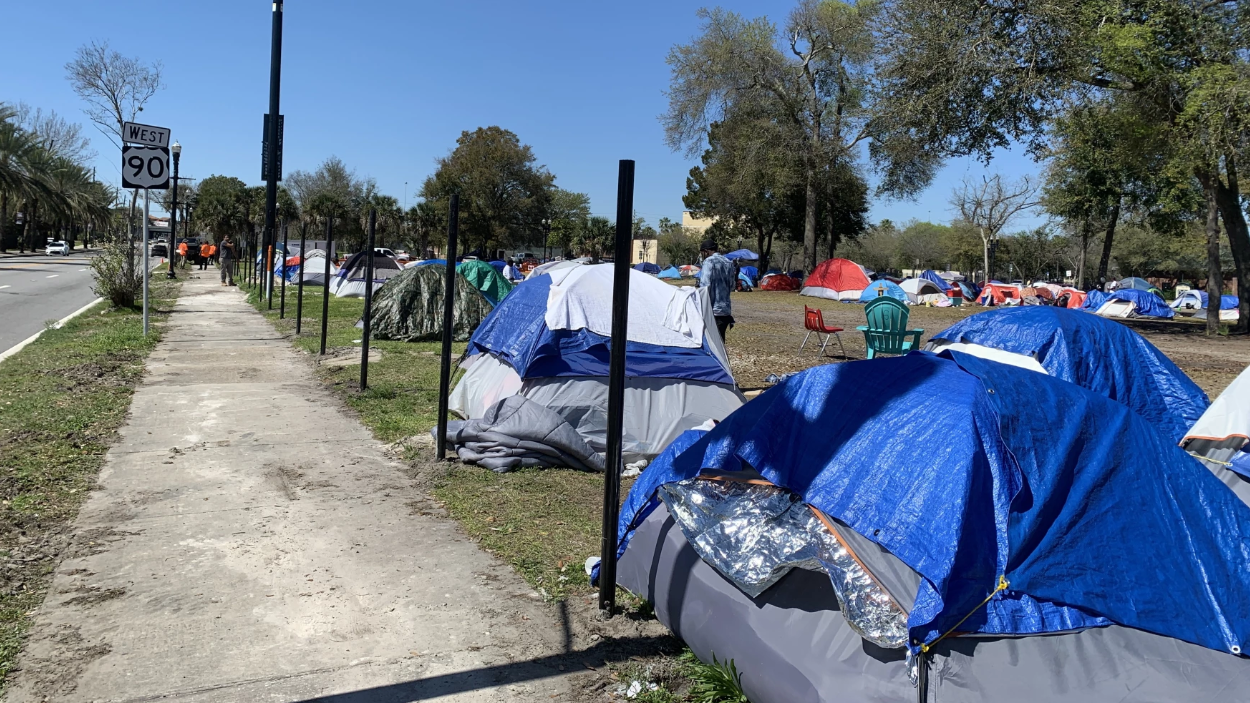 Jacksonville’s homeless population sees a sharp decline.
“In the past year, the number of sheltered was reduced from 779 persons in 2024 to 719 persons in 2025. The number of unsheltered, those sleeping in parks, on sidewalks or vacant buildings in 2024 was 566 persons and only 290 persons in 2025, a reduction of 49%,” a press release claims.
“This is the result of what happens when we work toward real solutions. The City Council focused its efforts on homelessness, developed and funded a creative solution that has translated into hundreds of lives being changed. Our goal was not just to reduce numbers, but to prove that the programs we are investing in are working,” Salem says.
Mayor Donna Deegan said that “the 2025 Point in Time Count is encouraging.”
“It shows that we’re on the right track since the city developed a strategic plan, launched the JFRD PATH outreach team and expanded available shelter beds. It’s important to note that this one data point is also a snapshot in time. We know there is more to do. We must continue the work with our community partners to move people into housing and grow the forward progress.”
State law has compelled cities like Jacksonville to address the issue. HB 1365 bans counties and municipalities from permitting public sleeping or public camping on public property without explicit permission.
Unemployment holds
Florida’s monthly unemployment rate has been increasing slightly, rising to 3.5% in January and then ticking up to 3.6% in February. That figure remained the same in March.
The state’s unemployment rate had held steady at 3.4% for most of the back half of 2024. The Florida rate was as low as 3.2% last year, with that mark last seen in March 2024.
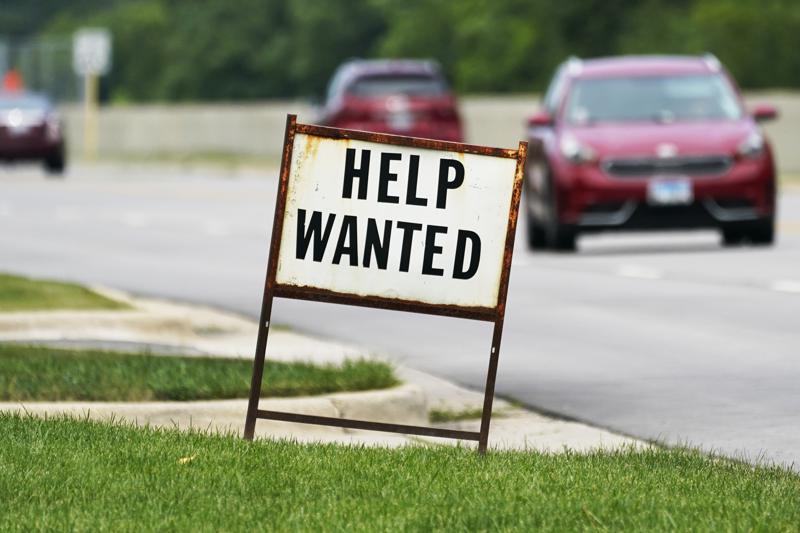 Florida unemployment rate ticked up slightly, reaching 3.6% in February and March 2025.
Florida’s unemployment rate remains lower than the national rate, which ticked up to 4.2% in March. It’s the 53rd month in a row the Sunshine State has had a lower rate than the national figure.
FloridaCommerce reported there were 403,000 jobless Floridians out of a labor force of 11.198 million in March.
Monroe County had the lowest unemployment rate in the state at 2.4%, followed closely by Miami-Dade at 2.8%.
Fort Lauderdale recorded a 3.3% unemployment rate and Orlando and West Palm Beach each had a 3.4% jobless rate in March.
Among larger metropolitan areas, Fort Myers and Pensacola saw a 3.7% jobless rate last month. Jacksonville was just behind those areas at 3.6%, and Tampa was at 3.5%.
All the local metro area unemployment rates increased year-to-year when compared to March 2024.
Globe trotters need apply
U.S. Customs and Border Protection is hosting a seven-day Global Entry Enrollment Event in Jacksonville.
The event is designed for Global Entry applicants in North Florida, allowing them to complete the local enrollment process. The event will run from June 10 to June 13 and from June 16 to June 18 from 8 a.m. to 6 p.m. on all those dates. The process takes place at JAXPORT Cruise Terminal, located at 9810 August Drive in Jacksonville.
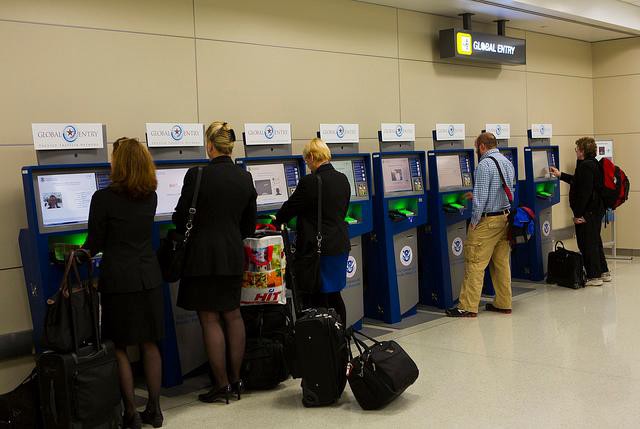 Jacksonville hosts Global Entry enrollment event at JAXPORT, June 10-13 & 16-18, for local applicants.
The events are designed to augment the Global Entry program, which already has about 10 million members. Global Entry is a sped-up process for entering and passing through U.S. Customs at airports and seaports. It helps travelers get through customs searches and processing.
Applicants undergo intense background checks and in-person interviews. Once approved for Global Entry, those residents get the privileges of the Transportation Security Administration (TSA) program.
Manufacturing slowdown
Northeast Florida’s manufacturing sector appears to have softened in March, as key elements are prompting concern.
The University of North Florida (UNF) Coggin College of Business’s monthly Jacksonville Economic Monitoring Survey showed contraction in several indicators last month. Manufacturers on the First Coast saw a contraction in new orders, backlogs of work, finished goods inventory, and employment in March compared to February.
“In March, Jacksonville’s Purchasing Managers’ Index (PMI) registered 49, matching the national PMI figure,” said Albert Loh, UNF Coggin College Interim Dean, who oversees the UNF monthly manufacturing report.
“A PMI below 50 signals contraction, indicating that the local manufacturing sector, like the nation’s, is facing softening conditions. This reading reflects a marginal decline in overall business activity, ending the modest expansion seen in prior months.”
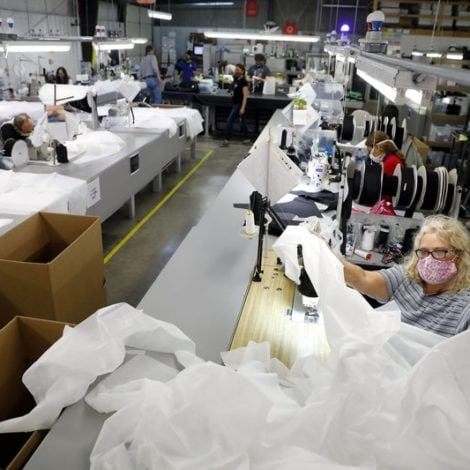 UNF survey shows manufacturing concerns for March.
Loh acknowledged that the notable drop in new orders among First Coast manufacturers does not bode well for the coming weeks and months.
“This means more local firms reported a decline in new orders than those reporting increases, which is often an early warning sign for future slowdowns in production, hiring and revenue,” Loh said in the report.
“Since new orders fuel upcoming output, a reading below 50 suggests that companies may start scaling back operations if this trend continues, especially in manufacturing sectors. For Jacksonville, a city with growing logistics and manufacturing activity, sustained declines in new orders could ripple through supply chains and reduce demand for transportation, warehousing and other support services.”
Tourism time for St. Johns
St. Johns County is expanding efforts to draw more visitors to the tourism-rich coastal county along the Atlantic Ocean.
Tourism & Cultural Development Director Tera Meeks is aligning the county’s efforts with multiple community elements to enhance community, cultural and destination development programming.
“These efforts reflect our continued dedication to strengthening tourism, enhancing neighborhood development, and preserving the rich history and identity of our community,” said Joy Andrews, St. Johns County Administrator. “We are grateful for the leadership of Director Tera Meeks and the expertise of her team in delivering programs that reflect the values and aspirations of our residents.”
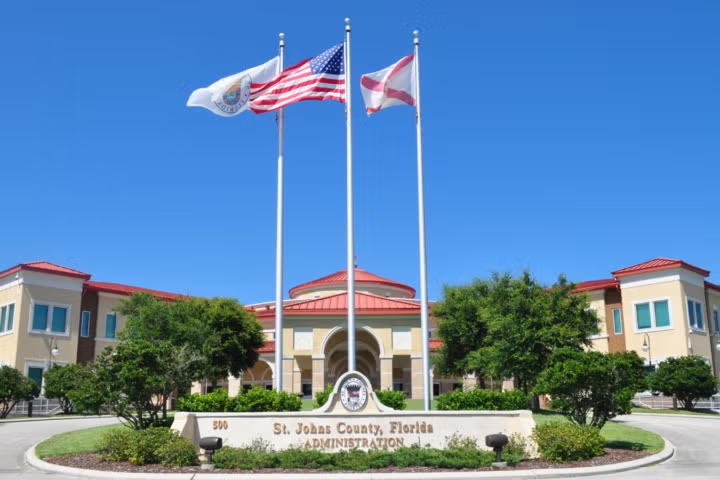 St. Johns County government administration building in St. Augustine. Image via St. Johns County.
Dena Masters, Tourist Development Council Administrator, will be part of the collaborative effort that will feature tourist development tax administration, grants program management, advisory board coordination and visitor services oversight.
“Dena’s professionalism, integrity and deep knowledge of the tourism landscape are vital assets to St. Johns County,” said Andrews. “We are fortunate to have her leading programs that strengthen community connection, celebrate culture and support sustainable economic growth.”
Tweet, tweet
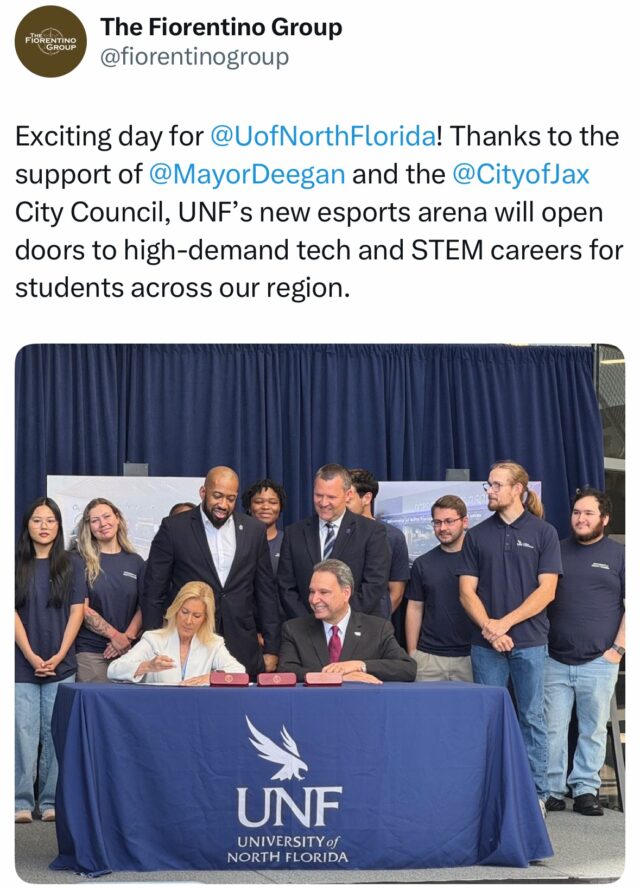
Science!
On Sunday, Flagler College kicks off Science Week 2025, headlined by a free keynote address from First Coast News Chief Meteorologist Tim Deegan.
“Forecasting: Communicating Weather in a Changing World” begins at 4 p.m. at the Flagler College Ringhaver Student Center. This presentation offers a unique chance to hear Deegan reflect on his 42-year career, navigating the complexities of weather communication amid global changes.
 Tim Deegan keynotes Flagler College Science Week, discussing 42 years of forecasting weather changes.
A public meet-and-greet reception will follow his presentation.
The weeklong celebration offers a diverse lineup, including an ecological boat tour, community nature cleanups, student research showcases and an interactive “Science & Spirits” tasting event. The festivities conclude with a capstone symposium and an awards ceremony that recognize student achievements.
Organizers urge interested community members and students to register promptly for all events, including the complimentary keynote. Full event details, schedules, and registration links are available now on the Flagler College website at flagler.edu/scienceweek.
Draft options
This week’s NFL draft is one of the most intriguing for the Jacksonville Jaguars because of what we’ll learn about the team’s new direction as a result of the selections.
Since he was hired as the team’s general manager, James Gladstone has consistently talked about wanting to add players who are “intangibly rich” to the roster. Since Gladstone’s introduction on Feb. 21, we have learned a bit more about what that phrase means.
In the pre-draft news conference last week, Gladstone talked about wanting to add physical and mental toughness to the roster. Those are clearly two of the intangibles he values.
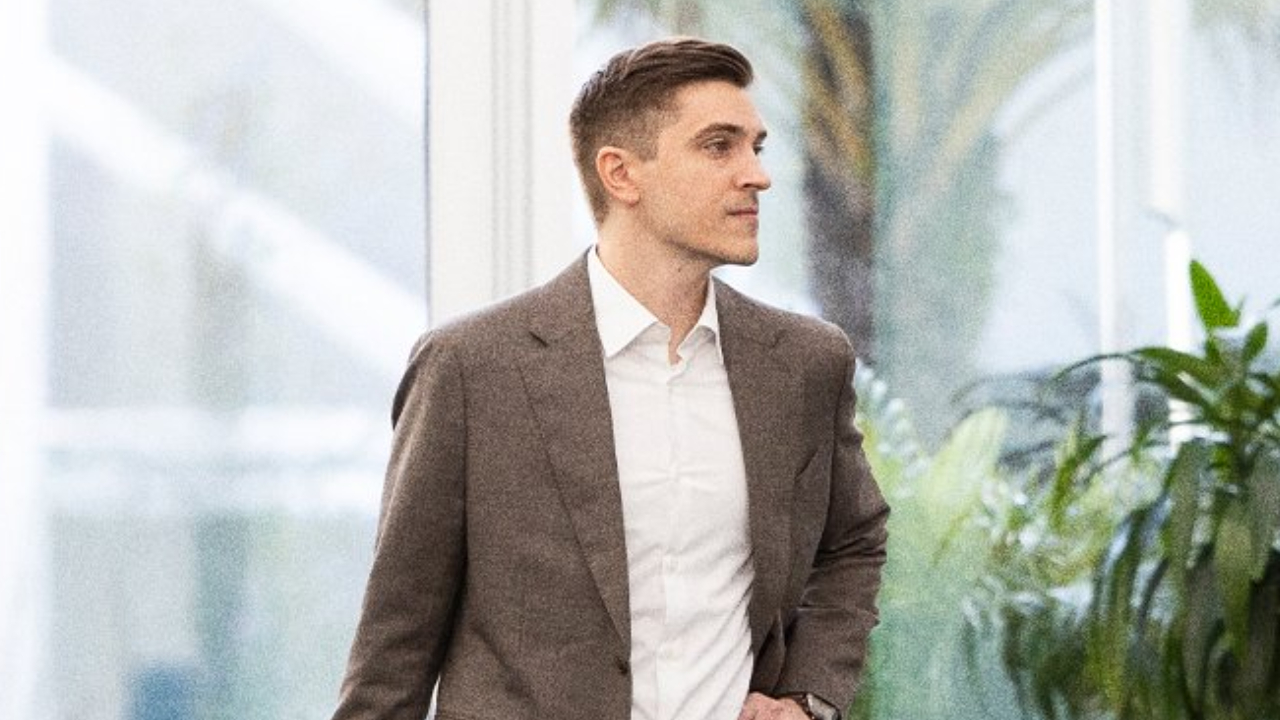 James Gladstone seeks ‘intangibly rich’ players, emphasizing physical and mental toughness in NFL Draft.
But there are others. How much does leadership matter to him? Or self-motivated players? Or players who grew up around the game? We’ll know more as the draft—Gladstone’s first as a general manager and Liam Coen’s first as a head coach — unfolds, starting with Thursday’s first round.
There seem to be three scenarios most likely to occur as the Jaguars await their selection at No. 5.
First, it is expected that three of the four picks ahead of the Jaguars will include Miami quarterback Cam Ward, Colorado cornerback/wide receiver Travis Hunter, and Penn State pass rusher Abdul Carter. Assuming those three are off the board, what the New England Patriots do with the fourth pick is intriguing. They could pick LSU offensive tackle Will Campbell or Missouri tackle Armand Membou. They could also opt for Georgia edge rusher Jalon Walker. Or they could try to trade back. The opportunities to trade back are few in the top 10 since there are no other quarterbacks likely to go that high in the draft. Quarterback is usually the most attractive bait for a team to move up.
In any case, the Jaguars’ pick at five has been associated with Michigan defensive tackle Mason Graham so often that it almost feels like national pundits have decided that it’s an easy enough spot for Graham to land, so they stop concerning themselves with the Jaguars’ pick.
Side note: keep an eye on the TV coverage on Thursday night. We’ll see if the coverage goes to a commercial break when the Jaguars are on the clock. The Jaguars are likely to pick around 9 p.m. ET, and with big media markets New York and Boston picking ahead of the Jaguars, don’t be shocked if the coverage breaks when the Jaguars are on the clock.
If it’s not Graham, the Jaguars could select one of the offensive tackles mentioned above. Walker also could be added if the Jaguars want to give Josh Hines-Allen and Travon Walker some help in rushing the passer.
There is one more intriguing possibility: Boise State running back Ashton Jeanty.
Jeanty was the runner-up in the Heisman Trophy race, and although the running back position has seen some devaluation in the last decade, Jeanty might be the kind of player to buck the trend. Considering the impact Saquan Barkley had in Philadelphia last season, helping lead the Eagles to the Super Bowl championship.
The Jaguars have Travis Etienne and Tank Bigsby on the roster, but Jeanty is almost certain to be selected in the top 10 by some team (maybe the Las Vegas Raiders at #6) if the Jaguars don’t take him.
It would be an aggressive selection by Gladstone and would mirror Tom Coughlin’s first pick in his second go-around with the team when he selected Leonard Fournette with the fourth pick of the draft.
Whomever the Jaguars select, they will be marked as the first draft pick of the Gladstone/Coen era and will be expected to become a key figure in the Jaguars’ future success.
Post Views: 0