
25
Apr 2025
Lithuania is strengthening its military presence along the Suwałki Gap, a weak spot in Europe that could face a Russian threat.
Working with Poland, the country plans to improve important roads and border defenses. These upgrades aim to secure a key connection between Western Europe and the Baltic states by 2028.
Suwałki gap poses real risk
The Suwałki Gap is a 100-kilometer stretch of land between Poland and Lithuania. It lies between Russia’s Kaliningrad region and Belarus, a close Russian ally.
This gap is the only land route that connects NATO’s Baltic countries to the rest of the alliance. Military experts see it as a likely target if Russia attacks the EU or NATO.
“This corridor is critical to us from a security and defense perspective,” said Lithuanian Deputy Defense Minister Tomas Godliauskas. “They’ve always been part of our civil-military planning as key ground routes for allied support during a crisis.”
Second route strengthens strategic access
Two main roads run through the Suwałki Gap. One is the Via Baltica, which links Kaunas in Lithuania to Warsaw in Poland. The other connects Vilnius to Augustów.
Lithuania and Poland now plan to upgrade the Vilnius–Augustów road so it can handle both civilian and military traffic during emergencies.
“It’s just one more option to ensure better logistics in times of need,” Godliauskas explained.
Via Baltica and the high-speed Rail Baltica are already key routes for moving military forces. Improving the Vilnius–Augustów road will give NATO more options for moving troops and gear, and for carrying out evacuations if needed.
Upgrades include roads, bridges, and barriers
Lithuania and Poland plan to rebuild 113 kilometers of road and repair eight bridges as part of their joint project. Lithuania’s Deputy Transport Minister Roderikas Žiobakas said that they aim to finish by 2028.
Still, Godliauskas admitted that the deadline could slip. “With multinational projects, things can take longer,” he said, but added that common security goals and Poland’s resources may help keep things on schedule.

(Image courtesy of Jon Worth via Wikimedia Commons)
Border defenses tackle more than just roads
Infrastructure is not the only focus. Lithuania is also looking at ways to strengthen border security near Kaliningrad and Belarus.
Plans include adding road checkpoints and concrete barriers to slow down enemy forces if a conflict breaks out.
“We’re discussing how to address GPS spoofing and jamming from Russia, which is already affecting our civil aviation and navigation systems,” Godliauskas said.
Bilateral funding reflects regional priorities
While the project supports EU and NATO defense goals, it is not part of any official programs from either group. Instead, Lithuania and Poland are funding it through a direct agreement.
Lithuania will cover the cost of upgrades on its side of the border and has asked Poland to handle the work on its side of the Augustów road.
“We’ll be lobbying the EU — together with Poland, Estonia, and Latvia — to ensure these projects are prioritized” in the bloc’s upcoming budget, Godliauskas noted.
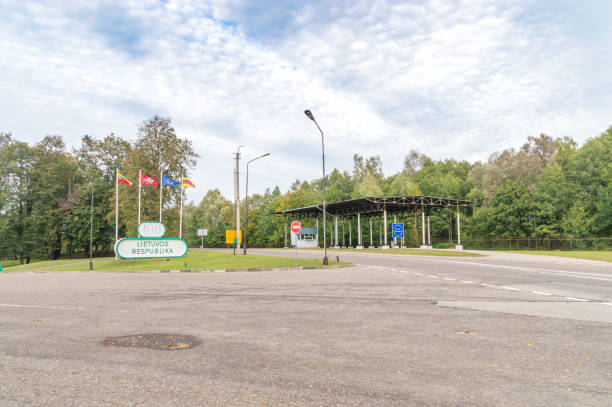
(Image courtesy of RobsonPL via iStock)
Travel becomes safer, but also stricter
Lithuania’s efforts to strengthen its borders and improve military roads send a clear message: more security and more oversight.
As NATO increases its presence in the Suwałki Gap, travelers crossing this key route between the Baltics and the rest of the EU may face stricter checks and short delays, especially during military drills or times of tension.
Civilian travel will continue, but land crossings between Lithuania and Poland will likely see more surveillance.
These changes could support the European Union’s upcoming European Travel Information and Authorization System (ETIAS), set to launch in 2026. ETIAS will require non-EU travelers to get electronic approval before entering Schengen countries.
Lithuania’s upgrades—like dual-use checkpoints and better border technology—could help manage this new system by improving how travelers are screened and tracked.
Migrants, especially those coming from Belarus or Russia—legally or not—may find fewer easy paths across the border. With new road checkpoints and barriers, crossing without permission will become riskier and more difficult.
In the short term, this could push migration toward less-protected parts of the EU, putting more pressure on other border countries.
Border control redefines national gatekeeping
Lithuania’s investment in physical infrastructure does more than strengthen its defense—it also changes how borders are seen today.
For EU countries, especially those near the eastern edge, immigration and national security are becoming more connected.
By upgrading roads and adding military-level surveillance, Lithuania is making it clear: managing borders is not just about controlling who enters, but also about stopping potential threats.
This view could shape how other countries handle asylum, migration limits, and refugee routes.
Governments might use security concerns to justify stricter rules, quicker deportations, or collecting more personal data like fingerprints and facial scans.
The systems being built now—both physical and digital—are setting the tone for future borders: stronger, less open.
At the EU level, Lithuania’s actions support growing demands for shared funding and coordinated control of outer borders.
As Estonia, Latvia, and Poland join Lithuania in pushing for this support, the EU may face pressure to treat immigration more as a security issue.
This could make it harder to build more welcoming and unified systems for newcomers, especially in countries still divided over past migration challenges.
.jpg)
(Image courtesy of jo.sau via Wikimedia Commons)
Fortifying the frontline
As tensions rise in the region, Lithuania’s effort to upgrade its military infrastructure sends a clear message to both its allies and rivals.
By making the Suwałki Gap easier to defend and move through, Lithuania strengthens NATO’s northeastern border and shows it’s ready to face threats from Russia and Belarus—including cyber attacks and other non-traditional tactics.
These upgrades go beyond construction. They show the Baltic states’ commitment to staying strong and prepared.
As uncertainty grows, Lithuania’s approach could guide how other European countries protect their borders. In this case, preparing for conflict is part of how the region works toward peace.