![[OC] 60 days of bird feeder visits](https://www.europesays.com/wp-content/uploads/2025/04/p5ubywk16lxe1-1920x1024.jpeg)
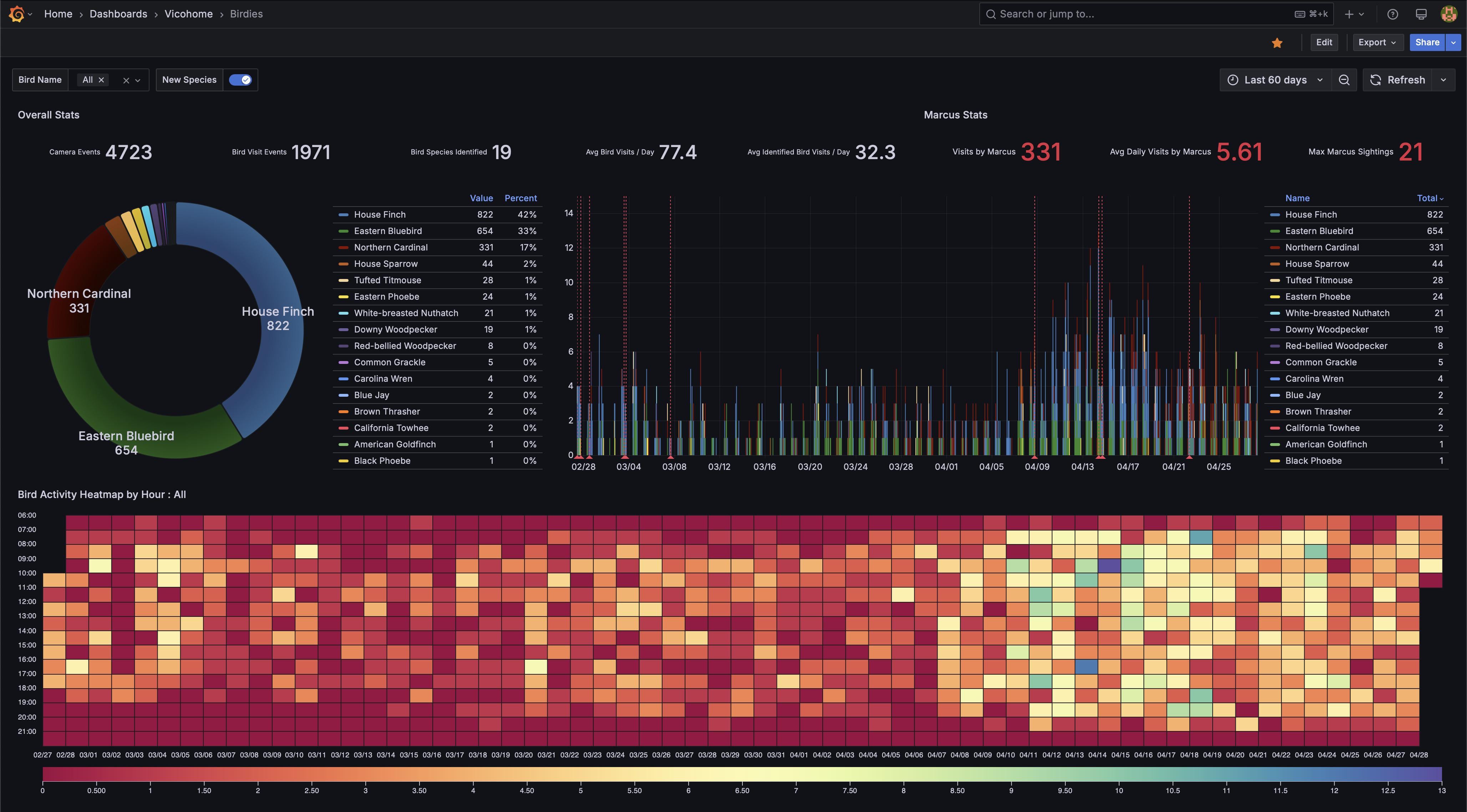
I spent a lot of time reverse engineering the API my bird feeder camera events get sent to. After getting access to it in a raw format, throwing it into influx was straightforward. It’s still sort of hackey, but that extractor is on GitHub here: https://github.com/dydx/vico-cli
We just have the one feeder on the porch and kept seeing it get more popular with the local birds. I wanted to understand more about who all is coming and when.
It’s crazy that I can see when spring really seemed to hit.
Hoping to include some local weather and air data in here too at some point. Also taking images for birds it could not identify and attempting to identify them to fill in gaps. Will update if/when I do.
Posted by d2xdy2
10 comments
Very fun, but making the colour for a “bluebird” green is funny to me (I’m sure the colours are generated by the system itself, right?)
This is nerd^(2) material right here. Pretty neat.
This is a thing of beauty
How’d you get the bird species? Manual or do you have the pro thing that tells you what shows up? I know mine gets a lot of false positives throughout the day
I need this level of cool autism
i have a db with several records how do I generate this type of chart against usage of each record.
I love this. Reminds me of this artist/data scientist who toook all the data from ebird to track similar things: https://www.jerthorp.me/every-bird
I saw a grafana dashboard and thought mmm devops. Then I saw the github and was like who tf are you are your golang-fu. Good god. If you wrote that, that is some clean code, that deserves it’s own applause!
This is great. My feeder is dominated by house finches and chickadees. I’ll see the occasional goldfinch, but they aren’t as common.
This is excellent, I love it. However, I think the image recognition/ID algorithm on that feeder probably needs some work. Eastern Phoebe is primarily an insectivore and doesn’t really visit seed feeders unless there is truly no other food sources around. Eastern Phoebe and Black Phoebe (also an insectivore that doesn’t really go for feeders) have ranges on opposite sides of the continent and it would be exceptionally rare for those two to overlap. California Towhee is also suspect given that it seems like you’re in the Eastern US from the major species present.
Source: extreme bird nerd
Comments are closed.