John Archer / Getty Images/iStockphoto
Commitment to Our Readers
GOBankingRates’ editorial team is committed to bringing you unbiased reviews and information. We use data-driven methodologies to evaluate financial products and services – our reviews and ratings are not influenced by advertisers. You can read more about our editorial guidelines and our products and services review methodology.

20 Years
Helping You Live Richer


Trusted by
Millions of Readers
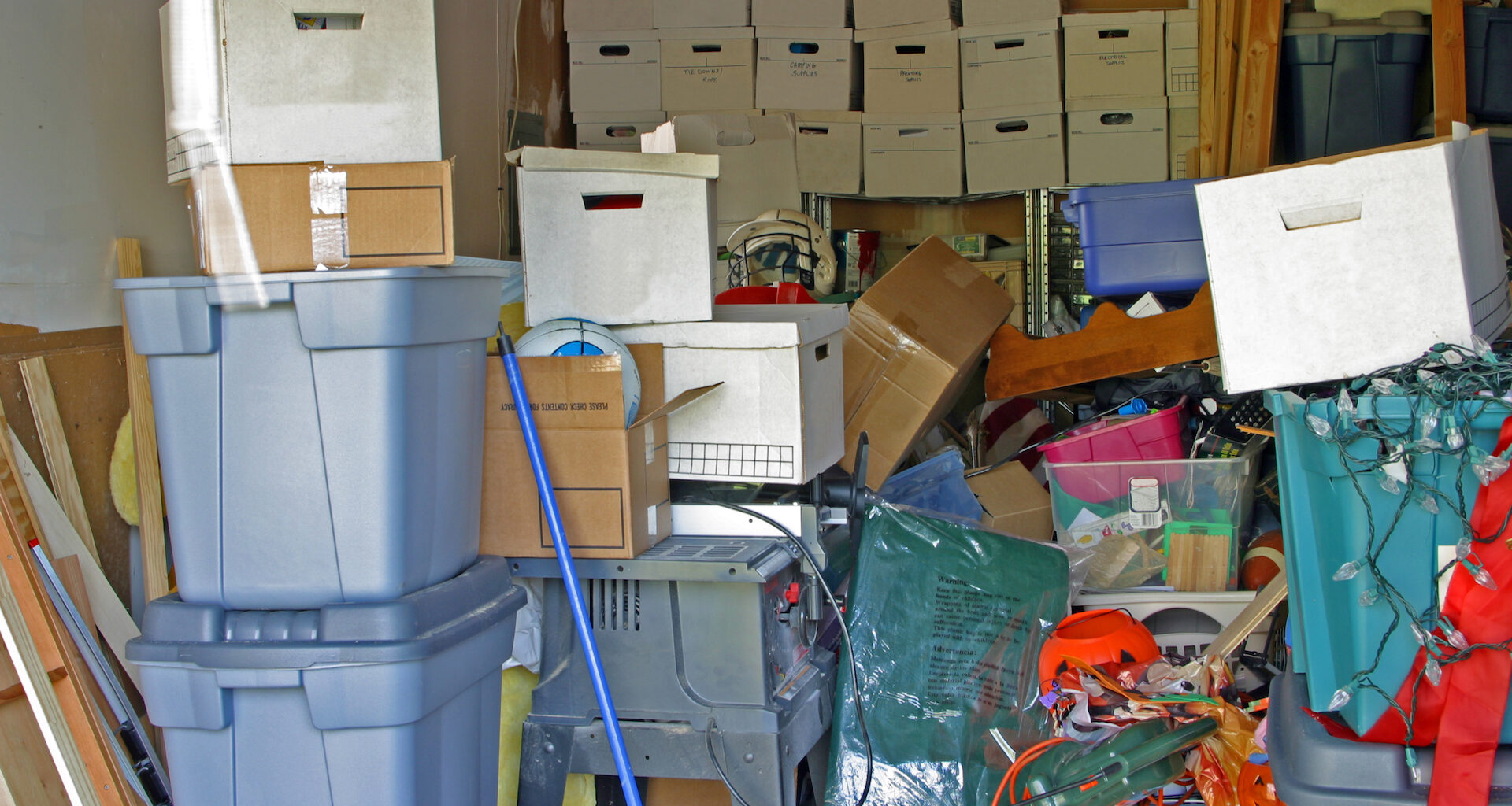
Clutter isn’t just an eyesore, it’s a silent budget killer. From buying duplicates you forgot you already own to spending money on underused subscriptions and offsite storage, physical and digital clutter can quietly chip away at your finances.
Here’s how a messy space might be costing you more than you think, and what you can do to clean up your finances along with your home.
Overspending and Double Purchasing
In a cluttered home or office, you’re less likely to know what you already possess. Similarly, you may remember getting something you need, but with too much clutter, you may not be able to find it, so you’ll spend money on a new one, said Melanie Musson, a finance expert at Clearsurance.com.
Gerrit Jan Reinders, decluttering and cleaning expert and founder of BOXIE24, shared, “I have had clients find out they possessed a number of the same kitchen devices, equipment and even clothes with price tags still attached,” he said.
Additionally, clutter can keep you from using what you have effectively. “That bread maker collecting dust is money spent with no value received,” Reinders pointed out.
Beyond that, when areas are cluttered, things can become damaged more easily or stop working due to underuse.
Creating Digital Clutter
Clutter can exist in your digital life with surprising financial costs that often go unnoticed. Forgotten subscriptions are among the biggest culprits — streaming services, apps and memberships that automatically renew month after month without providing value, Reinders said.
Digital clutter may lead to purchasing additional cloud storage, too, Musson pointed out. While that may not seem like much at first, when you’re paying around $1.99 a month, it adds up.
“But then your clutter continues to accumulate, and you’ll have to buy more storage. Before you know it, you’ll be spending $10 a month or more,” she said.
Additionally, just a couple of unused subscriptions at $10 per month could end up wasting you over $250 per year, she said.
The “set it and forget it” nature of digital payments makes this form of clutter particularly costly over time, Reinders said.
Low-Level Stress
Living or working in a cluttered environment can create a constant low-level stress that affects cognitive function, which can lead to overwhelm and trouble making important financial decisions or choices, Reinders explained.
“Research shows that people in cluttered environments tend to make more impulsive purchasing decisions and have difficulty delaying gratification,” he said.
Additionally, important financial documents get lost in the mess, leading to missed payment deadlines, late fees and even damaged credit scores. Creating an organized environment allows your brain the space needed for thoughtful financial planning.
Lost Time
Your time is valuable, so when your space is disorganized, you may waste countless hours searching for misplaced items, such as keys, documents, supplies or clothing, Reinders said.
“This lost time could otherwise be spent on productive activities, whether career advancement, side hustles or simply reducing costly convenience purchases made when rushing. For business owners or remote workers, a cluttered workspace reduces productivity and focus, directly impacting earning potential.”
Many people also resort to expensive convenience services or products because their cluttered lifestyle leaves them perpetually time-poor, creating a costly cycle that’s difficult to break, he said.
Unnecessary Storage Fees
Clutter also often leads to renting storage units to store things you don’t even use, Reinders said.
“Many renters could purchase new versions of everything in their storage units for less than they’ve spent on years of storage fees,” he said.
Beyond the rental costs, keeping things in storage comes with a “psychological burden” of knowing you’re paying to store items you don’t use, plus the eventual cost of dealing with those items later.
Storage units can serve legitimate temporary purposes, but they too often become expensive clutter extensions.
Not Living in the Moment
Reinders said a lot of people hold onto items or purchase new ones for emotional reasons, representing “someday” aspirations or for nostalgia, such as keeping children’s items long after they’re needed and maintaining inherited items out of guilt rather than genuine desire.
“These emotional attachments lead to larger homes than necessary, excess insurance costs and specialized storage requirements.”
They also create “opportunity costs” where both the space these items occupy and the mental energy devoted to maintaining them could be directed toward more fulfilling pursuits, he said.
Breaking the emotional attachment to things often requires recognizing that memories reside within us, not within objects, freeing both physical space and mental bandwidth.
Change Your Relationship to Consumption
Try adopting a different relationship to consumption and clutter, Reinders said, for financial if not emotional reasons.
Some of the benefits of fewer possessions include:
With a need for less space, you could potentially downsize.
Your insurance premiums decrease when you have fewer valuables to cover.
Maintenance costs drop significantly with fewer things to repair or replace.
“Perhaps most importantly, decluttering often triggers a fundamental relationship change with consumption — many report feeling less desire to shop recreationally and more satisfaction from experiences rather than things, creating lasting financial resilience,” he said.
Declutter for Tax Benefits
Decluttering can have positive tax implications when approached thoughtfully.
“Donating items to qualified charitable organizations may qualify for tax deductions, though you’ll need to maintain proper documentation and receipts,” Reinders said.
For valuable items, having appraisals can maximize legitimate deduction amounts.
Take Better ‘Inventory’
An organized home allows you to clearly inventory what you already own, preventing duplicate purchases, Reinders said.
“Many clients who declutter their homes subsequently organize their finances, creating budgets and tracking systems. Clear spaces create mental clarity that improves decision-making around purchases,” he said.
Clearing clutter isn’t just about creating a neater space, it’s a strategic move that can lead to smarter spending, better financial awareness and even a greater sense of control.
Sources