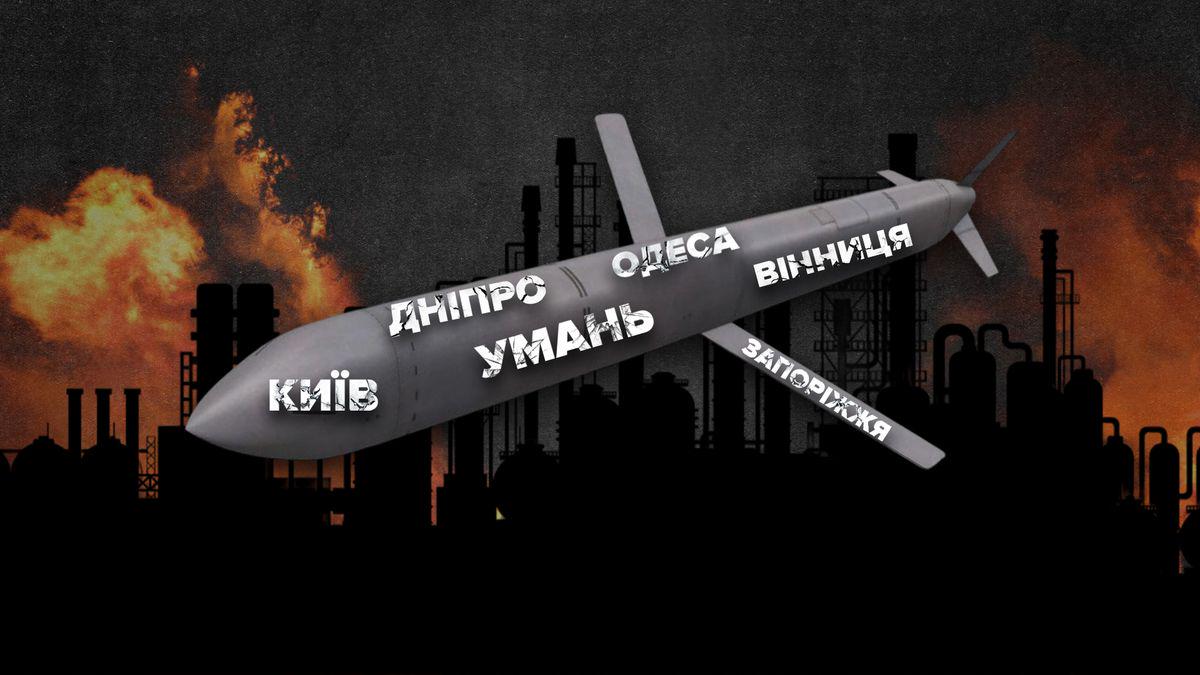
Document leaks: How many X-101 missiles Russia produces, which foreign parts uses. Channel 24’s analysis based on documents from TRV-Engineering. How Russia buys parts for altimeters for its missiles, which companies are involved in procurement hubs, how many missiles Putin plans to produce in 2025
https://24tv.ua/document-leaks-how-many-x-101-missiles-russia-produces-and-which_n2815336
by Lion8330
6 comments
The article investigates Russia’s production of X-101 cruise missiles, a key weapon used in attacks on Ukraine, based on leaked documents from the private intelligence company Dallas and an informant from Russia’s TRV-Engineering holding.
Despite Western sanctions, Russia has significantly increased X-101 production by adapting to supply chain challenges and sourcing foreign components. The article details the missile’s role in Russia’s strategy to target Ukrainian infrastructure, the involvement of Putin’s associates in the defense industry, and procurement networks bypassing sanctions.
Key Points:
Production Surge: Russia produced about 56 X-101 missiles annually in 2021 but now manufactures up to 50 per month, with plans to produce 633 in 2025 (approximately 53 per month).
Strategic Use: X-101s are Russia’s most used cruise missiles in Ukraine, deployed in hybrid air attacks with drones and ballistic missiles to overwhelm defenses and target critical infrastructure.
Sanctions Evasion: Russia has found alternatives to sanctioned components, smuggled foreign-made parts, and streamlined production, relying on companies like Tactical Rocketry Corporation (KTRV).
Foreign Components: The article analyzes how Russia procures spare parts, including altimeters, through a network of suppliers, some linked to Putin’s inner circle.
Defense Industry Focus: The Kremlin invests heavily in its military-industrial complex, with factories operating in three shifts and new facilities being built to sustain missile production.
Geopolitical Implications: Increased production may signal Russia’s intent to regroup for future aggression, potentially targeting NATO countries, as per Western intelligence concerns.
Accountability: The article emphasizes the need to understand ownership structures of Russian defense firms to hold Putin’s associates accountable for war crimes.
Main Actors Involved in Sanctions Evasion Schemes
Russian Entities:
TRV-Engineering:
A private company within the Tactical Missiles Corporation (KTRV), responsible for procuring altimeter components and other parts for X-101 missile production. It organizes logistics, contracts suppliers, and circumvents sanctions to secure foreign parts.
Led by CEO Mikhail Kolesnikov, who was detained for embezzlement but continues to facilitate defense contracts. The company is linked to Putin’s associates, including Boris Obnosov and his daughter Olga Zorikova, who owns stakes in related firms.
Ural Design Bureau “Dietal”:
Manufactures altimeters for X-101 missiles, relying on TRV-Engineering to supply microchips and other components. Dietal’s orders (e.g., state contract #2225187923201412208226001) drive production planning.
Tactical Missiles Corporation (KTRV):
A major Russian defense contractor, 100% owned by the Federal Agency for State Property Management. It oversees X-101 production and is managed by Boris Obnosov (Director General) and Boris Gryzlov (Chairman), both close Putin allies.
JSC State Machine Building Design Bureau “Raduga”:
The primary manufacturer of X-101 missiles, dependent on Dietal’s altimeters and TRV-Engineering’s supply chain.
Foreign Actors:
Integral OJSC (Belarus):
A Minsk-based company supplying microchips for X-101 altimeters, as documented in TRV-Engineering’s orders. Its involvement makes Belarus complicit in Russia’s missile production and a potential military target for Ukraine.
Chinese Suppliers:
Unnamed Chinese companies provide components, such as servo drives for guided bombs and substitutes for Kazakh tantalum products used in capacitors, through sophisticated schemes to conceal their role in the supply chain.
Kazakh Suppliers:
Supply tantalum products for capacitors used in missile electronics, though payment issues have prompted Russia to seek Chinese alternatives.
Individuals Linked to Putin’s Inner Circle:
Boris Obnosov: KTRV Director General, a former UN mission member and Putin confidant, whose company Teploservis and daughter Olga Zorikova hold stakes in TRV-Engineering’s parent company, Zvezda-Strela.
Olga Zorikova: Obnosov’s daughter, a makeup artist owning 50% of Teploservis, indirectly linked to TRV-Engineering’s procurement activities.
Boris Gryzlov: Chairman of KTRV’s board, a prominent Russian politician, Putin ally, and ambassador to Belarus, deeply involved in Russia’s defense industry.
Mikhail Kolesnikov: TRV-Engineering CEO, implicated in sanctions evasion and missile part procurement, despite his detention for embezzlement.
Conclusions
Russia sustains X-101 missile production by procuring altimeter components through TRV-Engineering, which navigates sanctions by smuggling foreign parts (notably Belarusian microchips from Integral OJSC) and using Chinese and Kazakh suppliers.
The supply chain’s reliance on foreign components, despite near-localized altimeter production, creates vulnerabilities, such as payment disputes or potential Ukrainian strikes on suppliers like Dietal or Raduga.
Key actors, including TRV-Engineering, KTRV, and Putin’s associates (Obnosov, Gryzlov, Zorikova, Kolesnikov), are central to sanctions evasion, making them complicit in war crimes and potential targets for accountability measures.
Disrupting this supply chain through targeted sanctions or attacks on critical nodes (e.g., Integral OJSC, Dietal) could significantly weaken Russia’s missile production capacity.
Key Findings:
The X-101 cruise missile, a key weapon in Russia’s attacks on Ukraine, relies on altimeters for navigation, enabling the missile to maneuver around terrain and avoid air defenses. Altimeters are critical components of the missile’s control unit.
While Russia has localized much of the altimeter production, it still depends on foreign microchips for key components. These parts are documented in TRV-Engineering’s procurement records and Integral’s product catalog.
Sanctions Evasion and Procurement Networks:
Despite Western sanctions, Russia procures foreign parts, including altimeter components, through TRV-Engineering, which organizes supplies for the Ural Design Bureau “Dietal”, the altimeter manufacturer for X-101 missiles.
The article notes that Russia has found ways to smuggle foreign-made parts and pass off illegally imported Western components as domestic products, enabling near-localized altimeter production. However, specific Western microcircuits (e.g., from the U.S. and Japan) are still used, with identification labels often erased to obscure their origin.
Procurement challenges include payment issues with suppliers (e.g., Kazakh suppliers of tantalum for capacitors) and reliance on Chinese components as alternatives, indicating vulnerabilities in the supply chain.
Production Scale and Planning:
Russia plans to produce 633 X-101 missiles in 2025, based on TRV-Engineering’s orders for altimeter parts to Dietal. Each altimeter requires specific microchips, with delivery schedules (e.g., 100 altimeters between December 2024 and January 2025, 50 by March 2026) reflecting a two-year production strategy.
The supply chain is sensitive to disruptions, such as drone attacks (e.g., on NPO Strela) or supplier refusals, which can delay component deliveries and affect missile production.
Main Actors Involved in Sanctions Evasion Schemes
Russian Entities:
TRV-Engineering:
A private company within the Tactical Missiles Corporation (KTRV), responsible for procuring altimeter components and other parts for X-101 missile production. It organizes logistics, contracts suppliers, and circumvents sanctions to secure foreign parts.
Led by CEO Mikhail Kolesnikov, who was detained for embezzlement but continues to facilitate defense contracts. The company is linked to Putin’s associates, including Boris Obnosov and his daughter Olga Zorikova, who owns stakes in related firms.
Ural Design Bureau “Dietal”:
Manufactures altimeters for X-101 missiles, relying on TRV-Engineering to supply microchips and other components. Dietal’s orders (e.g., state contract #2225187923201412208226001) drive production planning.
Tactical Missiles Corporation (KTRV):
A major Russian defense contractor, 100% owned by the Federal Agency for State Property Management. It oversees X-101 production and is managed by Boris Obnosov (Director General) and Boris Gryzlov (Chairman), both close Putin allies.
JSC State Machine Building Design Bureau “Raduga”:
The primary manufacturer of X-101 missiles, dependent on Dietal’s altimeters and TRV-Engineering’s supply chain.
Foreign Actors:
Integral OJSC (Belarus):
A Minsk-based company supplying microchips for X-101 altimeters, as documented in TRV-Engineering’s orders. Its involvement makes Belarus complicit in Russia’s missile production and a potential military target for Ukraine.
Chinese Suppliers:
Unnamed Chinese companies provide components, such as servo drives for guided bombs and substitutes for Kazakh tantalum products used in capacitors, through sophisticated schemes to conceal their role in the supply chain.
Kazakh Suppliers:
Supply tantalum products for capacitors used in missile electronics, though payment issues have prompted Russia to seek Chinese alternatives.
Individuals Linked to Putin’s Inner Circle:
Boris Obnosov: KTRV Director General, a former UN mission member and Putin confidant, whose company Teploservis and daughter Olga Zorikova hold stakes in TRV-Engineering’s parent company, Zvezda-Strela.
Olga Zorikova: Obnosov’s daughter, a makeup artist owning 50% of Teploservis, indirectly linked to TRV-Engineering’s procurement activities.
Boris Gryzlov: Chairman of KTRV’s board, a prominent Russian politician, Putin ally, and ambassador to Belarus, deeply involved in Russia’s defense industry.
Mikhail Kolesnikov: TRV-Engineering CEO, implicated in sanctions evasion and missile part procurement, despite his detention for embezzlement.
Conclusions
Russia sustains X-101 missile production by procuring altimeter components through TRV-Engineering, which navigates sanctions by smuggling foreign parts (notably Belarusian microchips from Integral OJSC) and using Chinese and Kazakh suppliers.
The supply chain’s reliance on foreign components, despite near-localized altimeter production, creates vulnerabilities, such as payment disputes or potential Ukrainian strikes on suppliers like Dietal or Raduga.
Key actors, including TRV-Engineering, KTRV, and Putin’s associates (Obnosov, Gryzlov, Zorikova, Kolesnikov), are central to sanctions evasion, making them complicit in war crimes and potential targets for accountability measures.
Disrupting this supply chain through targeted sanctions or attacks on critical nodes (e.g., Integral OJSC, Dietal) could significantly weaken Russia’s missile production capacity.
*russia running out of missiles* /s
So currently can make ~50 a month.
Current stockpile level is unknown. 50/month for 6 months and 1000 in a warehouse, or fired everything and they hit 50/month in March for the first time?
Based on wreckage serial numbers, Russia had been firing extremely recent production units, implying they didn’t have very deep stockpiles of any cruise and ballistic missiles. And that’s been a relatively recent point. Like 6 months ago this wa seeing noted.
I wonder if Russia has been trying to hold anything back with an increase in production? Also, I wonder if the increased production is as effective as past production. Twice as many at half the quality? Are they just as effective as pre war production, but that’s less effective than ever now because of EW/jamming and AA?
If Russia can make 600 a year of these versus 50 a year, I would expect them to being having an impact in mass attacks, which haven’t really seen. Or maybe a 12 to 1 firing ratio for a Ukrainian AA defense that’s roughly 12x effective looks about the same.
Comments are closed.