
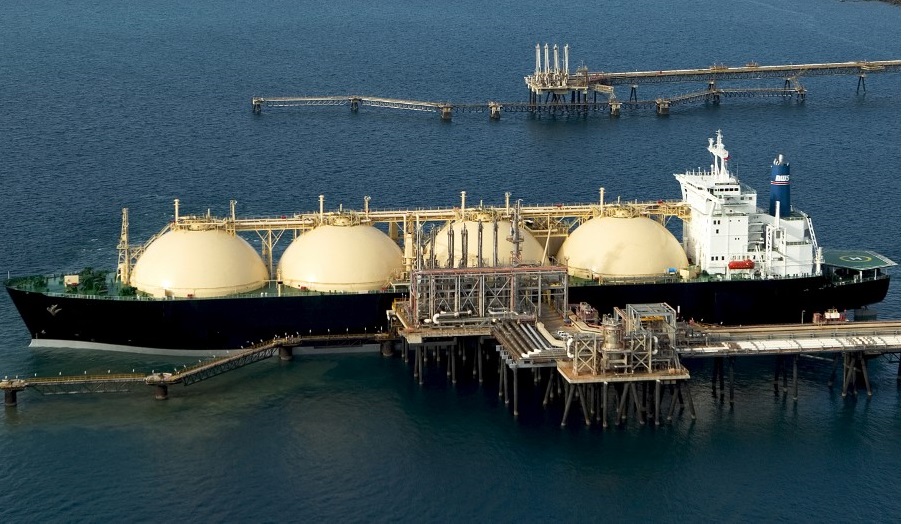
A final investment decision (FID) on a planned second liquefaction vessel for Argentine province Río Negro is due next quarter, state-controlled oil firm YPF said.
As well as hiking export capacity, the second unit would require construction of a dedicated gas pipeline to connect Río Negro to shale gas fields in neighboring Neuquén province.
The first vessel, the 2.45Mt/y Hilli Episeyo, has an FID and is due online in 2027. The second, the 3.5Mt/y MKII, would enter service the following year.
Southern Energy (SESA), the company established to develop the project, is owned by Pan American Energy (30%), YPF via unit Sur Inversiones Energéticas (25%), Pampa Energía (20%), Harbour Energy (15%) and a Golar LNG unit (10%).
MKII deployment is “subject to FID approval which is estimated to be no later than July 31,” CEO Horacio Marín said during YPF’s Q1 results call.
The dedicated natural gas pipeline would provide year-round availability, “instead of using existing pipeline idle capacity during the off-peak season,” Marín said.
YPF would export via a tolling agreement.
As things stand, Southern Energy will propel Argentina into the global LNG-exporting arena, in turn supporting domestic efforts to monetize gas held in the Vaca Muerta formation.
Exporting through Southern Energy comprises the first phase of a YPF master plan known as Argentina LNG.
Second and third-phase work involves YPF exporting via other vessels off the coast of Río Negro by the end of the decade with partners Shell and Eni.
Associated volumes are around 10Mt/y for the second phase, which is in the process of procuring engineering services and with an FID possible by end-2026. Volumes associated with the third phase are roughly 12Mt/y. Both are scheduled to start operating by the end of the decade.
Marín said plans or timelines may change depending on the global context.
Production, exports
Elsewhere on the hydrocarbons map, YPF is betting heavily on tapping – and exporting – shale oil in the Vaca Muerta formation. Reflecting a national trend, company production of unconventional hydrocarbons is trending up, while output of conventionals weakens.
A driver is lifting costs at its core shale hub in Vaca Muerta, which averaged US$4.6/boe in Q1. Overall company lifting costs averaged US$15.3/boe, with a 2025 estimate of US$12/boe, reflecting a shift away from mature conventional assets.
ALSO READ: Argentine hydrocarbons expert talks regulations, outlook, midterms
Shale accounted for 58% of total YPF hydrocarbons production in 1Q25, up from 55% the previous quarter and 49% in 1Q24.
Oil
The company’s oil production in the quarter climbed 5.6% year-on-year to 270,000b/d, driven by a 31.2% expansion in shale output to 147,300b/d.
YPF exported 36,400b/d in the quarter, up 34% year-on-year.
The average realized price for oil was US$67.9/b, down 1%. Prices have been trending down amid trade war fallout concerns.
The company is aiming to exceed shale oil production of 165,000b/d this year.
A YPF-led project to increase oil transport capacity to the Atlantic coast – the roughly US$3bn Vaca Muerta Sur – is under construction. Capacity of 180,000b/d is due to come online by the end of next year and then climb to 550,000b/d in 1H27.
Natural gas
Gas production was up 2.7% to 37.3Mm3/d, as shale output climbed 23.3% to 22.2Mm3/d. The average price fetched was US$3.0/MMBTU (million British thermal units), flat year-on-year.
Divestments
YPF is divesting mature conventional assets under a program known as Proyecto Andes.
The company has exited Mendoza province and expects to be out of Santa Cruz in a few months, investors were told. Among other divestments, YPF is working to leave Tierra del Fuego.
The firm expects to have completed divestments by the end of the third quarter.
Capex, oil price volatility
Capex deployed in 1Q25 was US$1.21bn, up 4% year-on-year, with 75% of outlay pumped into unconventionals.
Overall capex guidance for 2025 is US$5-5.2bn, with US$3.6bn earmarked for upstream and US$900mn for downstream.
In terms of changing investment plans because of oil price fluctuations, Marín said no kneejerk decisions would be taken.
“We will see… if I have to change, I will change, but today I don’t see that it is necessary,” the CEO said.
Trade tensions generated by US President Donald Trump have whipped up oil price volatility and clouded the global economic outlook.