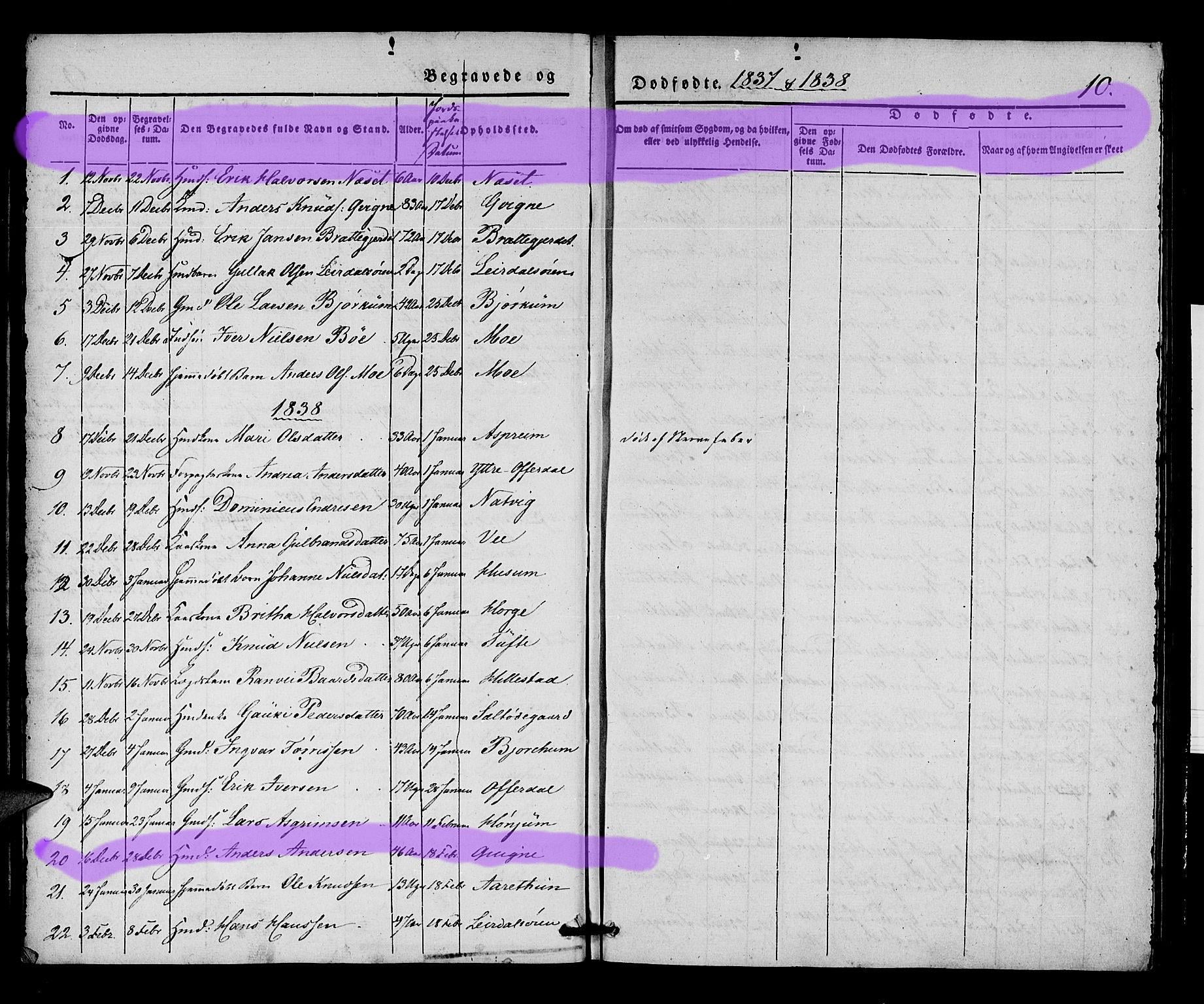
I have a burial record for my x5 great grandfather and I need a small section translated. I've highlighted what I need translated. Any help would be super appreciated!
by nolongerhuman07

I have a burial record for my x5 great grandfather and I need a small section translated. I've highlighted what I need translated. Any help would be super appreciated!
by nolongerhuman07
2 comments
I can´t understand everything, very difficult handwriting there 🙂 But, it is a list over people who are buried and stillborns in 1837 and 1838. The first column is number, second is date of death, third date of burial, fourth is full name and title (could be work or wife or such), fifth is age, sixth I am not sure about, seventh is where they live, eight is «if dead by a contagious disease, if so which, or from some other unnatural cause». The last three are for stillborns, with the first date of birth, second name of parents and the last I am not sure about.
I think your ancestor died December 16. and buried on December 28, his name was Anders Andersen, he was a blacksmith, 46 years. The second last is the date February 18. and the last I can´t read.
Hope this helps a bit-
From left to right:
No = Number [20]
Den Opgivene Dødsdag = The given date of death [16. Decbr = December 16th]
Begravelsesdatum = date of burial [28. debr = December 28th]
Den begravedes fulde navn og stand = the buried persons full name and social class [Gmd* Anders Andersen = farmer Anders Andersen]
Alder = age [46 aar = 46 years old]
Jordpåkastelse datum = Date of the burial ritual of throwing earth on the grave** [February 18th]
Opholdssted = Place of living [?***]
Om død av smitsom Sygdom, og da hvilken, eller ved ulykkelig hendelse = if dead by infectious disease, which, or if dead by accident
Dødfødte = Stillborns (three sub-columns, not relevant in this case)
—
*The abrivation Gmd (gårdmand) can be seen before many of the names, and means “farmer”.
**Like in many modern christian funerals, the priest/minister throw a fistfull of dirt onto the coffin. If a priest was not present for the funeral itself, this ceremony would have taken place when he came round to it. Smaller villages might share a priest. Notice how many of the dates in this column are the same. This would be when the local priest was visiting.
*** I can’t make out what the name of the place your ancestor lived is supposed to be, bit I might be able to of you can tell me what area this is from. This is probably the name of the farm, so a very local name.
Comments are closed.