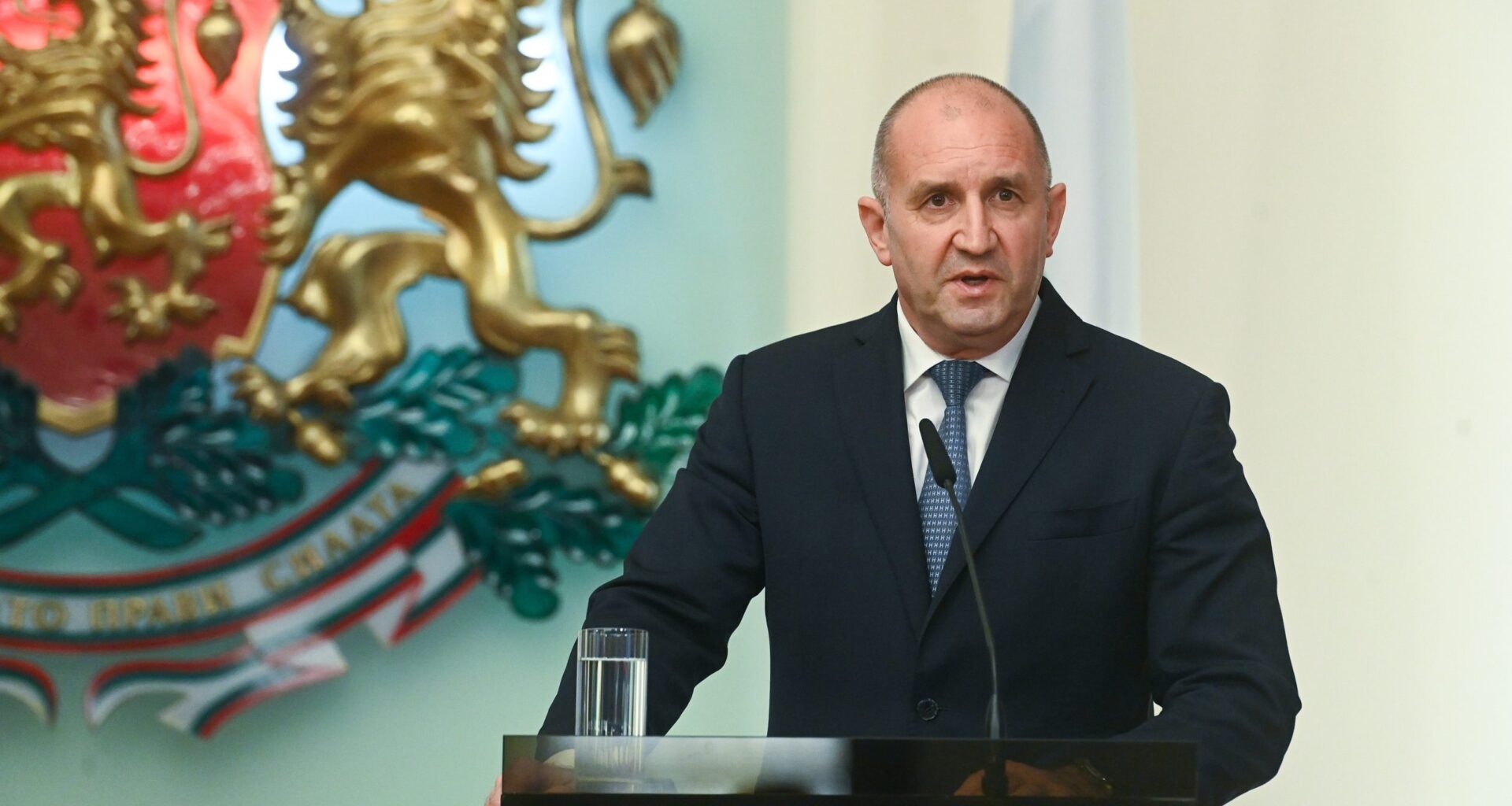
SOFIA – Bulgarian President Rumen Radev, often accused by critics of promoting pro-Russian views, unexpectedly announced on Friday his intention to initiate a national referendum to delay the introduction of the euro, just weeks before the country is expected to receive approval for eurozone accession in 2026.
The move triggered a political storm in Sofia, leading to the resignation of a presidential adviser who disagreed with the decision. Critics accused Radev of exploiting public fears about the euro’s impact on inflation and of opposing Bulgaria’s full integration into the EU on Europe Day.
“There are no convincing actions from the government to ensure the purchasing power of citizens and the competitiveness of the economy, which causes public anxiety. The basic principles of democracy must be respected, and institutions with critically low legitimacy should not make decisions about the country’s future without listening to citizens,” Radev stated.
Prime Minister Rosen Zhelyazkov accused Radev of using the euro issue to promote his future political project. He called on all members of parliament who support Bulgaria’s full integration into the EU to demonstrate it by voting in favor of euro adoption.
Two years ago, Radev rejected a request by the pro-Russian Vazrazhdane (Revival) party to hold a referendum on the euro, arguing that EU laws do not allow it. Eurozone accession was agreed upon when Bulgaria joined the EU, with the timeline depending on the country’s readiness.
Vazrazhdane, however, seized the opportunity to claim that Radev’s decision was the result of diplomatic pressure, and suggested that he received “instructions” from foreign powers. The party’s latest international move was the signing of a cooperation agreement with Vladimir Putin’s United Russia party, as well as a visit by their leader Kostadin Kostadinov to the May 9 military parade in Moscow.
Bulgaria is currently in the final stages of eurozone accession. The government in Sofia has requested an extraordinary convergence report, which the European Commission is expected to publish on June 4. The report is anticipated to be positive. The final decision by the European Commission and the European Central Bank on Bulgaria’s entry into the eurozone is expected on July 8.
A referendum on the issue, however, cannot be held before this date. The power to call a referendum rests solely with the Bulgarian Parliament. According to Teodor Slavev, a political analyst at the Bulgarian Institute for Legal Initiatives, Radev’s actions signal his shift towards party politics.
“Rumen Radev is initiating a referendum on the euro, which is a populist move towards his own political project,” Slavev said.
The parliamentary majority, consisting of GERB, the PP-DB coalition, and DPS – New Beginning, holds 131 of the 240 seats in the National Assembly and has already announced that it will quickly reject the president’s initiative.
Just a year ago, in response to a similar request from Vazrazhdane, Bulgaria’s Constitutional Court ruled that a referendum on euro adoption is not permissible. The court stated that Bulgaria will adopt the euro once it meets the necessary criteria, and the country has already agreed to join the European monetary union.