
It started when protestors marching against police brutality toppled a statue of Sir John A. Macdonald in downtown Montreal. It was the fall of 2020 and Shopify employees were watching four of their colleagues debate the legacy of one of Canada’s most important and controversial political figures.
The virtual town hall had been called because Kaz Nejatian, a recently arrived, fast-rising executive, had publicly pledged to put up $50,000 to restore the monument, sparking internal disquiet.
Talking Points
That lack of seriousness around diversity and inclusion sometimes translated into problematic company documents, sources say, one of which used references to the colonization of Canada as a guiding light for Shopify’s mission
The lack of internal support turned into concrete action in recent months when entire teams dedicated to helping Black and Indigenous entrepreneurs were laid off
The Macdonald town hall—organized by Toby Shannan, one of the firm’s most senior leaders at the time—was meant to demonstrate that while Shopify employees might differ on political or historical issues, they were united in their belief in the power of entrepreneurship. Shannan and Nejatian would be joined by Kyle Brennan Shàwinipinesì and Tracy Ridler, key members of the firm’s Indigenous employee group.
The discussion quickly turned into a debate. Nejatian opened with the claim that he’d visited more First Nations reserves than anybody, then defended Macdonald as a product of his time who nevertheless should be celebrated for his role in unifying Canada. Shàwinipinesì and Ridler countered by detailing how Macdonald’s policies had harmed successive generations of Indigenous peoples, and contributed to the economic inequality they continue to experience today.
Outside the town hall, business was booming. The COVID-19 pandemic drove hundreds of thousands of businesses to Shopify’s technology. As its customer base grew, so did its workforce, doubling to 10,000 people between 2019 and 2021. The company touted the “diverse global talent pool” that its new remote-first strategy had made available, and launched new programs to support staff and entrepreneurs from underrepresented backgrounds.
In June 2020, two months before Macdonald’s statue fell, Shopify had announced a series of new partnerships to support entrepreneurship in Indigenous communities, which the company said it recognized had “confronted systemic racism and injustices, institutionally and otherwise” for “centuries.”


Yet internally all was not well. As some staff saw it, a series of decisions taken by the company’s leadership showed they were never truly committed to diversity and equity. Interviews with more than a dozen current and former employees suggest Shopify often used diversity as a marketing ploy, and that internal support for major equity initiatives faded over time, with executives increasingly treating them as a distraction from the core business of building e-commerce tools. The Logic is not identifying these sources because they are not authorized to speak publicly about their time at the company.
Shopify was not the only tech firm to trumpet its commitment to diversity, equity and opportunity for underrepresented communities when there was broad public support for those issues—only to abandon such work when the political music changed. But the company’s handling of such initiatives was clumsy from the start.
Sources claim that employee resource groups were gradually deprioritized, and key equity partnerships floundered under the awkward handling of the marketing team. Wavering internal support turned into concrete action in recent months when entire teams dedicated to helping Black and Indigenous entrepreneurs were laid off.
Some former staff say these cuts were just business. But ex-employees who worked to get more merchants from underrepresented communities on the platform believe their work was a meaningful part of that business. They say the programs generated real returns, contributing both financially and philosophically to the company’s goals of making commerce better for everyone.
Shopify also started to discourage conversations about race and identity as a distraction—even as senior leadership increasingly took to social media to share their own political and ideological beliefs. Those changes came amid a broader shift in the company’s corporate culture, one that current and former staff say has made it a harder place to work.
Shopify’s shuttering of its equity initiatives is not unique. Businesses the world over have backtracked on their diversity, inclusion and equity (DEI) commitments in response to a crackdown launched by U.S. President Donald Trump. During the first four months of 2025, mentions of “DEI” or “diversity, equity and inclusion” in transcripts of corporate events and documents globally dropped 32 per cent year over year, according to data from AlphaSense. The change has been particularly pronounced at the Silicon Valley tech giants on which Shopify’s top leaders have increasingly modeled their business.
As companies the world over slash DEI initiatives, Shopify could be a case study, and potentially a cautionary tale, for what comes next. The company went early and cut hard, removing parts of its business that former employees say were bringing in new customers and generating revenue. And its changes to internal programs designed to foster diversity and inclusivity, sources argue, have made the company a less welcoming place to work and alienated staff.
“We retired some programs because we believe that true progress is driven by more than corporate virtue signaling,” says Shopify spokesperson Ben McConaghy. “We hire the sharpest minds, whatever their background, and put every idea through rigorous, open debate.
“This stress-testing of ideas,” he continued, “produces stronger solutions and keeps us focused on what matters most for our merchants.”
The shift in culture came from the top. Starting in mid-2020, a cohort of established leaders who’d worked for years alongside CEO and founder Tobi Lütke—and could challenge his decisions when they disagreed—left and were replaced by more pliable executives.
With Lütke firmly in control, Shopify has spent the last three years cutting its workforce and focusing more narrowly on helping merchants using its technology to boost sales. In January, four years on from the Macdonald town hall, the company’s Black and Indigenous entrepreneur programs, which at the time reported into Nejatian, were shut down entirely.

The head of a statue of Sir John A. Macdonald after it was torn down following a demonstration in Montreal in August 2020. Photo: The Canadian Press/Graham Hughes
In the years before the pandemic, Shopify had set up small teams focused on fostering diversity and belonging in-house and creating social impact outside the company. Employee resource groups brought together people with shared identities, starting with those who identified as Black, Indigenous, or LGBTQ2S+, respectively.
Staff volunteers led the groups, which organized activities for their members and represented the firm at events like the Afrotech conference in Los Angeles and Toronto’s Pride parade. The groups had their own channels on Shopify’s Slack where employees could gather and talk. The talent development team had also set up a company-wide #belonging channel, which would later become the site for an internal firestorm.
The firm worked with several organizations that serve underrepresented communities, including Indigenous Fashion Week Toronto. It was a founding sponsor of the Black Innovation Fellowship, a program the Toronto Metropolitan University-based DMZ incubator launched to “strengthen Black entrepreneurship and advocate for race equity.”
Despite launching a raft of projects, former employees say they felt Shopify’s diversity initiatives were often reactive, created in response to public backlash against its business decisions. In February 2017, the firm’s decision to host the store of Breitbart, an extreme right-wing U.S. publication, was met with strong internal and external criticism. At the time, Lütke defended the relationship, arguing that while Shopify didn’t like Breitbart, its commercial activities should be protected as free speech.
In the aftermath of the Breitbart controversy, Shopify hired staff focused on diversity, belonging and community. Sources say senior leaders didn’t put a lot of backing behind equity work. The volunteer leaders of the ERGs were eventually given budgets of a few thousand dollars to spend on organizing events and hiring speakers, although the cash was tightly controlled. Managers didn’t always appreciate the work that went into running the groups or factor that work into performance reviews, according to former employees. Bosses made clear that ERG work “didn’t belong on company time,” one source says, adding that the ERGs were sometimes treated as “counter to business.”
A series of internal incidents also left employees from underrepresented groups wondering just how well the company’s leaders understood their lived experiences. They cite the release of an updated version of the firm’s design manifesto, dubbed Polaris. On the cover was an illustration of a Mountie gazing over an apparently empty mountain landscape at the North Star. Inside, the document used the colonization of Canada as an analogy for how Shopify wanted to do business. Polaris referenced the fur trade and the Silk Road that carried goods between Asia and Europe for hundreds of years as landmark eras for commerce. Both brought considerable violence to the people along their route, though the design manifesto framed them as an inspiration to forge a new story.
The document made some Indigenous employees uncomfortable, given the Royal Canadian Mounted Police’s history as a colonial enforcement unit. Executives also used the colonization of Canada as a reference point for the company’s vision in multiple areas, sources say.
The disquiet around the design manifesto wasn’t an isolated incident. At a Shopify hackathon in July 2020—where employees had 48 hours to create new projects—the company’s culture team produced a video called “Ten Slack Commandments.” Set to the tune of rapper The Notorious B.I.G’s “Ten Crack Commandments,” the video explained how staff should be using Slack—instructions included setting a Slack status, using pronouns in profiles and using threads to reply to messages to avoid creating too much noise. Lütke tweeted a screen recording of the video.
In Shopify’s #belonging Slack channel, which had been created pre-pandemic as a space to talk about cultural and diversity issues, many staff said the video was problematic, and called for it to be taken down. One employee noted that predominantly white teams had repeatedly used rap and Black culture inappropriately. While it featured no Black employees, the video included several Black memojis, which, one employee wrote in Slack, “amounted to blackface” if the creators themselves weren’t Black, according to screenshots obtained by The Logic.
As the #belonging channel filled with criticisms of the video, one employee pointed out that someone had added a noose emoji to Shopify’s Slack, prompting dozens of replies and emoji reactions expressing outrage. That afternoon, Brittany Forsyth, the firm’s then-chief talent officer, wrote that the management team would “review and reflect” over the weekend. “I thank everyone for your opinions. I know they are deeply personal. We heard you,” she wrote.
Some employees interpreted that response as a tactic to shut down the conversation and criticized the leadership team for needing to deliberate about something that concerned staff considered so “clear-cut.”
Lütke deleted his tweet of the video, but an unlisted version is still available on what appears to be his YouTube account. The CEO also intervened in Slack, locking down the #belonging channel so only a select group of moderators and admins could post in it. In a message, he said the channel had turned into an echo chamber of “extreme toxicity,” and argued staff should instead have given “valid feedback” about the video to the teams involved. Employees were flouting their code of conduct by engaging in bad-faith communication, Lütke suggested. He insisted Shopify was “fully committed to the ideas of equality of opportunity and belonging.” Lütke’s post was met by a series of confused and sad-face emoji reactions.
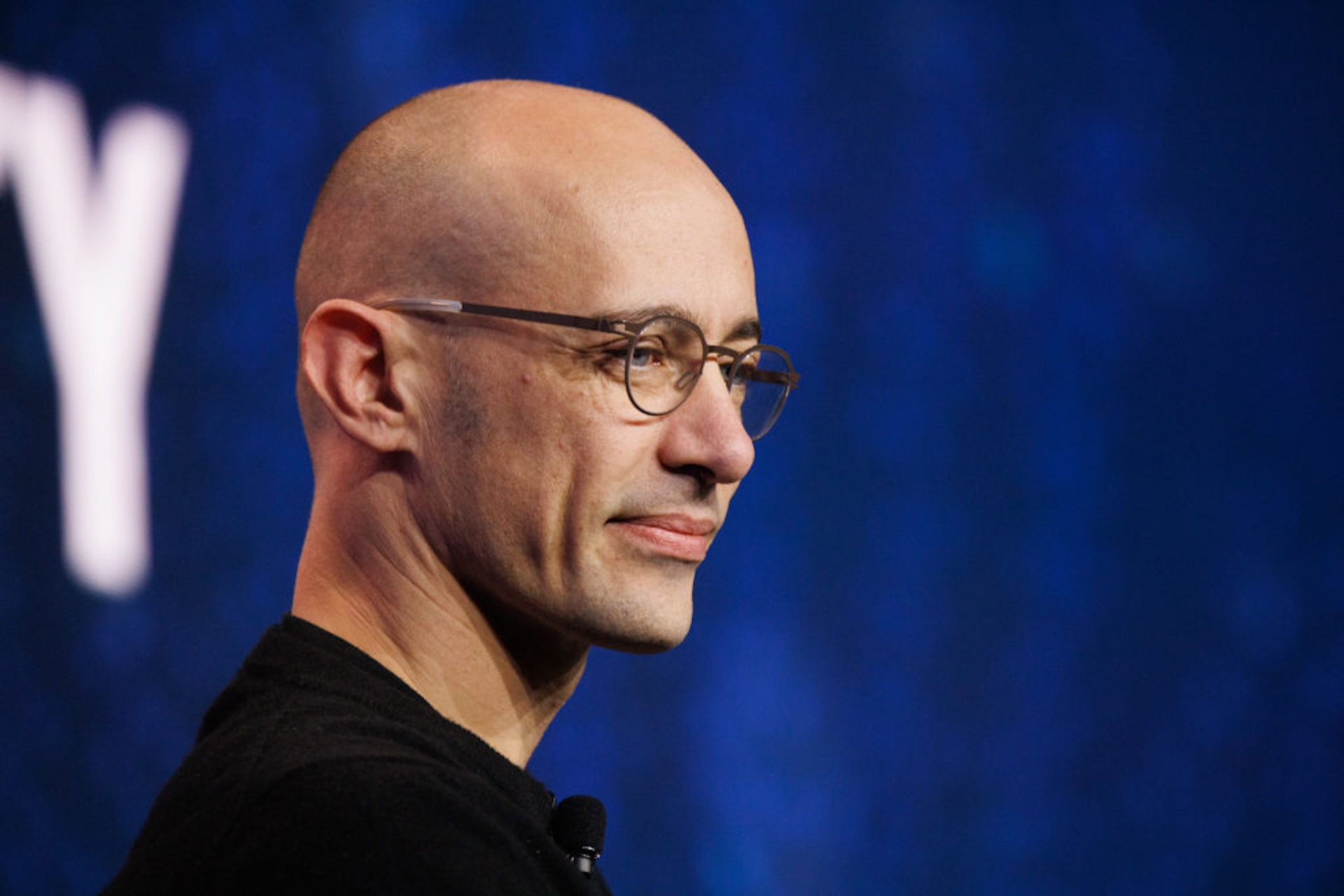
Shopify founder Tobi Lütke has likened the eliminated bits of the company to optional video game content, describing them as “side quests.” Photo: Bloomberg via Getty Images/Dustin Chambers
As the fallout from the #belonging channel shutdown simmered, staff were busy launching two of the company’s biggest-ever programs for entrepreneurs from underrepresented communities.
Build Native, which launched publicly in February 2021, was designed to increase the number of Indigenous merchants on Shopify’s platform and help them succeed. The program was developed by Ridler, Shàwinipinesì and David Pereira in the months following the Macdonald town hall. In addition to Indigenous entrepreneurs in North America, Build Native also initially supported merchants in Australia, New Zealand and American Samoa.
Participating merchants received an extended free trial subscription to the software—60 days compared to the regular 14—and access to a Slack channel where they could learn from each other. Staff had the authority to issue discounts to those customers, or send them free products like card readers.
The program also helped promote Indigenous businesses. The company’s marketing team “had a tendency, before COVID, to always go to the same merchants,” one source says, citing apparel brands Allbirds and Gymshark as two examples. Both were major Shopify success stories, starting out on the platform and growing into very large businesses. But aspiring Indigenous entrepreneurs didn’t necessarily identify with the young white men behind such brands.
Build Native helped get more Indigenous stores front and center in promotional material, featuring them in the company’s case studies and videos about e-commerce success stories. The program also took participating merchants to real-world selling opportunities like New Mexico’s Santa Fe Indian Market, which hosts tens of thousands of people each year, as well as smaller events in Toronto and Vancouver.
Indigenous merchants say they benefited from the community Build Native assembled as it helped them get more exposure. The program’s marketing campaigns converted at a higher rate than the company’s advertising efforts more generally, one source says.
Build Native was explicitly designed to be a commercial program, not a philanthropic or feel-good exercise. “To do this work long-term, it had to generate revenue,” says a source, adding that the program could have been cancelled on “a whim of an executive” if it wasn’t clear Shopify was getting something back.
Alongside Build Native, the company also launched Build Black. In the wake of the murder of George Floyd by a police officer in Minneapolis in May 2020 and the Black Lives Matter protests that followed, many large firms made public commitments to better support the Black community. That June, the firm began promoting Black-owned merchants in its Shop app, and donated $1 million to groups including the NAACP’s Legal Defense Fund.
In the months following Floyd’s murder, Lütke and other top executives met John Hope Bryant, CEO of Operation Hope, an Atlanta-based nonprofit that tries to make “capitalism work for the underserved.” In October 2020, Shopify announced it would put up as much as US$130 million in resources for an Operation Hope initiative now called 1 Million Black Businesses (1MBB), designed to help create that many firms by 2030.
Build Black, Shopify’s in-house version of that program, mirrored Build Native. Launched around the same time, it was designed to support Black entrepreneurs with educational materials, a shared Slack channel and events to showcase their businesses. Merchants involved say they found the resources useful, and that the program helped them through rough financial patches.
Build Black was also used as a marketing tool for the company. Shopify “put energy into this” because the firm “saw value from a brand perspective,” one source says. Its commitment to Build Black was always “reactionary,” another adds.
In July 2021, Shopify partnered with Facebook, the Canadian Council for Aboriginal Business and other Indigenous entrepreneurship organizations to launch We Thrive, a three-week advertising campaign on Instagram and Facebook. Under the partnership, Shopify selected 37 Indigenous merchants to feature in the posts and Facebook provided the ad space, with each firm committing $1 million to the initiative, according to one source.
We Thrive was dreamed up by Facebook and Shopify’s marketing teams, not the Build Native staff who worked with Indigenous entrepreneurs every day. And neither company was properly prepared for what came next. Instead of attracting new buyers to the Indigenous-owned stores, the We Thrive posts were bombarded by racist and vitriolic comments from Facebook users. It fell to Shopify’s social care team to monitor the backlash to the campaign, while the Build Native team was left to salvage relationships with the Indigenous entrepreneurs. We Thrive was shut down early, and most of the participating merchants never got the sales boost they’d been promised.
The We Thrive campaign did end up helping one participant: Facebook. Staff told their Shopify counterparts that the social media giant’s internal “brand lift” measure showed users thought more favourably of Facebook because of its role in We Thrive, sources say.
Also in July 2021, Shopify hired Brandon Davenport, a marketing executive based in Los Angeles, to lead its equitable commerce strategy. Under Davenport, the team, which included Build Black and Build Native, grew to include entrepreneurship programs for women and youth, as well as company-backed employee volunteerism. The unit reported to COO Shannan, who former staff say championed its work.
A lot of tech companies made commitments to equity in 2020, but Shopify was actually following through, said Ewuraesi Thompson, then-senior strategic operations manager at the firm during an October 2022 event. “It feeds into our mission of making commerce better for everyone, and everyone includes Black businesses,” she said. “We know that they’re doing amazing so we really want to invest in them to help them be on the same level as everyone else.”
The company was also looking at diversity issues within its own ranks. In 2020, the company’s workforce was 46 per cent Caucasian, a figure that rose to 60 per cent for leadership roles, according to a sustainability report published in May 2021. Black people made up less than three per cent and Indigenous people less than one per cent of either category.
To change this, the company had “embedded” diversity and belonging into “all stages” of hiring, the report said. It also engaged recruitment agencies to help find candidates from underrepresented communities for its customer support organization, and gave leaders anti-bias training. “In 2020, we added our voices to the global, collective movement for intentional action, engagement and progress” on diversity and belonging, the firm’s sustainability report stated.
By early 2023, the team focused on internal inclusion had grown to over a dozen people under David King III, head of diversity, belonging and social impact, who’d previously led diversity work at Airbnb and the U.S. State Department. The company recruited more staff from underrepresented backgrounds, and helped train them for more senior roles, a source says.
Shopify’s employee handbook, called “Checkout,” included a section explaining why increasing representation and making people feel like they belonged at the firm was so important to helping them succeed. Diversity and inclusion were “hugely critical” to creating “a healthy culture” at the company, wrote Shavonne Hasfal-McIntosh, the firm’s inclusion and innovation lead at the time.
“Can this work cause discomfort? Absolutely,” wrote Hasfal-McIntosh. “But consider the alternative, and the damage it could have on our culture, our product and our merchants.”

In January of this year, Shopify laid off the equitable commerce team that supported Black, Indigenous and women entrepreneurs. The programs had fallen under the remit of COO Kaz Nejatian in late 2024. Photo: The Canadian Press/Chris Young
As the pandemic wore on, Shopify’s culture began to change, ex-employees say. The firm’s top ranks had been filled by longtime leaders who’d helped grow the company alongside Lütke. Former staff say those executives—including Shannan and chief product officer Craig Miller, who had joined the firm in September 2011—could stand up to Lütke.
Miller left in September 2020, with Lütke taking over responsibility for product. It was the first change of many at the top. Forsyth, to whom the in-house diversity team had reported, departed in April 2021 alongside longtime chief legal officer Joe Frasca.
Shannan—one of the firm’s earliest management hires and the leadership team’s elder statesman—left his role as COO in September 2022 to take a board seat. His replacement was Nejatian, who’d joined in September 2019 and quickly moved up through the product ranks. The firm’s equitable commerce strategy, which Shannan had championed, was moved under Tia Silas, hired from Wells Fargo in April 2022 as chief people officer.
As the pandemic boom faded, so did Shopify’s bumper growth. Large-scale layoffs hit the tech sector, and the Canadian commerce company was no exception. In July 2022, the firm cut 10 per cent of its 10,000-strong workforce, including some teams that were “convenient to have but too far removed from building products,” Lütke wrote in a staff memo.
It was the firm’s first large-scale layoff, and Harley Finkelstein, one of the most senior executives at the firm and currently its president, said both internally and publicly that there wouldn’t be another. Then, in May 2023, the company announced it would cut another 20 per cent of its workforce, around 2,300 people, including by selling its entire logistics unit.
Lütke likened the eliminated bits of the company to optional video game content, describing them as “side quests.” Shopify was “subtracting everything that’s in the way of making the best possible product,” he wrote in a staff memo, adding that the firm’s main quest was “to make commerce simpler, easier, more democratized, more participatory and more common.”
It wasn’t just the number of people cut that showed a change of direction, but also who was cut. The company laid off the bulk of its internal diversity and belonging team, including King. The employee resource groups—which had previously organized events and brought together workers from underrepresented communities—were also stripped of their funding and left in limbo, former staff say. “The edict was, ‘You focus on your main job, and that’s it,’” says one.
Other former staff say ERG leaders had unrealistic expectations of what the groups could achieve internally, and that employees should not have been surprised that company leadership was singularly focused on achieving its business objectives. One ex-employee says many staff in a German office weren’t eager to participate in the DEI initiatives, and that Indigenous hiring targets didn’t make sense for most European offices.
The appointment of Nejatian as COO in September 2022 coincided with notable changes in the company’s culture. Leadership became less accepting of staff feedback and executives discouraged internal discussion of political issues and contentious merchants like Breitbart and Libs of TikTok. Sources also claim such complaints were treated as a distraction from the firm’s core commerce mission.
In late 2022, the company moved its internal communications from Slack to Meta’s Workplace. Instead of group-based discussions in channels, the new system required employees to talk via private messages, or to follow colleagues whose posts would then pop up in their feeds. “There was no rational rhyme or reason to this, as far as we could see from a work process perspective,” one source says.
The platform switch stifled conversation, because staff could no longer set up their own spaces to chat in groups, another source says. “If it wasn’t an approved thing to talk about, then you couldn’t talk about it.”
That hasn’t stopped Shopify’s leadership team from weighing in on political and cultural issues in public. Current and former staff point out that Lütke and Nejatian have regularly posted or reposted such takes on social media. For example, Lütke voiced his support for Scale AI CEO Alexandr Wang’s stance that the startup would hire for merit, excellence and intelligence (MEI), implicitly contrasted with DEI.
Nejatian, meanwhile, has posted that Canada needs to “fight the woke revisionism” about its history. In a post on X endorsing Conservative leader Pierre Poilievre, he claimed Canada was “on the verge of collapse,” in part because “we are being told that our friends are all racists and bigots and that our ancestors and history are evil.”
Nejatian is also reportedly a major donor to True North, a conservative website run by his wife Candice Malcolm. Former staff say they were disturbed by the outlet’s coverage, such as a book it helped publish that disputed the well-established negative impacts residential schools had on Indigenous communities.
Last November, True North put out a children’s book in defense of the legacy of Sir John A. Macdonald. Nejatian continues to push for the Montreal statue to be put back up.
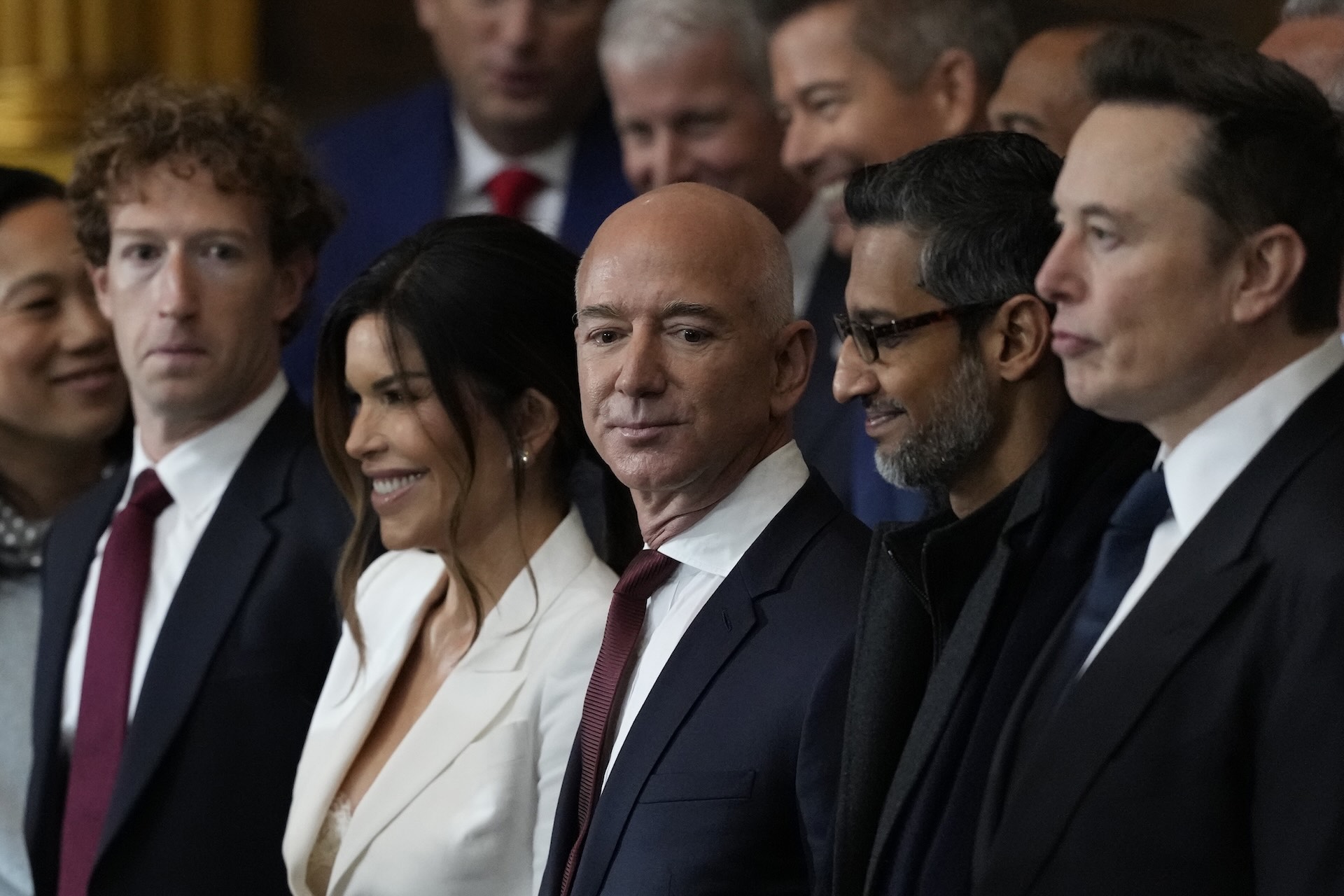
The “anti-woke” charge in Silicon Valley has been pushed by Meta CEO Mark Zuckerberg and X owner Elon Musk, men whom ex-Shopify employees claim Lütke admires. Photo: AP Photo/Julia Demaree Nikhinson, Pool
Shopify has been, in some ways, well ahead of the anti-DEI wave. In the U.S., President Donald Trump’s second term has accelerated the “anti-woke” charge. In Silicon Valley, that effort has been led by Meta CEO Mark Zuckerberg and X owner Elon Musk, men whom ex-Shopify employees claim Lütke admires and with whom he identifies. In January, Meta ended many of its internal DEI programs and shut down the third-party fact-checking system on Facebook and Instagram, which conservatives complained was biased. Musk, meanwhile, has used Trump’s authority to direct the slashing of all kinds of U.S. government operations, including purging DEI staff and initiatives.
Shopify had already cut most of its diversity and belonging team, but more cuts were to come. In January of this year, the firm laid off the equitable commerce team that supported Black, Indigenous and women entrepreneurs. The programs had fallen under Nejatian’s remit in late 2024 when Silas departed.
Also in January, the firm shut down Build Native, which by then was down to one full-time staff member and had narrowed its focus to just the U.S. and Canada. Build Black was shut down soon after. The closures apparently happened with such haste that the company initially neglected to remove links to both programs from its website footer. Indigenous and Black merchants who’d been part of the two programs were not notified of any changes, and found themselves locked out of the merchant Slack channels still operated by the company where they’d gathered to support each other and share information. The company also took down a directory designed to help shoppers find their businesses.
Build Black employees had formed personal relationships with merchants, and sources suggested support for these customers was shut down immediately. There was no succession plan to support the continuation of the firm’s participation in Operation Hope’s 1MBB program, a source says. Finkelstein remains on the board of the program, and the Build Black link on the Shopify website now redirects to the 1MBB program.
McConaghy, the Shopify spokesperson, says the company has put $190 million into Operation Hope and 1MBB since 2020, which had been used to support 450,000 Black businesses, 50,000 partners and $26 million in loans to small businesses. He added it was time to “stop corporate virtue signalling and start creating real opportunities” for entrepreneurs “facing significant challenges.”
Shopify has yet to publicly acknowledge the end of its equitable commerce strategy. Inside the firm, the cuts and closures came as a surprise. Ex-employees say Build Native and Build Black had been fulfilling their mandate of bringing in new businesses, generating revenue for the firm. The decision to cut the two programs was “a reflection of the current moment,” claims one source. “It’s ultimately a political decision.”
In a recent LinkedIn post, Davenport dismissed “the gossip” about the shuttering of the equitable commerce team, calling it “one of the boldest equity-focused initiatives in tech.” Merchants in the programs generated over US$100 million in sales via Shopify, he claimed. For comparison, the company’s total gross merchandise volume—a measure of merchant sales using its technology—was US$292.3 billion in 2024.
“This wasn’t charity. It was a strategy,” Davenport wrote, calling the equitable commerce team an “investment in innovative life cycle and cultural marketing.” He also cited as its achievements over US$1 million in grants Shopify had given to entrepreneurs, and more than 50,000 participants in educational programming and events it organized. “I had the honour of building and scaling a portfolio dedicated to unlocking entrepreneurship for underrepresented founders.” he wrote.
Other former staff say there’s nothing unusual about the firm’s priorities shifting with the times—it’s just business. In May 2023, Lütke made clear everyone at Shopify had to give their undivided attention to its mission of “making commerce better for everyone,” and cut out any side quests.
Yet the staff who worked on or supported the firm’s equitable commerce programs believed they were aligned with that mission. They believe that the “everyone” they were making commerce better for included the Black and Indigenous entrepreneurs and employees in those programs. They believed it was worth doing something about the fact, still noted in Shopify’s job postings, that “opportunity is not equally distributed.”