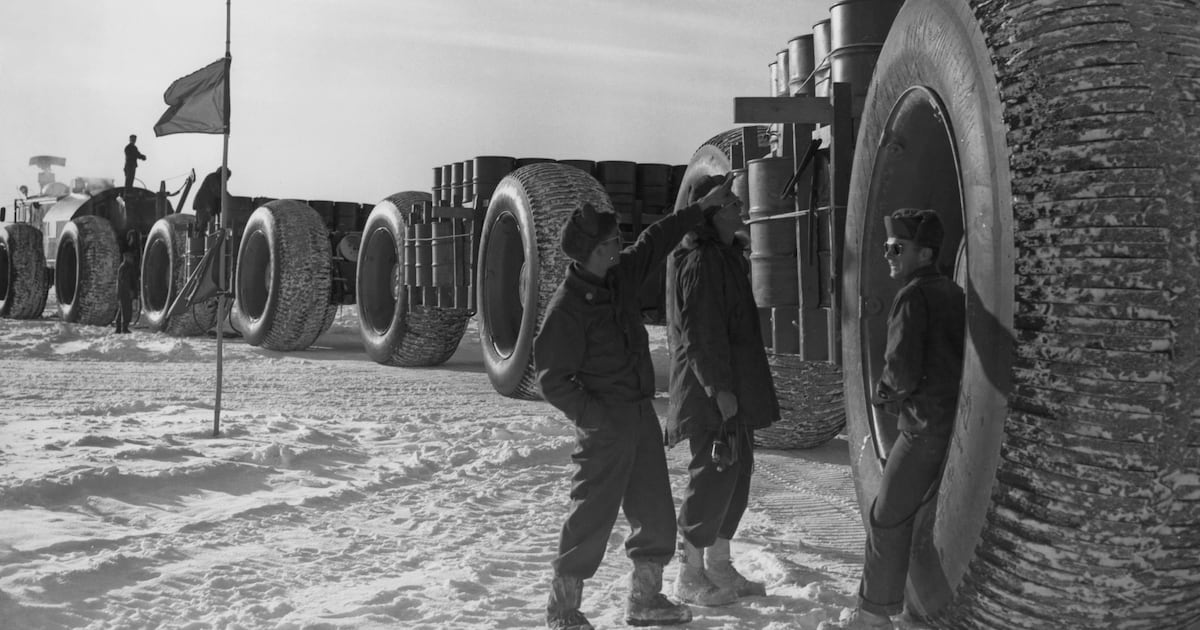
NASA scientists flying over Greenland have rediscovered an old Cold War relic: a secret U.S. nuclear-missile site buried beneath the ice for decades.
Scientists were testing a new radar instrument that can see through ice last spring when they stumbled upon a network of tunnels and structures that turned out to be the long-abandoned outpost, known as Camp Century, The Wall Street Journal reported.
Amid President Donald Trump‘s newfound efforts to seize control of the island, the rediscovered military base is a reminder of America’s long—and often contentious—relationship with the Danish territory.
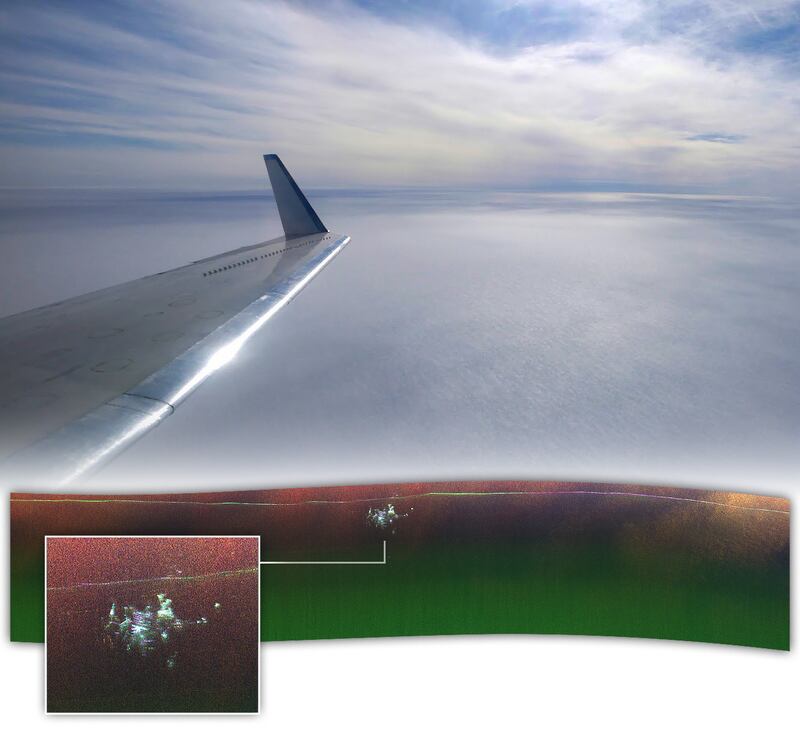 The NASA team detected the base while mapping the bottom of Greenland’s ice bed to estimate future sea level rise due to climate change. NASA Earth Observatory
The base was partially built in 1959 as the Cold War was reaching a fever pitch. However, the United States decided to scrap the project in 1967 after determining that the ice sheet was too unstable to support missile launches. According to the WSJ, the site had been designed to house 600 medium-range ballistic missiles.
Around 150 U.S. troops are currently stationed in Greenland at the Pituffik Space Base (formerly Thule Air Base), a dramatic downsizing from the 10,000 troops that filled 17 bases across the territory during the Cold War.
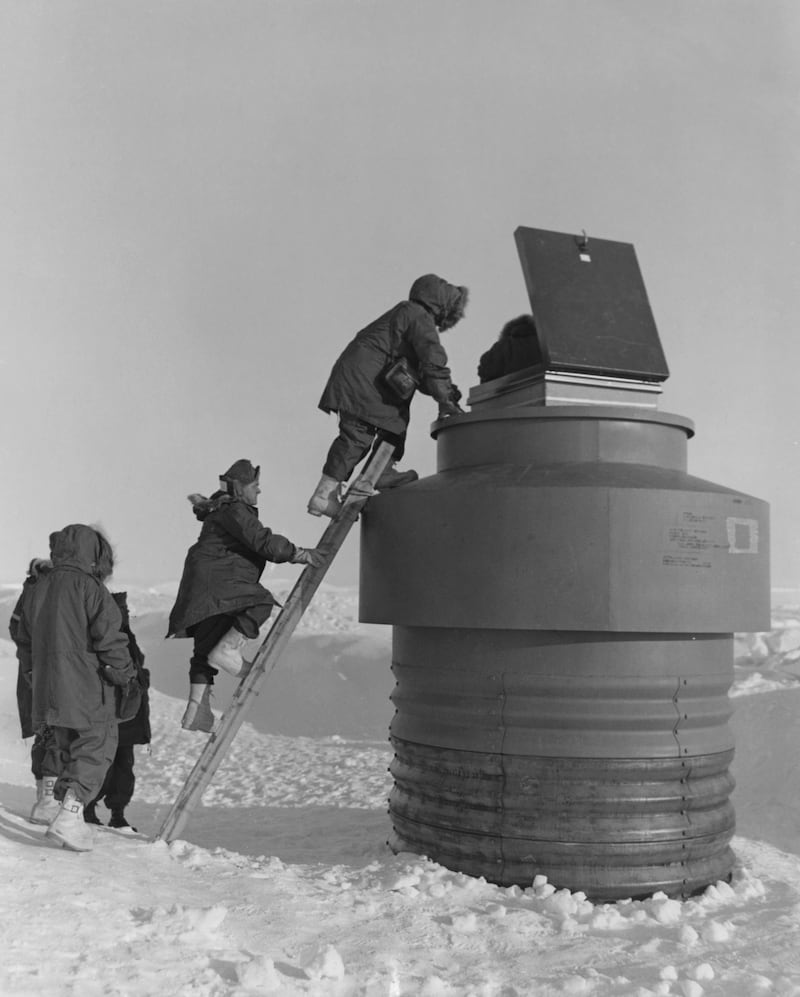 U.S. military personnel climb up to an escape hatch to enter Camp Century in June 1959. US Army/Getty Images
A 1951 treaty with Denmark granting the U.S. the right to build and maintain military bases on Greenland remains in effect—a point Danish politicians have repeatedly raised in attempts to placate Trump’s interest taking control of the territory.
After Vice President J.D. Vance visited Pituffik Space Base for three hours in March in a bizarre attempt at geopolitical posturing, Danish Foreign Minister Lars Løkke Rasmussen remarked that the 1951 treaty “offers ample opportunity for the United States to have a much stronger military presence in Greenland.”
Rasmussen said, “If that is what you wish, then let us discuss it,”
Still, Trump has refused to back down on demanding complete control, telling NBC News’ Kristen Welker last week, “We need Greenland very badly.”
“I don’t rule it out,” he said. “I don’t say I’m going to do it, but I don’t rule out anything.”
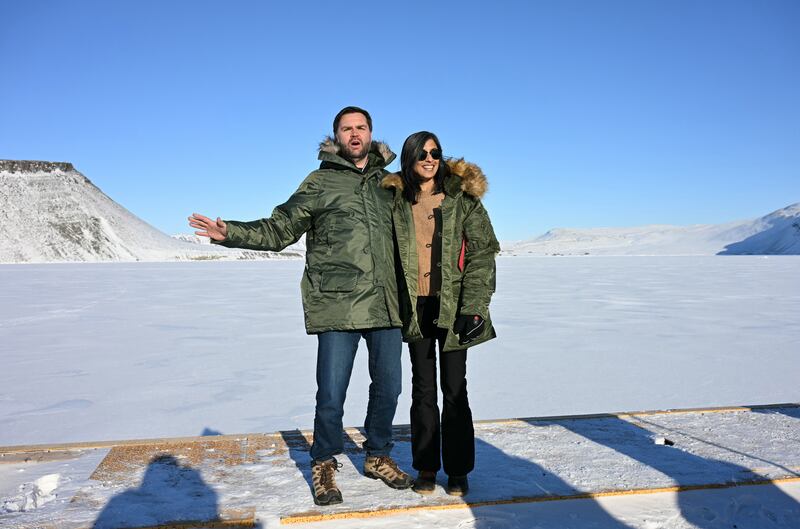 “It’s cold as s–t here,” Vance said after touching down in Greenland in March. Second Lady Usha Vance joined the vice president for the short trip. Jim Watson/Getty Images
The U.S. once offered Denmark $100 million to buy Greenland. After taking over the island’s defense during World War II, the U.S. refused to withdraw upon the war’s end and instead proposed the purchase in 1946. Denmark declined, leading to the 1951 defense agreement that remains in effect today.
“In the 1940s Denmark learned that if you say no to the U.S., the U.S. will go ahead anyway,” Ulrik Pram Gad, a researcher at the Danish Institute for International Studies, told the WSJ.
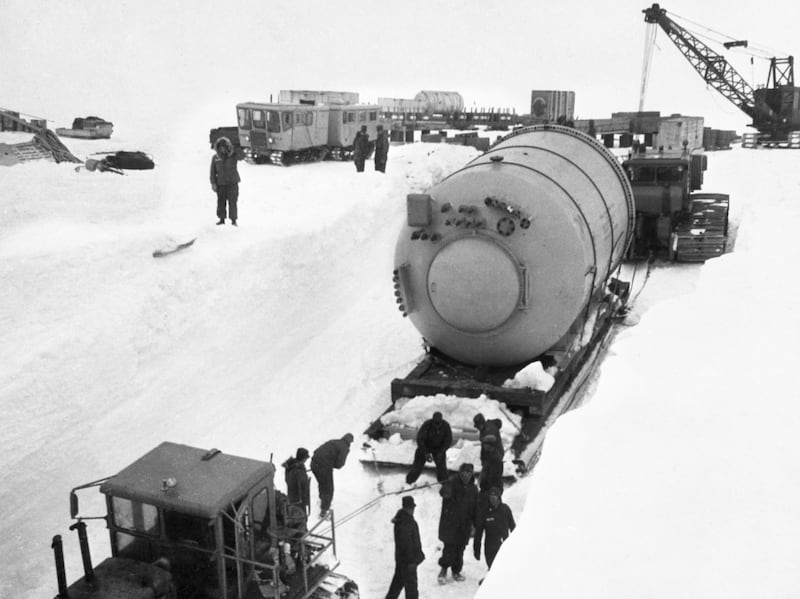 U.S. Army Engineers install move a vaper condenser, part of a portable nuclear power plant. Bettmann Archive/Getty Images
U.S. nuclear activities on Greenland during the Cold War were a source of tension with Denmark, especially after a nuclear-armed B-52 bomber crashed near the Pituffik Space Base in 1968, leading to radioactive contamination of the sea ice. The incident revealed that the U.S. stored nuclear weapons at the base without informing Denmark and sparked controversy among the Danish public, the WSJ reported.
Camp Century’s nuclear-related purpose was similarly concealed, even from many of the U.S. personnel stationed there. It’s secret remained hidden from the public until it was declassified in 1996.