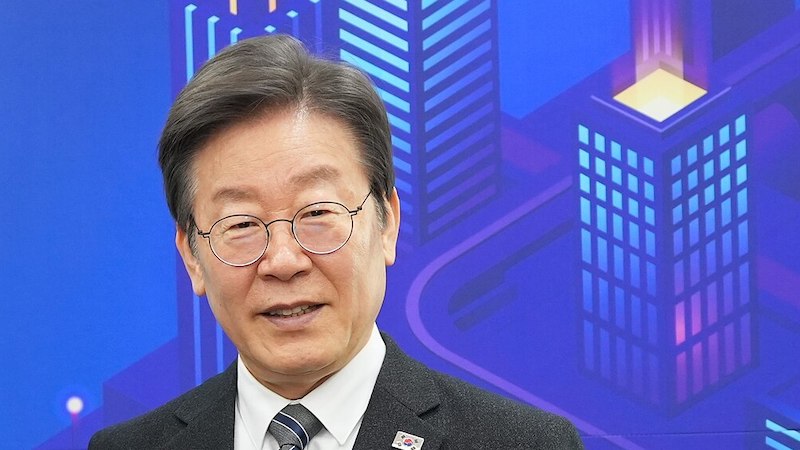
If Lee Jae-myung secures the South Korean presidency in June 2025, he will inherit a peninsula characterized by increasing strategic risks, significant economic disparities, and a North Korea that has been emboldened by a renewed partnership with Moscow.
In this context, a revitalized Sunshine Policy focused on engagement rather than isolation presents a way to reduce tensions. However, it must be accompanied by rigorous verification, ongoing diplomatic efforts, and a credible third-party intermediary to bridge the competing interests of Pyongyang, Seoul, Washington, and other regional stakeholders.
The original Policy Sunshine, enacted under President Kim Dae-jung from 1998 to 2008, achieved significant milestones: three inter-Korean summits, the creation of the Kaesong Industrial Complex that employed 54,000 North Korean workers, and regular family reunions. However, by 2016, Pyongyang’s intensified nuclear and missile programs led Seoul to suspend many cooperative projects. Critics contended that the economic incentives had not succeeded in restraining the North’s weapons development and ambitions. By 2024, inter-Korean trade had fallen to zero for the first time since formal relations began in 1989. This stark decline highlights how engagement that lacks enforceable verification can exacerbate deep-seated strategic mistrust.
Lee Jae-myung’s policy platform aims to learn from past shortcomings by incorporating stringent oversight mechanisms into any revival of engagement. His proposals include the 2018 inter-Korean military agreement, which halted propaganda blasts along the Demilitarized Zone—an arrangement that previously reduced civilian risks in border communities. He also links humanitarian aid to specific benchmarks for denuclearization. Additionally, he advocates for targeted assistance for malnourished North Korean children, citing data from the World Food Programme, which classifies hunger in the DPRK as “serious,” with a Hunger Global score index of 31. Furthermore, chronic stunting rates among children in North Korea are among the highest in East Asia. By linking food security programs with joint climate initiatives, Seoul could enhance resilience in flood-prone regions and build trust through apolitical channels.
The environmental strategy for 2025 remains problematic. On January 6, a new intermediate-hypersonic missile was successfully test-fired, featuring a glide vehicle that traveled approximately 1,100 kilometers before landing in the East Sea. In May, North Korea conducted multiple short-range ballistic missile launches—its first such tests since March—indicating the country’s ongoing efforts to enhance its strike capabilities and challenge conventional deterrence. South Korean military assessments report nearly a 20 percent increase in missile test frequency compared to 2024 levels, a trend that raises the risk of miscalculation and potential regional escalation.
One of the compounding threats is the strengthening alliance between Russia and North Korea. In June 2024, Presidents Vladimir Putin and Kim Jong Un signed the Treaty on Comprehensive Strategic Partnership in Pyongyang, which reintroduced a mutual defense clause obligating both nations to provide military and other assistance if either faces aggression. Since then, Pyongyang has sent 15,000 troops in two waves to support Russia’s operations in Ukraine, resulting in approximately 4,700 casualties, including about 600 deaths, according to the South Korean National Intelligence Service. These deployments not only show Pyongyang’s readiness to utilize manpower overseas but also suggest that Moscow may be providing North Korea with advanced air defense and reconnaissance technology in return for artillery and shells.
Given the complex interplay of security, economic, and diplomatic factors, a successful strategy requires an impartial mediator. Suitable candidates include neutral middle powers like Switzerland and Indonesia, which maintain formal ties with both Koreas, as well as United Nations agencies such as the Office for the Coordination of Humanitarian Affairs, which has previously managed cross-border deliveries under sanction exemptions. Acting as mediators, these entities could facilitate confidence-building measures, such as reactivating military hotlines to minimize misunderstandings, jointly supervising health programs to combat tuberculosis outbreaks among border populations, and managing a reopened liaison office staffed by accredited personnel to alleviate espionage concerns.
Domestic yet international challenges persist. South Korea faces opposition from bereaved families of abductees and conservative parties against sanctions or any relief unless there are verifiable steps toward denuclearization. Public opinion is divided: while around 51 percent support President Lee, only about one-third favor immediate concessions to Pyongyang without any corresponding actions. Meanwhile, the United States continues its maximum-pressure policy, linking any rollback of sanctions to concrete benchmarks for weapons dismantlement, while upholding its Extended Deterrence guarantee, which includes THAAD battery carriers and strike groups. Meanwhile, China’s position is ambivalent; it rhetorically opposes broad multilateral sanctions, yet it fears destabilization along its border and a loss of regional influence if the Peninsula descends into conflict.
Ultimately, the test of Lee Jae-myung’s presidency will be whether a data-driven and responsibly calibrated Sunshine framework can thrive in a multipolar environment where Pyongyang exploits great power rivalries to its advantage. Robust embedding verification, sustained diplomatic engagement, and effective third-party mediation offer the most plausible route to de-escalation. However, without an impartial mediator to maintain momentum, ensure compliance, and manage the differing interests of Seoul, Washington, Beijing, and Moscow, old patterns of mistrust may quickly resurface. To ensure lasting peace on the Korean Peninsula beyond June 2025, building that bridge will be just as essential as developing the policy itself.
The opinions expressed in this article are the author’s own.
References
Lee Jae-Myung’s Inter-Korean Gamble: Reviving Sunshine in a Nuclear Age. Eurasia Review, May 1, 2025.
Dealing with North Korea as It Deepens Military Cooperation with Russia. RAND Corporation, March 2025.
North Korean Leader Calls Support for Russia in Ukraine a ‘Sacred Mission. Stars and Stripes, May 12, 2025.