Please put an NSFW tag on this. I was on the train and when I saw this I had to start furiously masturbating. Everyone else gave me strange looks and were saying things like “what the fuck” and “call the police”. I dropped my phone and everyone around me saw this image. Now there is a whole train of men masturbating together at this one image. This is all your fault, you could have prevented this if you had just tagged this post NSFW
Ale ekstra! Nasz rząd z pewnością odda te zyski z podatków społeczeństwu! Jest taki prosocjalny i nie chce wcale deregulacji…
…prawda? PRAWDA?!
Thoughts from a foreigner living here.
Lovely country, lovely people. Poland is safer than many western countries and working and living here I feel that my taxes actually help the country grow.
Maybe could be better but I don’t see myself living anywhere else.
Now only if global warming comes a bit faster…
an pis supporters still shamelessly come out and write “how much did you pay to have this article written?” Those people really have no brain at all…
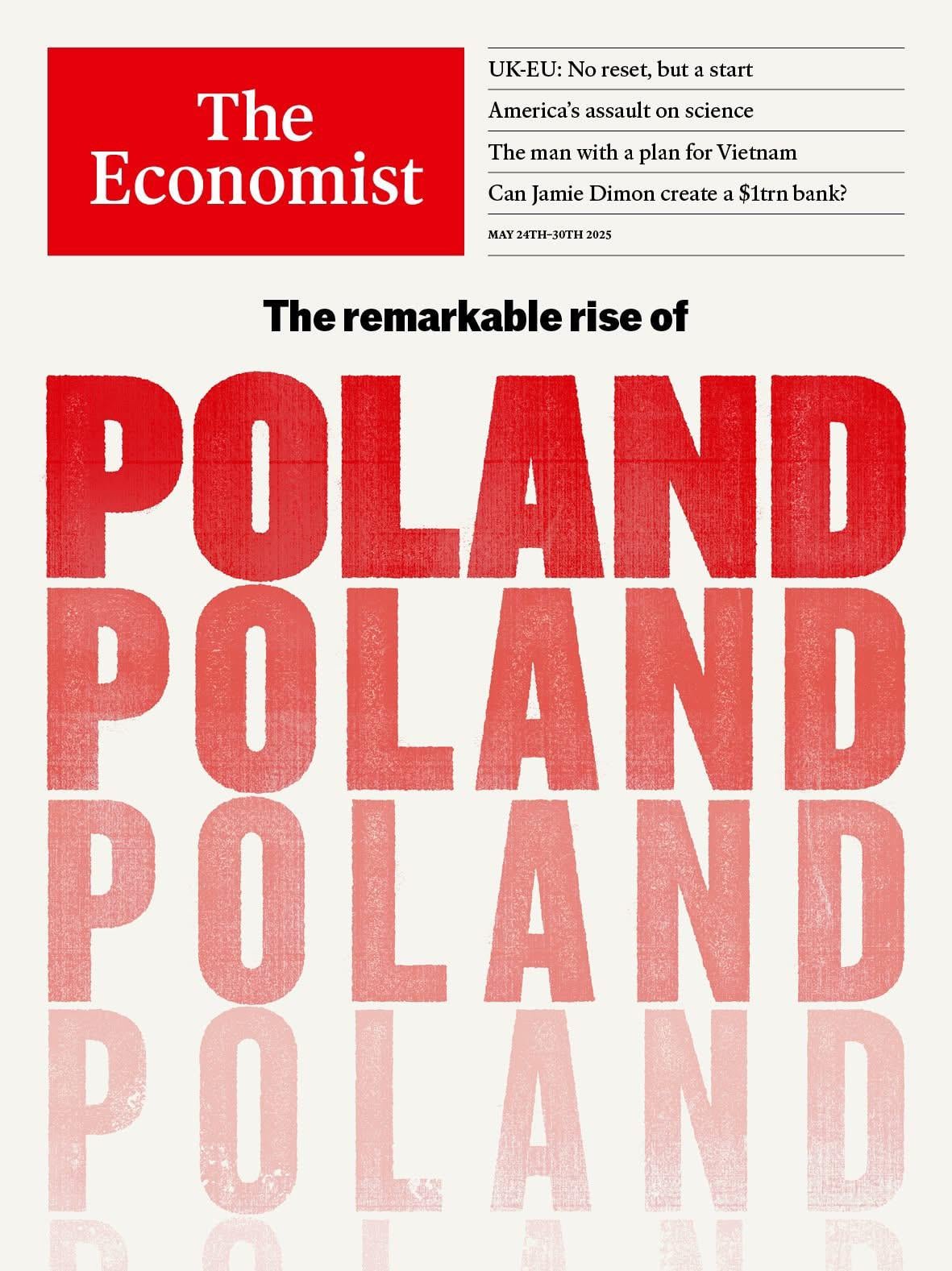
Might be worth noting here the “Magazine Curse”. When a person or group appears on the cover of a magazine, often leading to a significant decline in their career or fortunes shortly after.
“Please, please, please, PLEASE protect us from the Russians, Poland.”
POLISH MOUNTAIN 🇵🇱🇵🇱🇵🇱🇵🇱🦅🦅🦅🦅
Do the people of Poland know about that?
The article itself is excellent too, really well written
Here’s the article (I tried using gift link but sadly it only works for one person so I just copied the whole thing)
>**How Poland can keep its place at the heart of Europe**
If it turns inward, the country and continent will lose out
>TWICE IT VANISHED from the map, swallowed up by its rapacious neighbours. After it emerged from the second world war as a Soviet satellite, it endured decades of oppression. Today, Poland has transformed itself into Europe’s most overlooked military and economic power—with a bigger army than Britain, France or Germany and living standards, adjusted for purchasing power, that are about to eclipse Japan’s. Yet, just when Poland should stand proud and tall once more, is it about to throw away its influence?
>That is the question Poles face in the decisive run-off vote to elect their president on June 1st. One vision, from the candidate of the Law and Justice (PiS) party, is a brand of right-wing nationalism that feeds off conflict with Poland’s neighbours and the European Union. The other, from the centre, is that, in a dangerous world, Poland needs Europe to magnify its strengths, just as Europe needs Poland as a source of security and economic dynamism. Unfortunately, at the moment the right may have the upper hand.
>For the past three decades, Poland has shown how much a country can achieve by European integration and good economic policy. Since 1995 income per person has more than trebled. Since it joined the EU in 2004 Poland has never known recession apart from briefly at the height of the covid-19 shutdown. During those two decades, its average annual growth has been almost 4%.
>The fruits of that growth are on display across the country. Warsaw, the capital, boasts Europe’s tallest building outside Russia, the Varso tower; and below it bustles with designer shops and cafés, IT startups and fashion houses. Out in the once-neglected countryside fine roads, often built with EU money, criss-cross vistas of well-tended fields, farms and new houses.
>Poles used to flock abroad to find work, but for some years now home has been a stronger draw. Manufacturing is booming, thanks to Poland’s proximity to Germany, continuing to do well even as its western neighbour, like much of Europe, has stagnated. When Germany, under its new chancellor, Friedrich Merz, starts a planned new burst of infrastructure and defence spending, Poland is likely to be a beneficiary.
>Long attuned to the threat from Russia, Poland has used its wealth to enhance its security. It now musters the largest army in Europe after Russia, Ukraine and Turkey, and the third-largest in NATO. It spends well over 4% of its GDP each year on defence, far above the 2% that has been the NATO target since 2014, and plans to raise that to over 5% next year.
>This has translated into influence. These days the group that counts in European security is sometimes dubbed the four musketeers: the young addition to Britain, France and Germany is Poland, like the superlative swordsman d’Artagnan. Tellingly, its prime minister, Donald Tusk, travelled to Kyiv earlier this month with his three counterparts to stress that Europe is ready to stand by Ukraine even as America’s commitment has weakened. Poland’s stance is in sharp distinction to the rest of the “Visegrad Four”. Hungary under Viktor Orban and Slovakia under Robert Fico have both taken the side of Russia rather than Ukraine; and the Czech Republic is expected to tilt in that direction after elections in October.

13 comments
Please put an NSFW tag on this. I was on the train and when I saw this I had to start furiously masturbating. Everyone else gave me strange looks and were saying things like “what the fuck” and “call the police”. I dropped my phone and everyone around me saw this image. Now there is a whole train of men masturbating together at this one image. This is all your fault, you could have prevented this if you had just tagged this post NSFW
https://preview.redd.it/3rjvuzrgqb2f1.jpeg?width=557&format=pjpg&auto=webp&s=062a73ed787d8361b61f6eef6f1299581b952b2b
Polska mistrzem Polski!!!
Ale ekstra! Nasz rząd z pewnością odda te zyski z podatków społeczeństwu! Jest taki prosocjalny i nie chce wcale deregulacji…
…prawda? PRAWDA?!
Thoughts from a foreigner living here.
Lovely country, lovely people. Poland is safer than many western countries and working and living here I feel that my taxes actually help the country grow.
Maybe could be better but I don’t see myself living anywhere else.
Now only if global warming comes a bit faster…
an pis supporters still shamelessly come out and write “how much did you pay to have this article written?” Those people really have no brain at all…
Might be worth noting here the “Magazine Curse”. When a person or group appears on the cover of a magazine, often leading to a significant decline in their career or fortunes shortly after.
“Please, please, please, PLEASE protect us from the Russians, Poland.”
POLISH MOUNTAIN 🇵🇱🇵🇱🇵🇱🇵🇱🦅🦅🦅🦅
Do the people of Poland know about that?
The article itself is excellent too, really well written
https://preview.redd.it/iqol2t4wyb2f1.jpeg?width=617&format=pjpg&auto=webp&s=7462c2011ccbc2613271b2dcd23935256d6d2804
Here’s the article (I tried using gift link but sadly it only works for one person so I just copied the whole thing)
>**How Poland can keep its place at the heart of Europe**
If it turns inward, the country and continent will lose out
>TWICE IT VANISHED from the map, swallowed up by its rapacious neighbours. After it emerged from the second world war as a Soviet satellite, it endured decades of oppression. Today, Poland has transformed itself into Europe’s most overlooked military and economic power—with a bigger army than Britain, France or Germany and living standards, adjusted for purchasing power, that are about to eclipse Japan’s. Yet, just when Poland should stand proud and tall once more, is it about to throw away its influence?
>That is the question Poles face in the decisive run-off vote to elect their president on June 1st. One vision, from the candidate of the Law and Justice (PiS) party, is a brand of right-wing nationalism that feeds off conflict with Poland’s neighbours and the European Union. The other, from the centre, is that, in a dangerous world, Poland needs Europe to magnify its strengths, just as Europe needs Poland as a source of security and economic dynamism. Unfortunately, at the moment the right may have the upper hand.
>For the past three decades, Poland has shown how much a country can achieve by European integration and good economic policy. Since 1995 income per person has more than trebled. Since it joined the EU in 2004 Poland has never known recession apart from briefly at the height of the covid-19 shutdown. During those two decades, its average annual growth has been almost 4%.
>The fruits of that growth are on display across the country. Warsaw, the capital, boasts Europe’s tallest building outside Russia, the Varso tower; and below it bustles with designer shops and cafés, IT startups and fashion houses. Out in the once-neglected countryside fine roads, often built with EU money, criss-cross vistas of well-tended fields, farms and new houses.
>Poles used to flock abroad to find work, but for some years now home has been a stronger draw. Manufacturing is booming, thanks to Poland’s proximity to Germany, continuing to do well even as its western neighbour, like much of Europe, has stagnated. When Germany, under its new chancellor, Friedrich Merz, starts a planned new burst of infrastructure and defence spending, Poland is likely to be a beneficiary.
>Long attuned to the threat from Russia, Poland has used its wealth to enhance its security. It now musters the largest army in Europe after Russia, Ukraine and Turkey, and the third-largest in NATO. It spends well over 4% of its GDP each year on defence, far above the 2% that has been the NATO target since 2014, and plans to raise that to over 5% next year.
>This has translated into influence. These days the group that counts in European security is sometimes dubbed the four musketeers: the young addition to Britain, France and Germany is Poland, like the superlative swordsman d’Artagnan. Tellingly, its prime minister, Donald Tusk, travelled to Kyiv earlier this month with his three counterparts to stress that Europe is ready to stand by Ukraine even as America’s commitment has weakened. Poland’s stance is in sharp distinction to the rest of the “Visegrad Four”. Hungary under Viktor Orban and Slovakia under Robert Fico have both taken the side of Russia rather than Ukraine; and the Czech Republic is expected to tilt in that direction after elections in October.
>
(cont. in next comment)
Comments are closed.