What’s going on here?
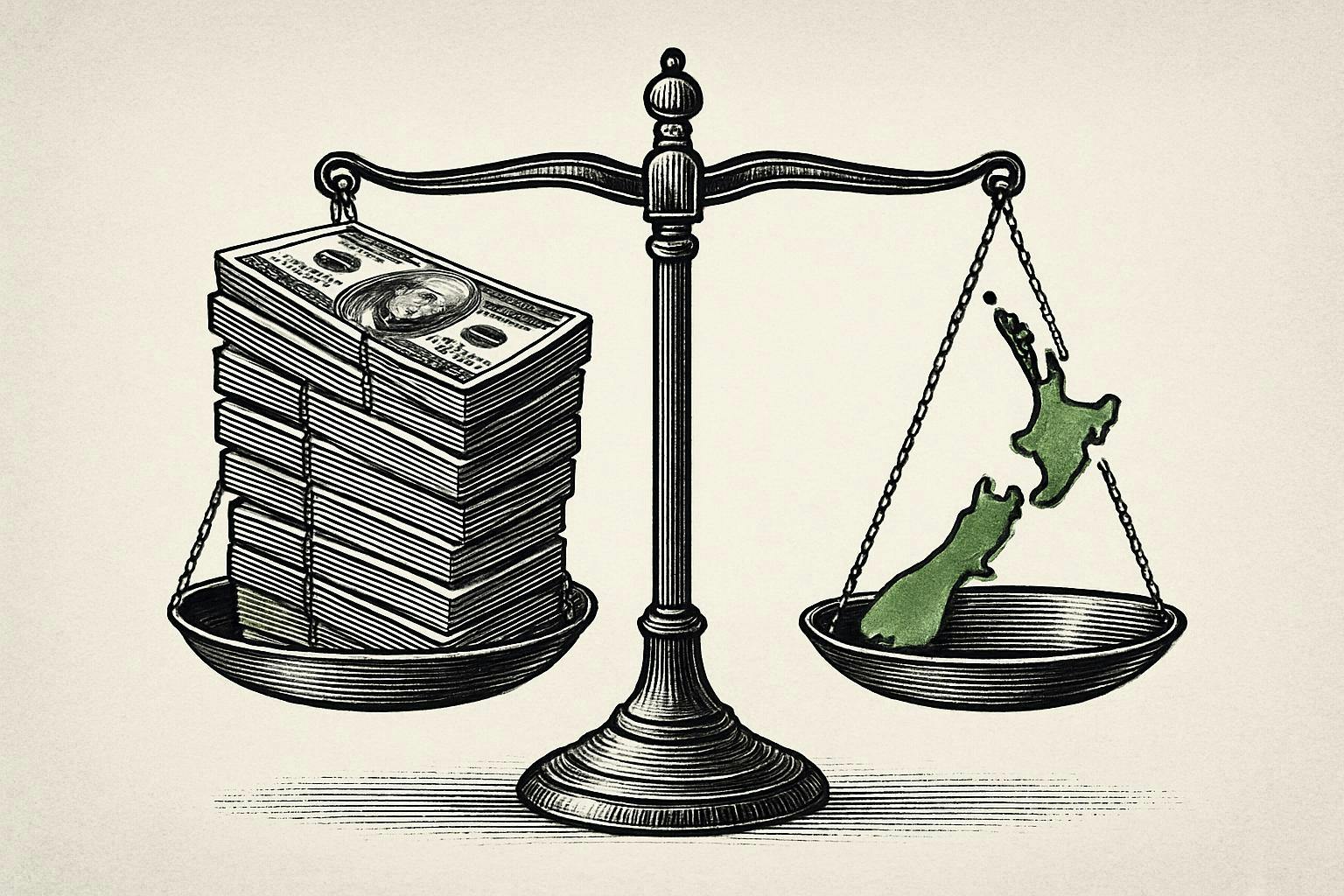
The S&P/NZX 50 Index slipped 0.52% to 12,596.50 as New Zealand reacted to US debt worries following President Trump’s tax cut bill.
What does this mean?
Wall Street remained mostly unchanged after the narrow passage of Trump’s tax cut bill, predicting a $3.8 trillion national debt increase over the next decade. The S&P 500 and Dow Jones barely moved, while the Nasdaq ticked up 0.3%. A NAB strategist pointed out that the bill overlooks US bond issuance and global bond supply issues. On a brighter note, New Zealand surprised with a 0.8% retail sales climb last quarter, defying expectations. However, the Reserve Bank of New Zealand noted a drop in household inflation expectations, paired with rising forecasts for house prices.
Why should I care?
For markets: Bracing for bigger deficits.
With Trump’s tax bill green-lit, investors need to watch the US debt, projected to balloon by $3.8 trillion. Major US indices stayed stable, but New Zealand’s S&P/NZX 50 felt a minor pinch. This highlights how fiscal maneuvers can reverberate globally, showing that even distant markets like New Zealand aren’t immune to shifts in US economic policies.
The bigger picture: Navigating economic tides.
New Zealand’s retail sector demonstrated strength amidst global unease, boasting a 0.8% sales increase in the March quarter. Coupled with Meridian Energy’s battery storage success and Channel Infrastructure’s optimistic dividend outlook, the nation presents a cautiously positive economic picture. With diverging inflation expectations and housing price forecasts, businesses and investors must remain agile in adapting to the fluctuating economic landscape shaped by both domestic developments and international fiscal shifts.