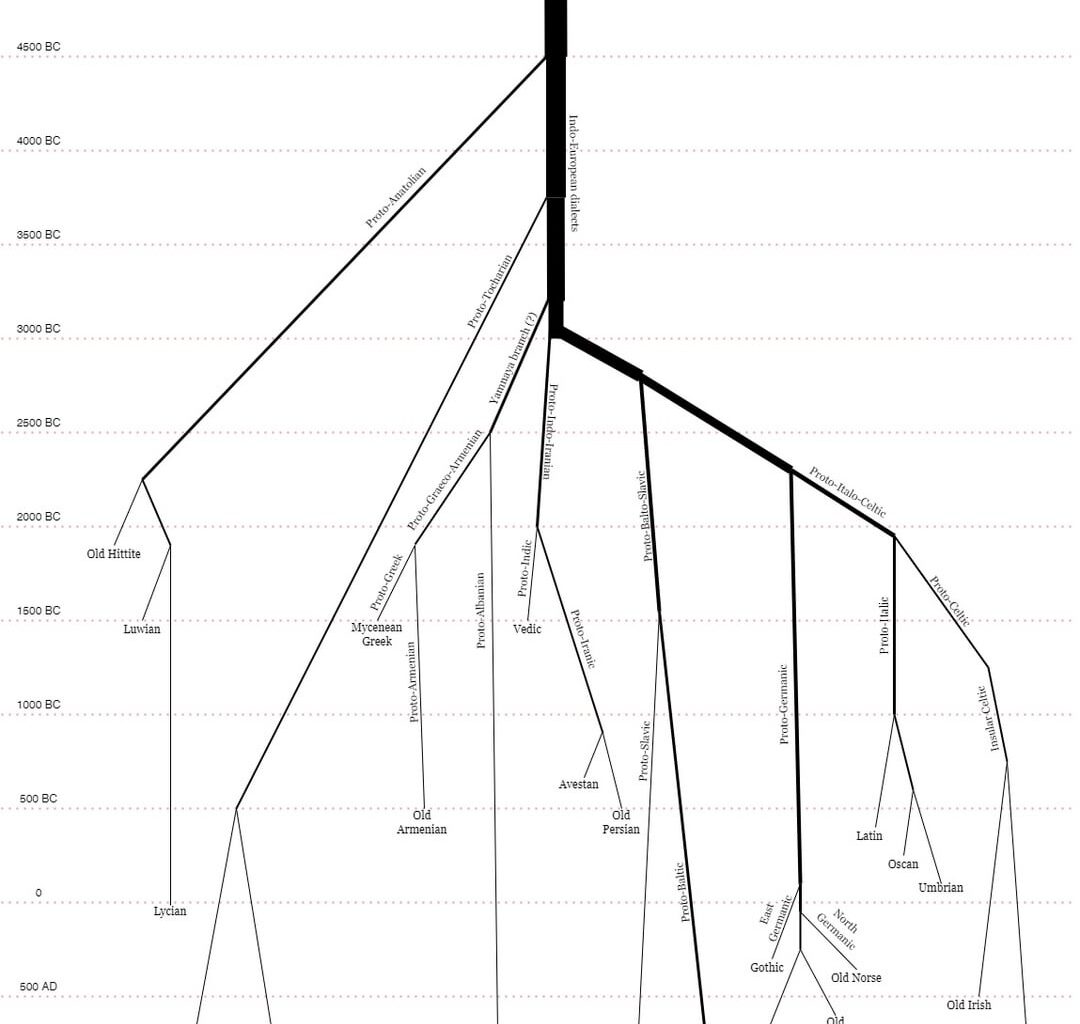
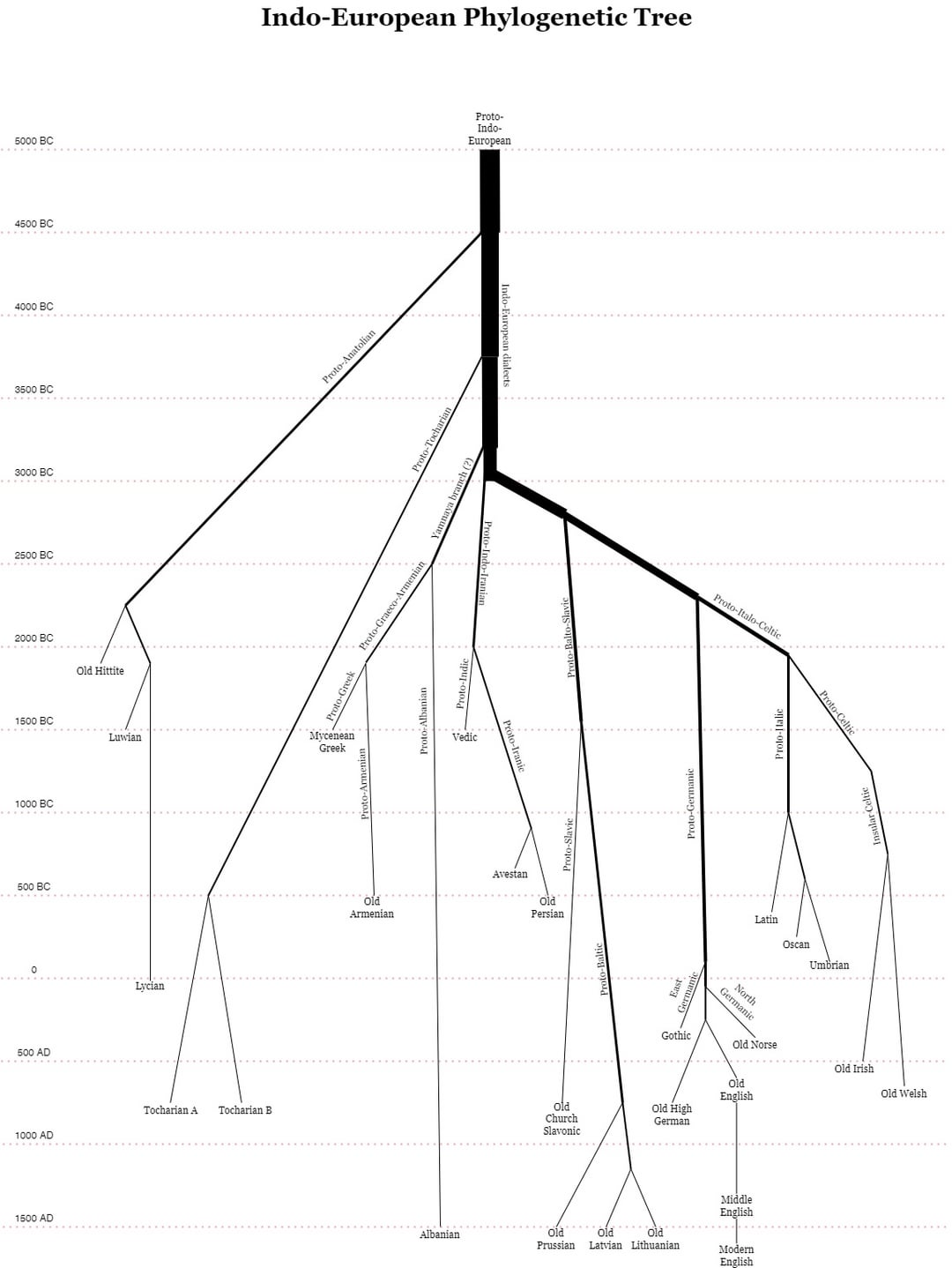
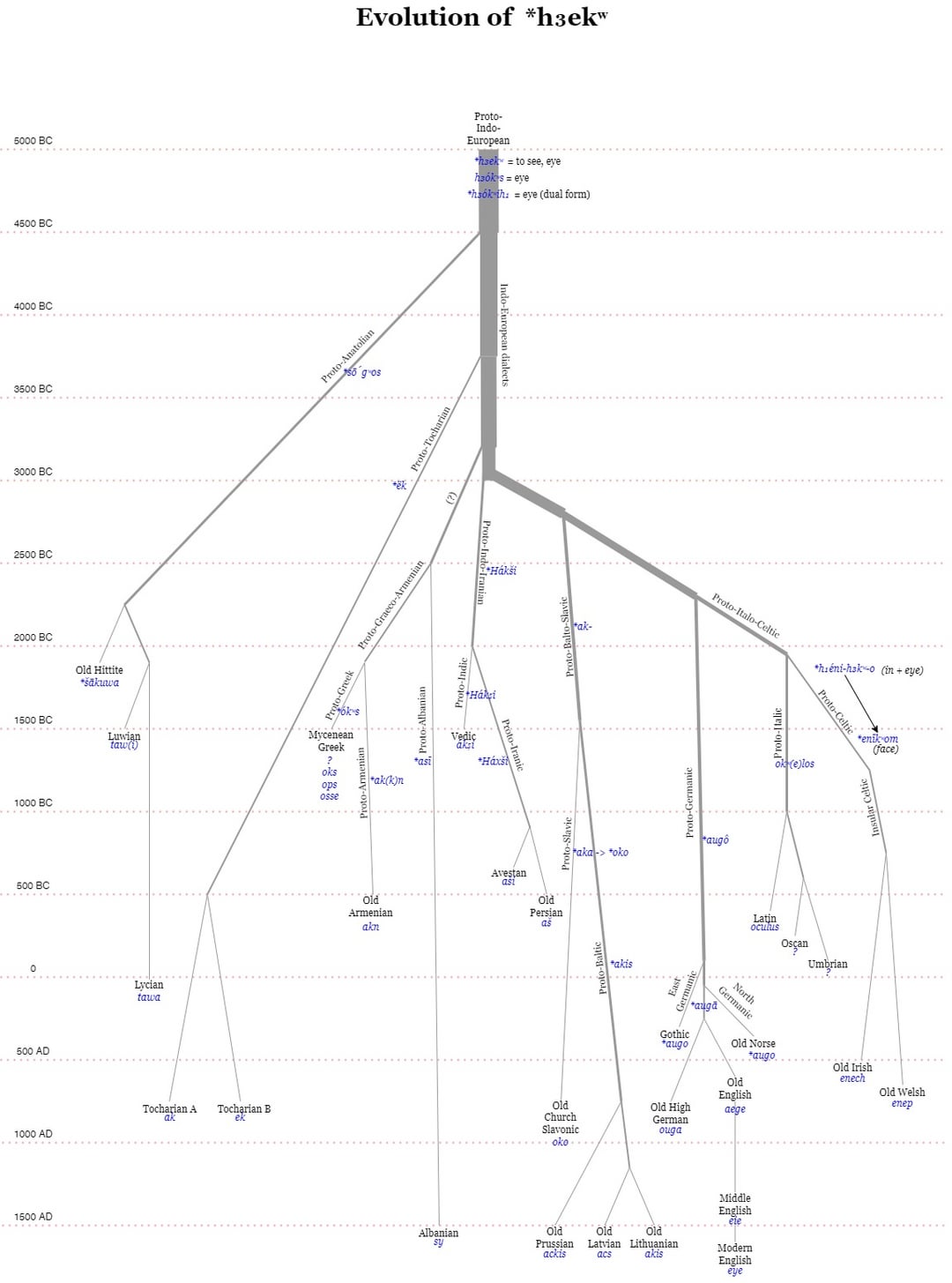
I am not a linguist and have no formal education in the subject – just an enthusiast.
There are many theories on how the Indo-European languages branch from each other – this is one of them.
The tree model itself has flaws because it doesn't strictly represent reality where there are borrowings, linguistic influence from proximity (sprachbunds), and a host of factors that complicate a clean model.
In other words take this with a huge grain of salt.
Posted by BeltQuiet
7 comments
would work on font – make font size bigger, maybe thicker. Extremely hard to read. Gave up in 10 seconds.
Doesn’t pass the smell test to me.
It is ‘akis’ in modern Lithuanian too.
Странно, что русский считают веткой балтийских языков. Другие свявянские ближе
I don’t get it – the Indo-European languages encompass almost all modern European languages (except Finnish, Estonian, Basque and Turkish) as well as a decent chunk of languages in the Middle East and South Asia. Why is Modern English the only one that is represented on this tree?
Not beautiful. The author doesn’t believe modern Slavic languages exist
I stumbled up on a tourist guide couple of weeks back at Dublin City centre who actually surprised me with relation between Irish and Hindi language. I was asked to count from one to ten in Hindi and he did everything in Irish. And surprisingly most of them were similar.
1-ek-haon
2-do-dó
3-tīn-trí
4-chār-ceathair
5-pāṅc-cúig
6-chaḥ-sé
7-sāt-seacht
8-āṭh-hocht
9-nao-naoi
10-das-deich
Only one and five sounded a bit different. Rest all sounded similar.
Comments are closed.