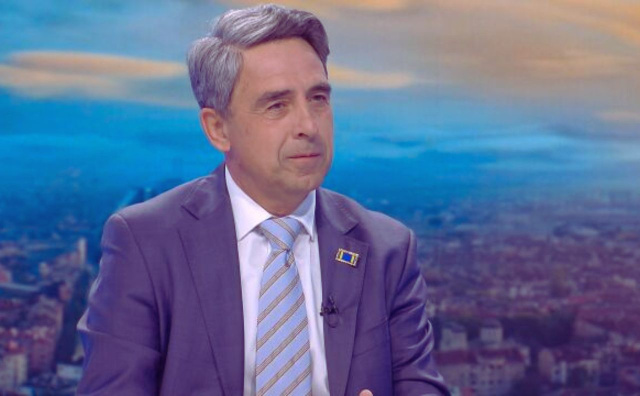
Former Bulgarian President Rosen Plevneliev spoke on bTV about Bulgaria’s near achievement of a historic milestone – joining the eurozone – a step that will shape the future for generations to come. He stressed that political actors must realize the gravity of the moment and act accordingly.
Plevneliev criticized current President Rumen Radev, accusing him of prioritizing personal political ambitions and hidden dependencies over the country’s national interests at this crucial juncture. “We see relentless propaganda and falsehoods flooding the public discourse against adopting the euro. The source of this is clear – it comes from Moscow,” Plevneliev said bluntly.
He explained that Russia pursues clear geostrategic goals in the region, and some Bulgarian politicians, unable to rise above their own interests and influences, have aligned with these ambitions. Entering the eurozone, Plevneliev argued, means full institutional integration with Europe’s core, placing Bulgaria firmly within a united democratic Europe.
Without joining the euro, Bulgaria risks remaining marginalized, vulnerable to Russia’s geopolitical maneuvers. He pointed out that President Radev’s stance is influenced not only by Russian interests but also by his own political future. Plevneliev noted Radev’s lifelong connection with Russian military hardware and training, rhetorically questioning where his loyalties lie.
On the question of a referendum about joining the euro, Plevneliev insisted it must be well-prepared and allow sufficient time to inform citizens honestly. He highlighted that all eurozone countries are wealthier than Bulgaria and that joining would mean becoming part of a more prosperous club, with benefits such as fairer prices, strategic investments, and even opportunities for Bulgarians to return home.
Asked about GERB’s chances to challenge Radev in past elections, Plevneliev acknowledged the party’s failure with candidate Tsetska Tsacheva but named other potential contenders who could have defeated the incumbent. He recalled internal GERB dynamics, pointing to a decisive meeting where Tsvetan Tsvetanov strongly backed Tsacheva’s candidacy despite doubts.
Plevneliev also noted ongoing communication between Boyko Borissov and Rumen Radev over the years, mentioning how Borisov once blocked Radev’s attempt to resign from the Air Force leadership. These past connections, however, have since turned into open political rivalry.
He further referred to statements by Russian official Reshetnikov, who openly described Radev as a key project for Russia in the Balkans. Plevneliev said he had evidence of meetings between Reshetnikov and Bulgarian politicians like Kornelia Ninova, who supported Radev’s candidacy. He also cited Reshetnikov’s interview on Bulgarian TV, reinforcing the notion of Radev as a Russian-backed figure.
Labeling Radev a Eurosceptic and an anti-European populist, Plevneliev accused him of exploiting public fears about economic hardship, referencing the costly contract with Russian energy giant Botash, which will burden even the poorest Bulgarians with a six-billion-lev bill.
Source: bTV