
BHPian Jaggu recently shared this with other enthusiasts:
According to Google, across the world, there are 30+ vehicle manufacturers who have museums dedicated to their brand. And how many of them capture the legacy and essence of the brand through the years? Just a handful. From an automobile museum perspective, Mercedes-Benz is considered one of the best, with a legacy that can be traced back to the world’s first car! Any invitation to visit such an institution becomes a bucket list item for an auto enthusiast!
Last month, when I received a call informing me that there was a trip planned with Mercedes India, I thought it would be yet another new launch or something similar. But when the actual invite was shared, my eyes lit up… a short trip of just one and a half days in Germany, but starting with a visit to the Mercedes Museum. Little did I know that this was a very exclusive event and curated for just 3 people from India, plus a handful of others from across the world – only true blue automobile journalists. One more surprise awaited us when we reached the museum. We were to have our dinner on the museum floor, sitting beside some of the most iconic cars from the Mercedes-Benz collection!
From the museum website:
The Mercedes Benz Museum in Stuttgart celebrates the automobile invented by Carl Benz in 1886: it relates its history and tells its stories, bringing both alive by placing them in the context of technology, day-to-day life, social history and popular culture. More than 160 vehicles of all types are the main protagonists. They range from some of the oldest automobiles ever built to legendary racing cars and futuristic research vehicles.
Together with other exhibits, they form the centrepiece of the permanent exhibition covering a total of 16,500 square metres in twelve rooms. This unparalleled world can be discovered on two tours that follow a “Legend” and “Collection” narrative.
Link to the museum website
The building is a marvel in itself, designed as what they term a “double-helix spiral” spanning nine levels! Starting from the top floor (one takes an elevator) and chronologically moving through the spiral walkway, you observe history pass you chronologically, while you descend.
Fun fact: the exhibition starts before the first automobile, and one is greeted by a cute, almost life-like white horse :

We had only a couple of hours at the museum, which I felt was a gross injustice! One should plan for at least a full day to cover it.
There are a few excellent threads already on Team-BHP by BHPians who have had the privilege of visiting this museum. Here are some of the reports:
What made this experience super special was that the Mercedes-Benz team had arranged for one of their classic car historians to accompany us through our quick tour, and he had some very interesting historical and fun facts to share. These were being relayed to each one of us through the communicators we were wearing throughout the walk. Now, the challenge is absorbing all of that because one cannot even take voice notes, along with the task of taking pictures. Anyway, I will try to share some pictures of what I could capture in the short duration.
So, let us cut the chase and get right down to business with some pictures.
The grandfather clock – a compact gasoline engine producing 0.8 kW, would technically be the first exhibit you see. It is named so because it resembles a grandfather clock. It weighs 92 kg, which is remarkable for the year 1886, I would say:

5 HP Benz 2-cylinder opposed-piston engine. Karl Benz did not develop his first gasoline engine with more than one cylinder before 1897, but in so doing, opted for a new principle. While Daimler and Maybach built their engines with cylinders arranged in a V-shape or parallel, Benz developed an engine family with two cylinders arranged opposite each other. With this design, which he called “contra engine”, Benz had created the world’s first horizontally opposed piston engine:

5 HP Daimler 4-cylinder engine. Daimler supplied the first four-cylinder gasoline engines to customers as early as 1870 – a 12 HP version with 371 cubic inch displacement and a smaller 6 HP unit with a displacement of 147 cubic inches (on display). Like many of the early gasoline engines, both were used to power boats. 4-cylinder engines were not installed in road-going vehicles before 1898:

To be honest, I never knew Mercedes-Benz also made motorcycles. This one is from 1886, making 0.4 kW and with a top speed of 12 km/h:
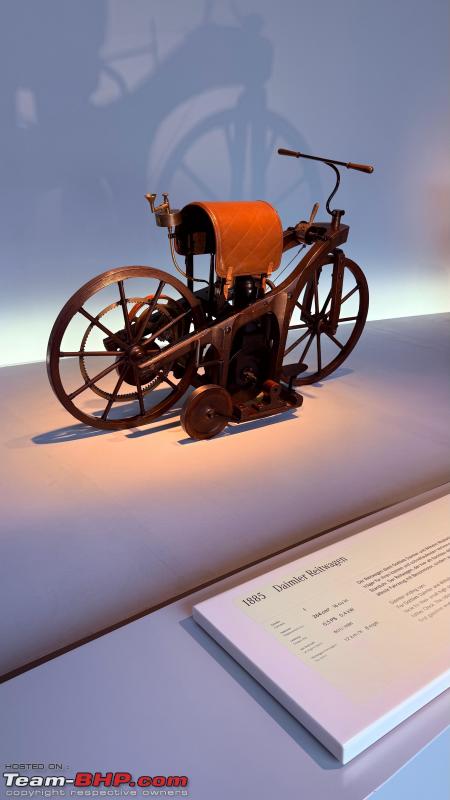
From the archives:
Gottlieb Daimler registers a patent for a two-wheeled “vehicle with gas or petroleum engine” (patent no. DRP 36 423 issued on 11 August 1886). The test vehicle, producing 0.5 HP / 0.37 kW and also described as “petroleum riding car”, is the world’s first motorcycle. On 10 November, Gottlieb Daimler’s younger son Adolf, undertakes a maiden journey from Cannstatt to Untertürkheim, reaching speeds of up to 12 km/h.
Who invented airplanes? The Wright brothers, says Wiki, but there is a Mercedes invention from 1888, powered by a similar 1.5 kW motorised airship. This is a replica, though:
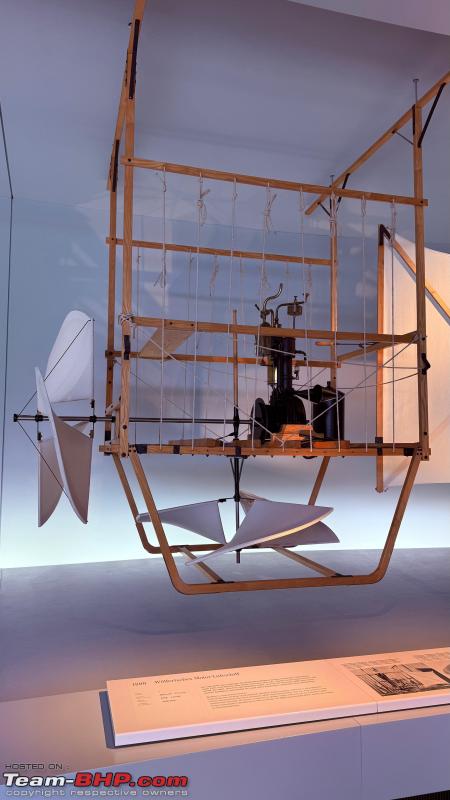
From the internet:
This airship, powered by Daimler’s “Grandfather Clock” engine, made its maiden flight from Cannstatt’s Seelberg, landing after about six miles in Kornwestheim. This event is considered by some to be the world’s first motorised airship flight.
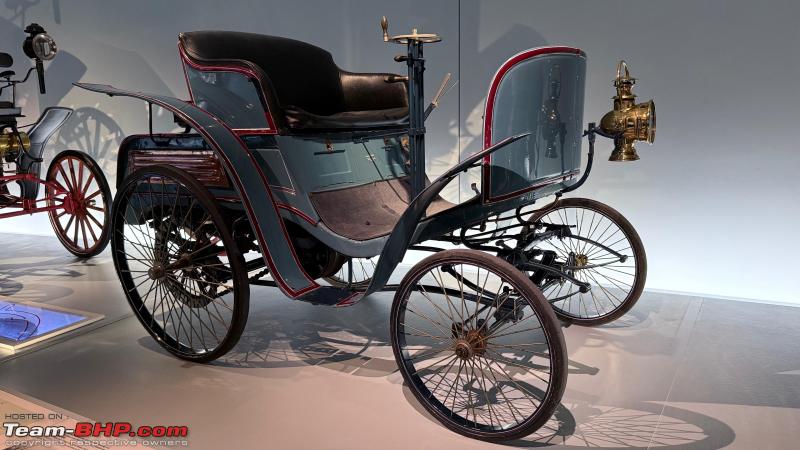
Benz Viktoria was the first 4-wheeled automobile that Benz made. It came with the invention of a kingpin steering system. Even to date, this steering helps vehicles to corner better:

The first large-scale production car (1200 units were sold between 1894 and 1901) was called the Motor Velocipede:
Daimler Reimenwagen: 150 of these were built with three inventions from Wilhelm Maybach. You can term it the great-grandad of the current Maybach. Inventions included a spray nozzle carburettor, belt drives, and a Phoenix engine making a whooping 3.4 kW or 4.6 HP!

Benz Dos à Dos had the first opposing piston engine developed by Benz & Cie. Now, you will wonder what Dos à Dos means? Simple. Occupants are seated back-to-back, unlike other models:

Now, all these cars had one serious flaw. While they needed a few gallons of fuel to run, they used to consume almost 100 litres of water in an hour! This made it torturous to plan a long trip, and this was one of the major grievances that Mrs. Benz had. That led to the invention of a closed-loop water cooling system with radiators! From the first model of Mercedes, most of the flaws were pointed out by Freda Benz. Those were fixed with future models and again vetted by Mrs. Benz!
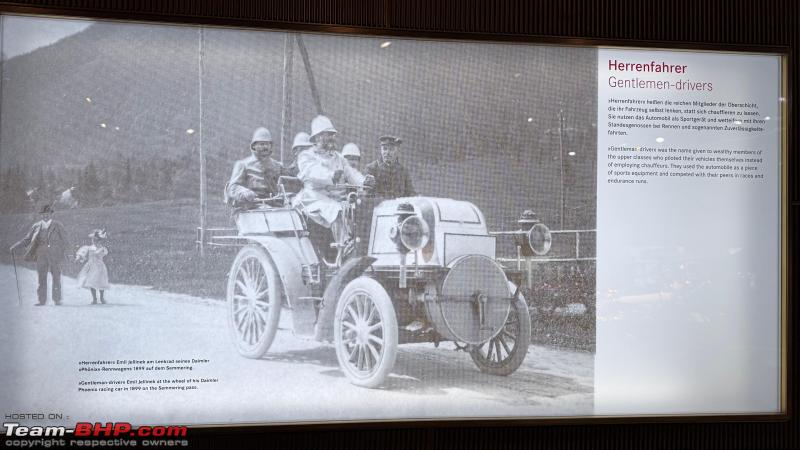
Craze for motorsport was there right from the early days of automobiles, apparently, and Gentleman Drivers were the term given to wealthy individuals who used to prefer driving to being chauffeured. Fun fact: wealthy individuals would buy cars and race them under pseudo names to avoid bringing a bad name to the family in case things went wrong or if they lost an event.
“What is wrong with this picture?” was the question asked of us. Well, almost everything! This was a typical automobile that would race, and most often, the passengers would fall off the vehicle while taking a corner; sometimes the whole car would topple and whatnot! The problems included a high centre of gravity, seating position, position of engine and axles, and much more. That is how the next era of inventions came into the modern automobile:
40 HP Mercedes-Simplex, the oldest Benz still in existence and the successor to the 35 HP Mercedes by Maybach. It is known as the first automobile of the modern age. The name Simplex denotes the relative ease with which it could be operated (at least for that era):
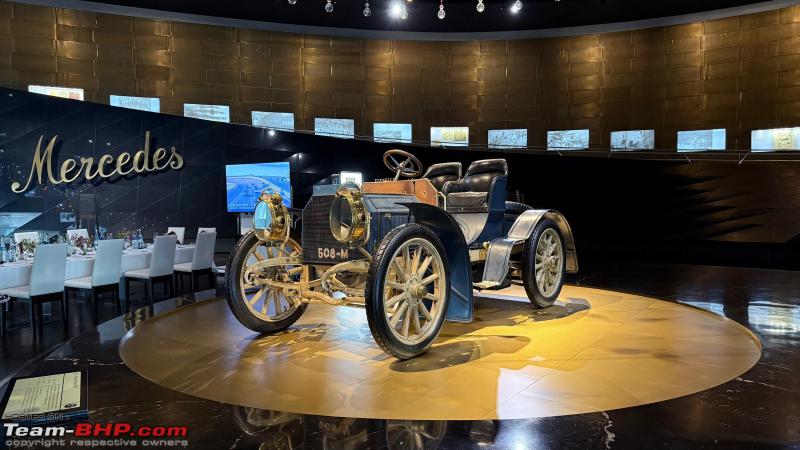
From the archives:
The 40 HP Mercedes Simplex, first supplied in March 1902 along with the 28 hp version, dominated the Nice Race Week in April 1902 even more than the first Mercedes had done the previous year. E.T. Stead was victorious in the Nice – La Turbie hillclimb race at an even higher average speed of 55.2 km/h.
“Mercedes Simplex” was the talk of the town and inspired no lesser person than Emperor Wilhelm II to come up with a bon mot. At the Berlin motor show in March 1903, he told Wilhelm Maybach: “A truly beautiful engine you have here! But it’s not as simplex as that, you know.”
One of the first 40 HP Mercedes Simplex cars was received in March 1902 by the American billionaire William K. Vanderbilt Jr. who already owned a 35 hp Mercedes. In May, he undertook a record attempt in the new Mercedes top model on the road from Ablis to Chartres, where he reached a speed of 111.8 km/h.
Today, Vanderbilt’s car is displayed in the Mercedes-Benz Museum and is regarded as the oldest Mercedes still in existence.
The tables had been set; we were to dine right beside this installation!
Coming back to the car, the axles were sorted with the right positioning of the engine, seating was lowered, and the passenger position and centre of gravity were lowered. All these were big innovations that led to the modern car as we know it now:
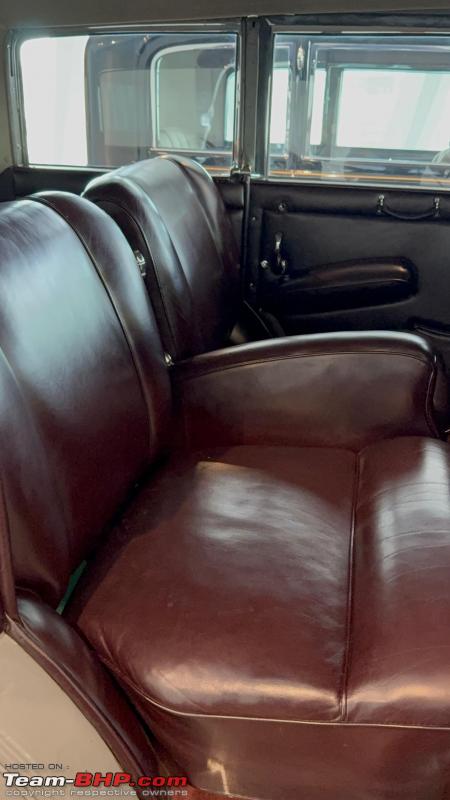
Some rather royal cars. Automobiles were always associated with wealth and aristocracy. Not surprisingly, one could see many kings having some of the best customised cars. This one had an intercom system from the royalty to the driver’s side. Those huge horns on top were where instructions were passed on. Proper leather customised interiors and machined to perfection:


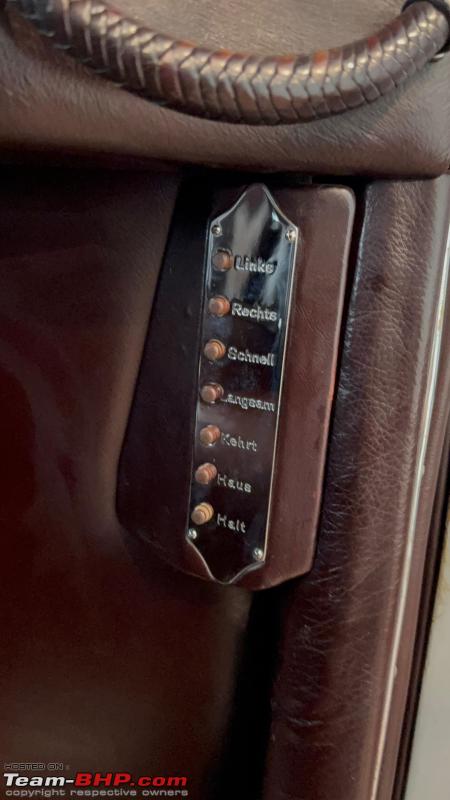
This car was made for the Emperor of Japan. He had a communication system operated by buttons in the passenger cabin. Those in turn would alert the driver, with instructions being displayed in the driver’s cabin. Evolution from the trumpet intercoms:

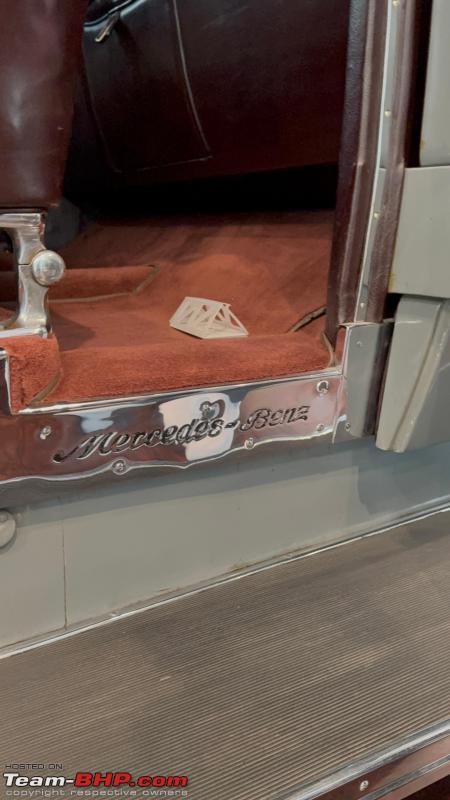
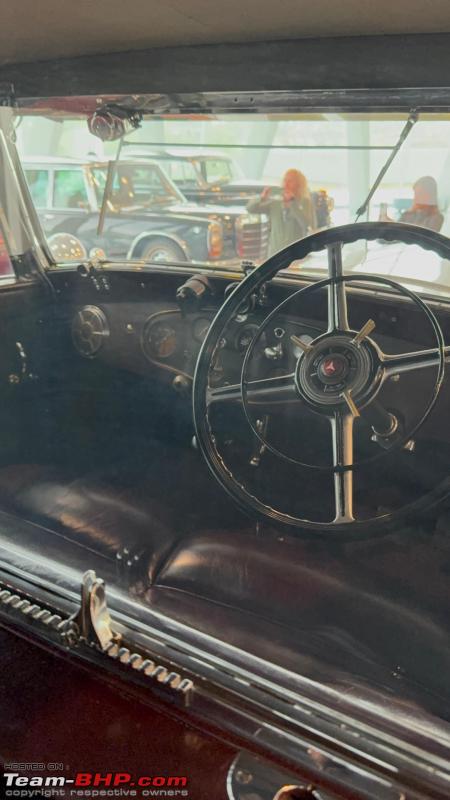
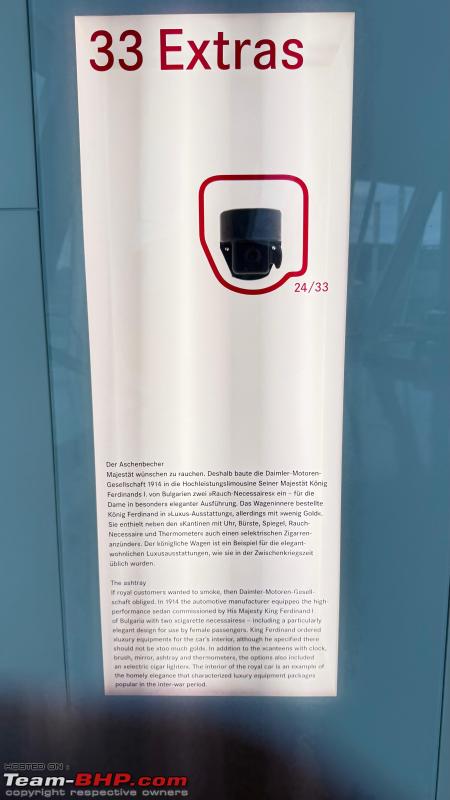
How about some customisation for smokers?
The ashtray- If royal customers wanted to smoke, then Daimler-Motoren-Gesell-schaft obliged. In 1914, the automotive manufacturer equipped the high-performance sedan commissioned by His Majesty King Ferdinand I of Bulgaria with two cigarette necessaires – including a particularly elegant design for use by female passengers. King Ferdinand ordered luxury equipment for the car’s interior, although he specified there should not be too much gold. In addition to the canteens with clock, brush, mirror, ashtray and thermometer, the options also included an electric cigar lighter:
The emblems, aka the jewellery that has adorned the vehicles over the years. You can also see the other accessories and even official cutlery that one could get with the vehicle:

The world’s most valuable car, anyone?
Daimler-Benz developed this closed version of the 300 SLR racing sports car for the 1956 season. Two cars were built. However, they never raced, because the company decided to pull out of motorsport at the end of the 1955 season. Instead, Rudolf Uhlenhaut, head of the test department, repeatedly used them for business trips. Mercedes-Benz Group AG sold the second 300 SLR Coupe to a collector in 2022. The sales price of 130 million Euros makes it the world’s most valuable car.
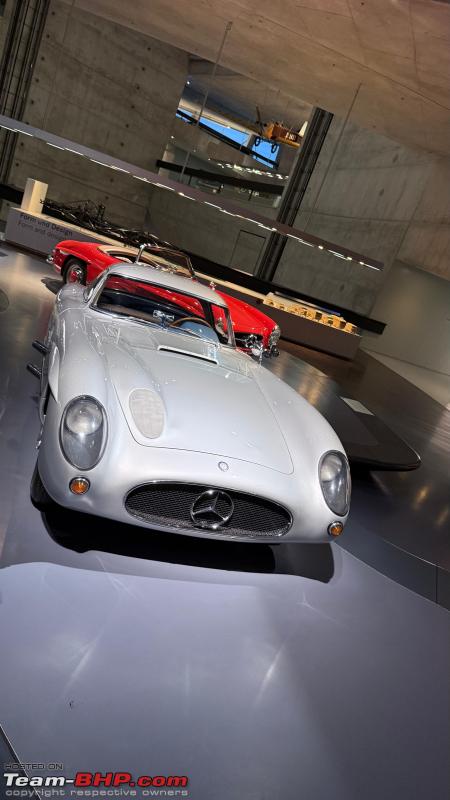
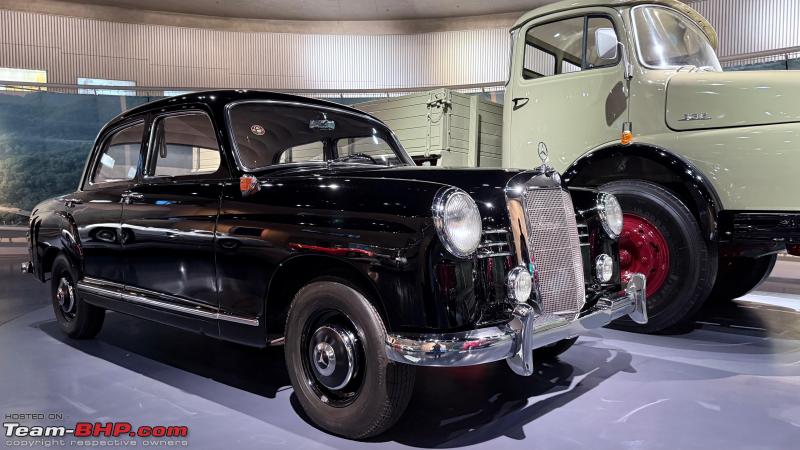
Some more modern cars from Mercedes. Will let just the pictures do the talking here.


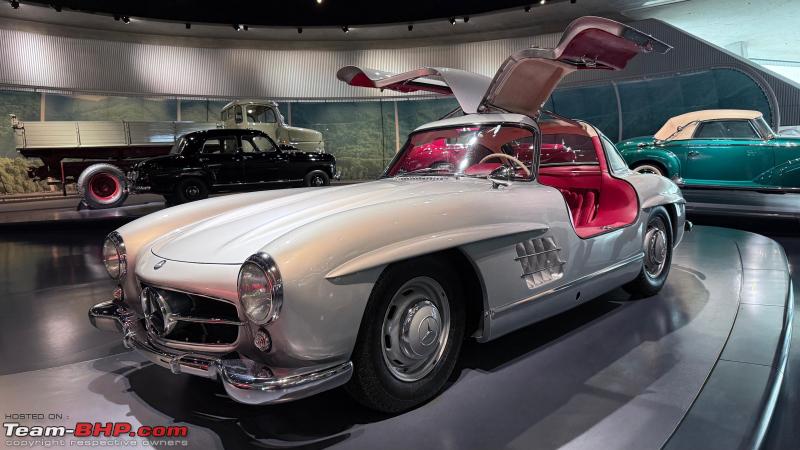
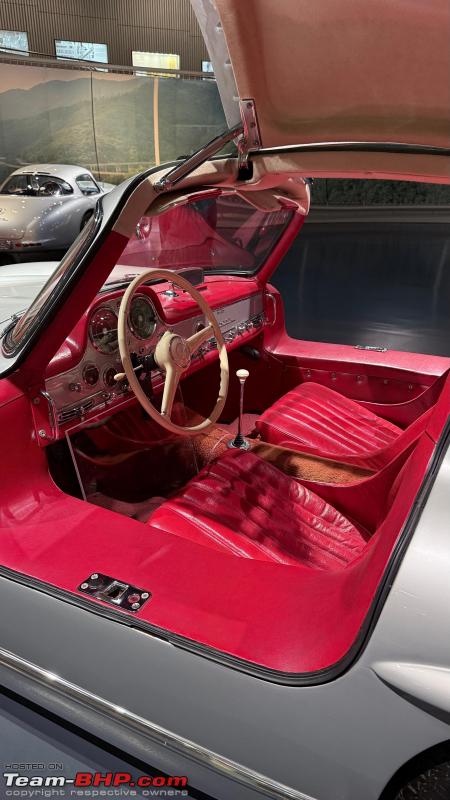

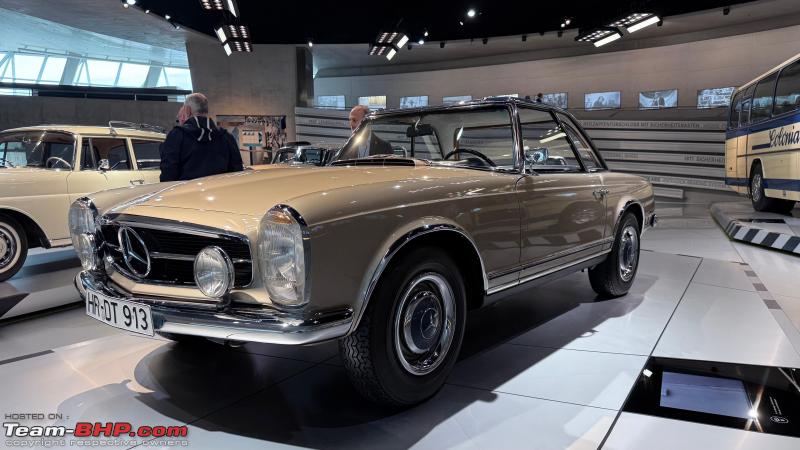
Now, this was an interesting one. Wondering how the real-time testing data logging was done in those days? Test-car in the front and…
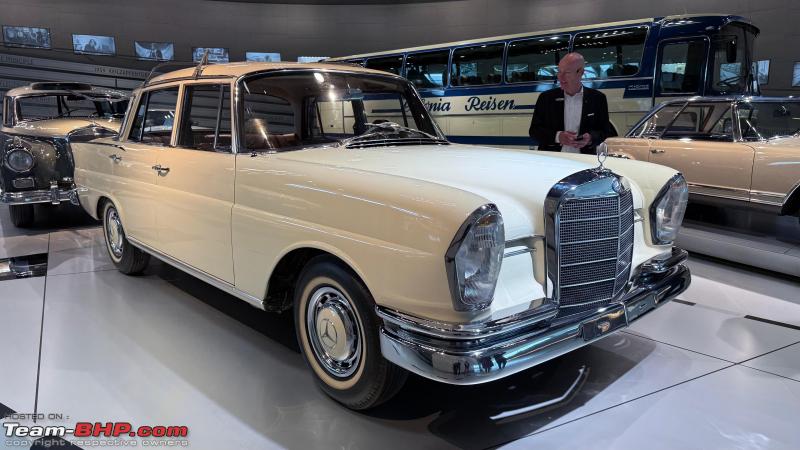
…this custom-built car for data collection during new vehicle development, following it. The car in front had sensors which relayed the data over the cables connected, and the wagon at the rear had the computers and other equipment that read, stored, and analysed the data:


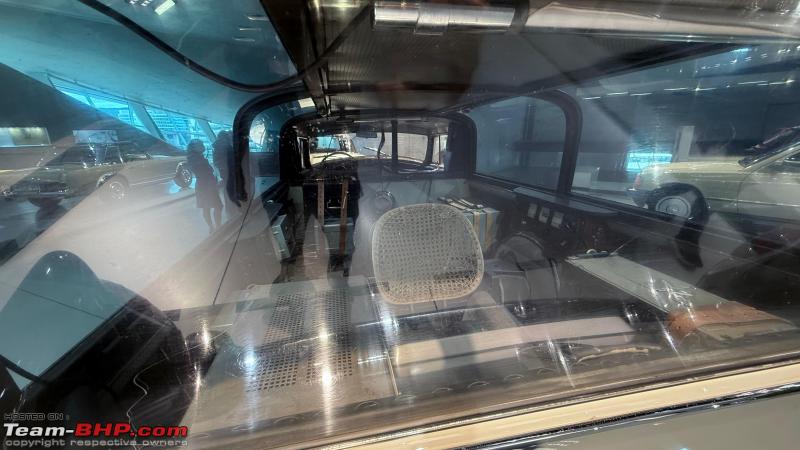
This one was an icon when it came to safety – the experimental safety vehicle that was used for the airbag and belt tensioner system. It was made in 1973 before I was born. Pretty much the same system works in modern automobiles:

Pope mobile, anyone?
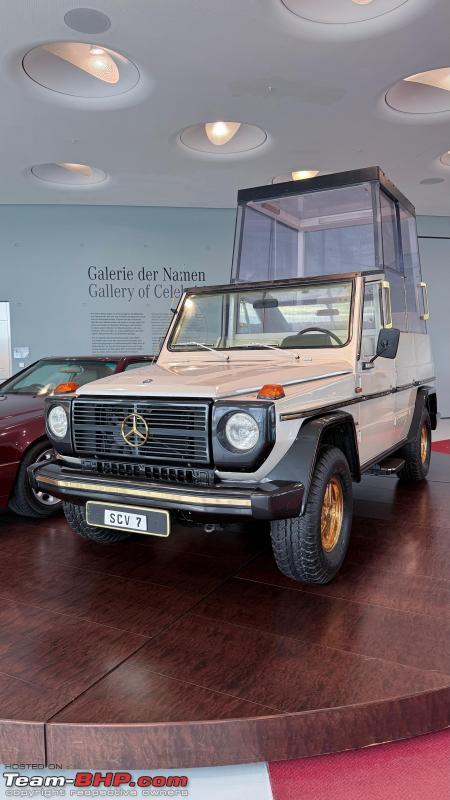
This bus was a replica made because the company could not find the original bus that ferried the 16 football World Cup participants in 1974. It was completed just before the COVID lockdown. Later, the news came from one of the visitors to the museum, who was a dealer in a South American country, that one of them might be surviving out there:

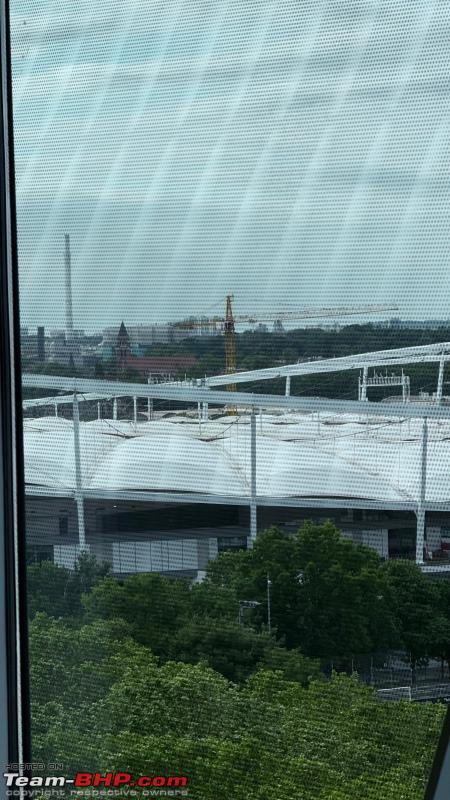
Look towards the chimney tower on the left. Do you see a church to the right of that tower before the crane? That is where Karl Benz is buried! How many museums offer such a view and story to tell?? And now you know why Mercedes chose this area. The view of the old town with many stories associated with this brand makes the whole place very special. It is a cultural spot for the city, and many events happen here. There is a conference facility that can be rented out if you want to conduct company meetings:
We were short of time and needed to hurry up if we were to cover a few more exhibits from the collection before it was time for dinner:

This shot is from a secret viewing location, which is not open to public otherwise, and those are real crystals – some 48 (or was it 72) hanging! And yeah, that’s our dinner table. After a briefing and some interesting chat over dinner, I decided to do a quick walkaround and take some more pictures. It is a very weird and sometimes eerie experience to walk around a huge museum all alone at night. There are, all in all, about 160 exhibits, and a few of them get updated or rotated around, which means even a quick top-up trip to this museum every few years is worth it:

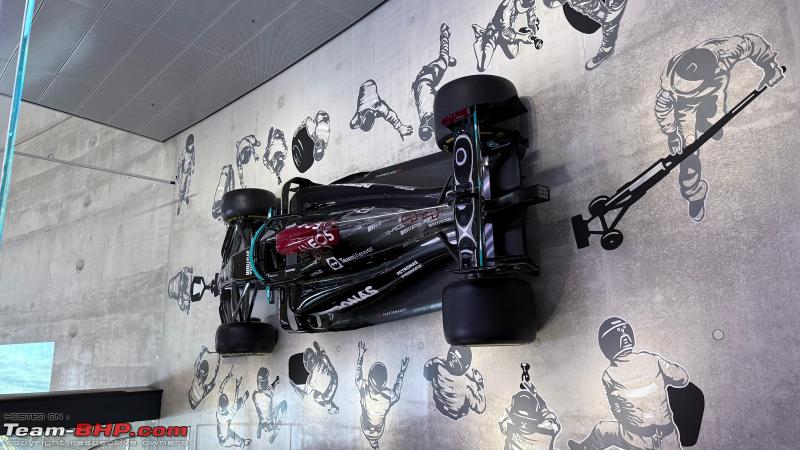
Some more interesting cars and other displays from the motorsport floor. I will not even attempt to explain the heritage because that would take another thread and apart from the quick walk around, I could not spend much time here:
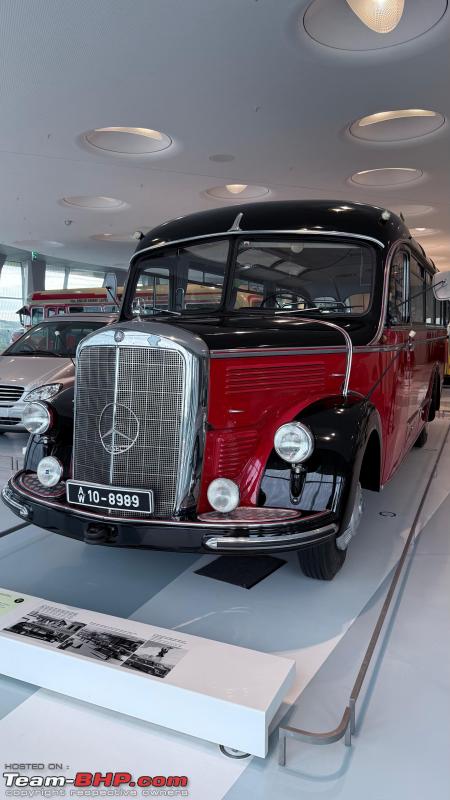
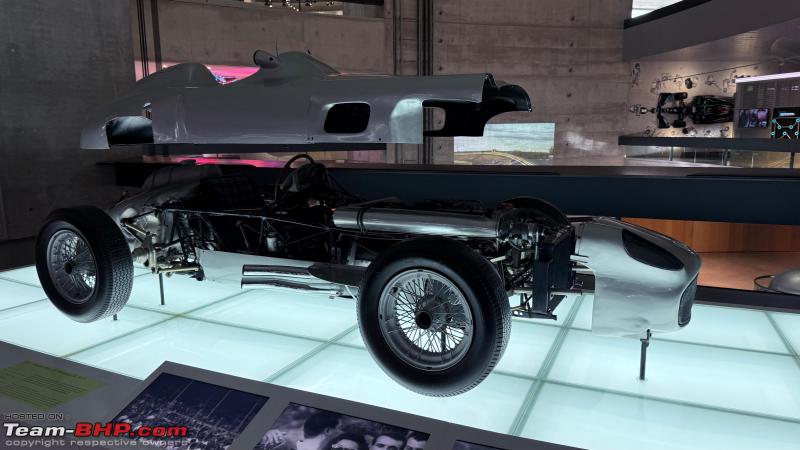

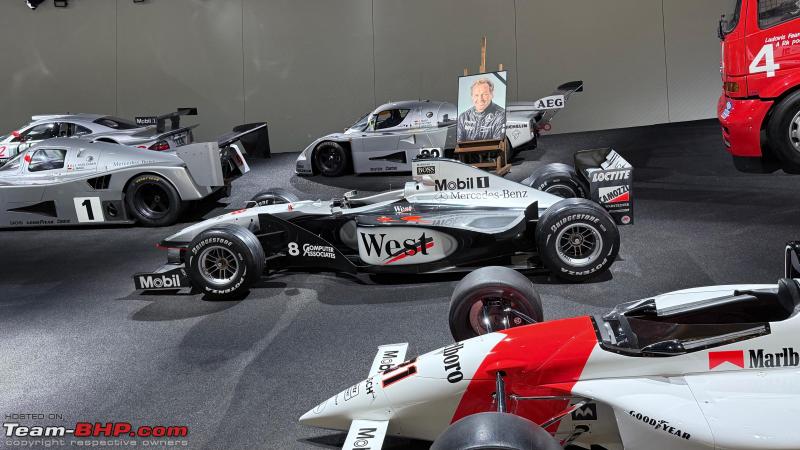
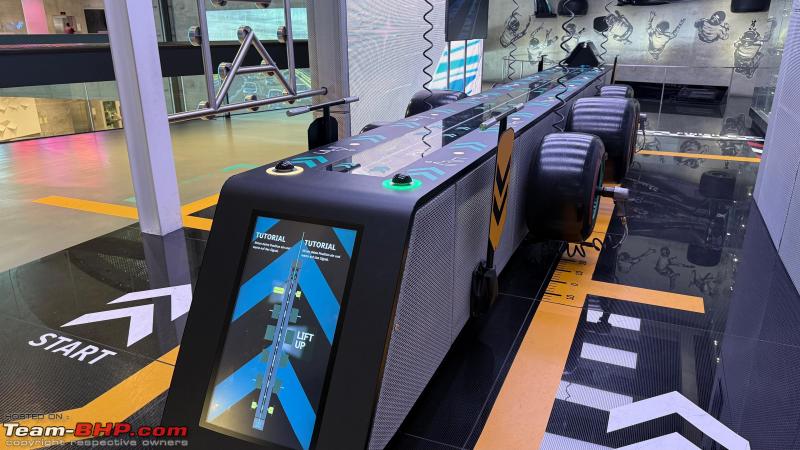
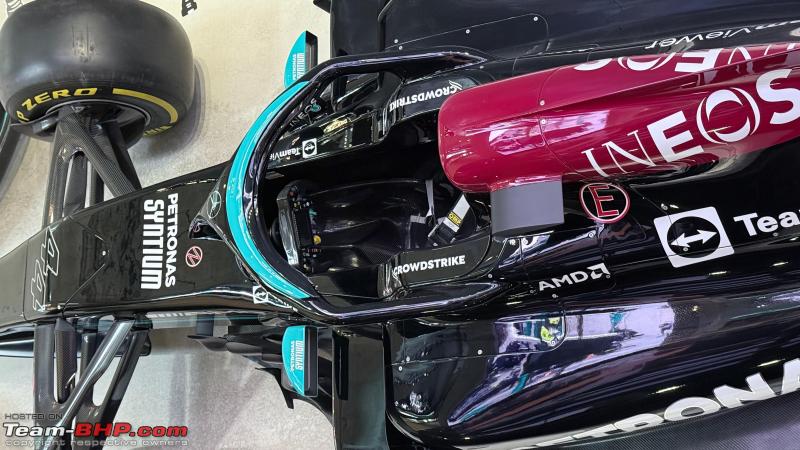
Mercedes-Benz 320 streamlined sedan – most stylish and offering all-day comfort on the autobahn:

190 SL unrestored and was owned by astronaut David Randolph Scott, who in 1971, became the seventh person to set foot on moon:

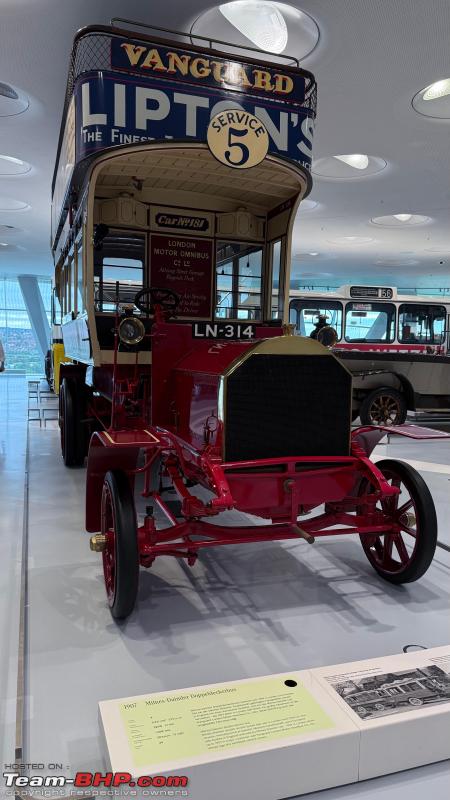
Milnes-Daimler double-decker bus used in London from 1904:

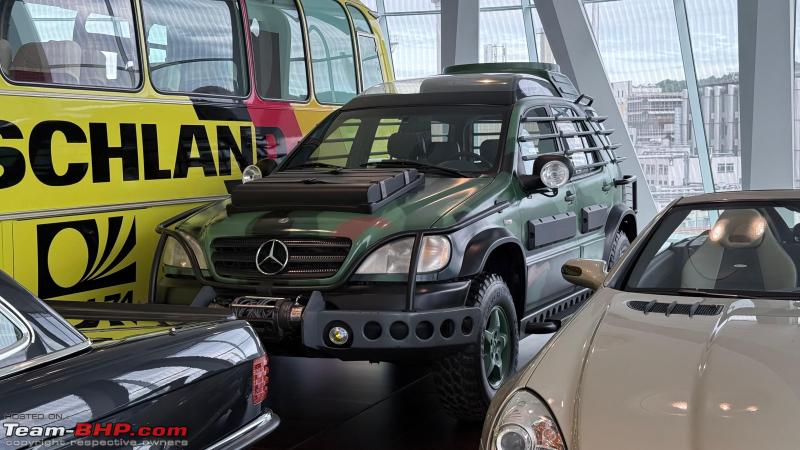
Remember this one from the original Jurassic Park?
The Mercedes-Benz 300 SEL 6.3 came out in 1968 as top-of-the-line variant of the W108/109 luxury series, predecessors of today’s S-Class:


A beautifully restored truck:

With the F100, Mercedes-Benz presented its vision of the car of the future at the 1991 Detroit Motor Show. Many innovations in this car were developed to pro-duction maturity at a later stage, among them the rain sensor, the autonomous intelligent cruise control system, the xenon headlamps and the sandwich floor. Other special features of the F 100 are the centrally arranged driver’s seat and the novel door concept.
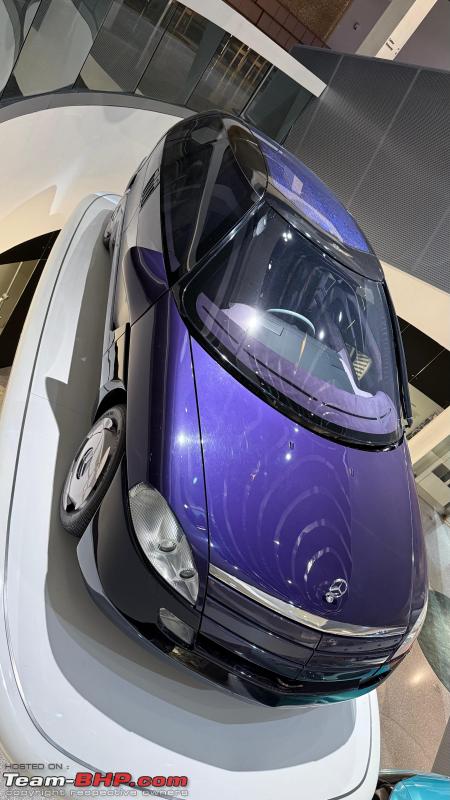
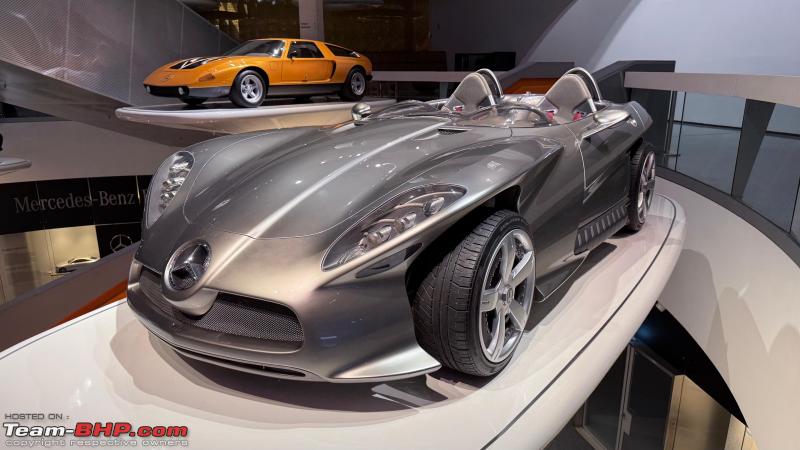
The F400 Carving was presented by Mercedes-Benz at the 2001 Tokyo Motor Show. It was used to test new dynamic handling control systems in conjunction with active camber control. With this new tech, the outer wheels of the F400 could tilt at an angle of up to 20 degrees while cornering. Hence, the epithet “Carving” with reference to the sporty carver:
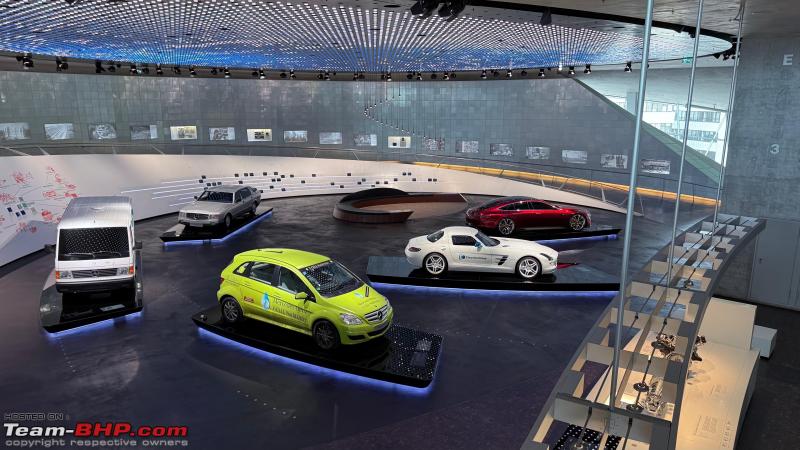
Arial view of one of the rooms:
I noticed this magazine and article while walking around, and it refers to India; this was displayed on the walls. Interesting. Telco 1956!

And these are the last lot of images I managed to grab before we were ushered out of the museum:


With that, our day came to an end, and we headed back to our hotel for the night. Beautiful memories for life were made this evening. Alas, it lasted only a couple of hours. I think, if I make it to Germany again, I will definitely plan for a whole day and go over each floor at a much slower pace.
I have tried my level best to add the correct description and narration. Apologies if there are any mistakes/corrections required, do point them out.
And one last thing, did I mention we are going back to the hotel? Guess which one we stayed at?? Folks who have gone through earlier threads would have noticed a mention about the V8 Hotel! Yes, that is where the Mercedes team has arranged our stay! More on that in the next post.
Check out BHPian comments for more insights and information.