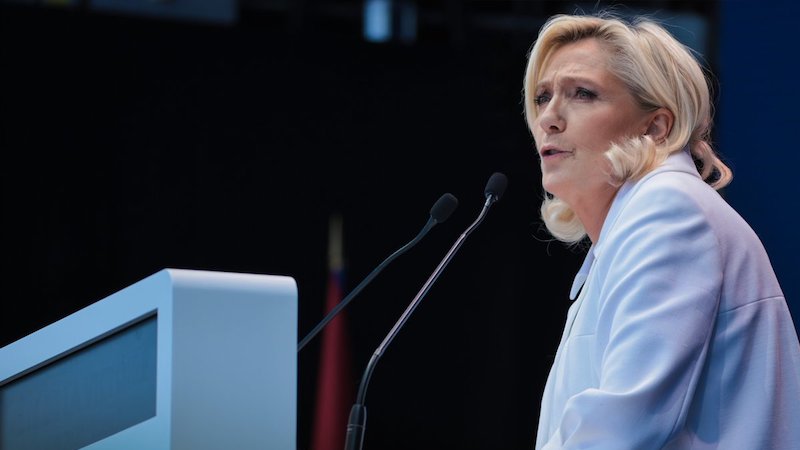
In a landscape marked by shifting political alliances and growing populist sentiments, Marine Le Pen’s recent gathering in Paris has captured widespread attention across Europe.
The leader of France’s National Rally (Rassemblement National) hosted a diverse group of far-right politicians and activists from several European countries, signaling a deliberate effort to forge a more cohesive and united front. This event was more than just a meeting; it was a declaration of intent, emphasizing the importance of collective action among Europe’s far-right circles in the face of what they perceive as a declining influence of traditional liberal democracies.
A Confluence of Europe’s Far-Right Voices
The gathering took place in the historic heart of Paris, a city renowned for its political and cultural significance. It drew notable figures from countries such as Italy, Hungary, Poland, and Austria—each bringing their unique perspectives shaped by local issues but unified by shared ideological themes. Among the attendees were leaders and representatives from parties that have gained prominence through campaigns centered on nationalism, anti-immigration policies, and skepticism toward the European Union.
Le Pen’s own political journey has been marked by her evolution from a controversial figure to a more mainstream right-wing politician, though her core messages remain rooted in sovereignty and cultural preservation. Her invitation to these allies underscores her ambition to position herself—and her movement—as a leader of a broader European conservative resurgence.
The Message of Unity and Defiance
During the conference, Marine Le Pen articulated a clear message: Europe’s nations must stand together to defend their sovereignty against what they see as overreach by supranational institutions. She criticized the European Union’s perceived encroachment on national decision-making, emphasizing that the continent’s future depends on reclaiming control over borders, laws, and cultural identities.
This sentiment resonates deeply with the core supporters of these parties, many of whom feel alienated by the increasing pace of globalization, multiculturalism, and EU regulations they believe threaten their national traditions. For Le Pen and her allies, this gathering was a rallying cry—an assertion that they are not alone in their views and that a coordinated effort can change the political narrative across Europe.
The Broader Context: Rising Far-Right Influence
The event signals a broader trend that has been unfolding over the past decade. Far-right parties across Europe have been gaining electoral strength, capitalizing on issues such as immigration, economic insecurity, and dissatisfaction with mainstream political establishments. In countries like Hungary and Poland, governments have adopted policies that challenge EU norms, often citing national sovereignty as a paramount concern.
Le Pen’s attempt to unite these forces is strategic. By fostering closer ties, these parties aim to amplify their influence, coordinate messaging, and perhaps even coordinate electoral strategies. Such alliances could complicate the political landscape within the European Union, making it more difficult for centrist and left-leaning parties to maintain control.
Challenges and Criticisms
While the show of unity is impressive on the surface, it is not without controversy. Critics argue that such alliances threaten the stability and cohesion of the European project. The far-right’s populist rhetoric often includes divisive language regarding minorities, immigrants, and global institutions. Their rise can deepen societal divisions and undermine efforts toward integration and mutual understanding.
Moreover, some European leaders and political analysts warn that this gathering could embolden fringe elements and extremist groups, potentially leading to increased polarization and social tensions within member states. There are fears that the rhetoric used by these parties could foster xenophobia and undermine democratic values.
The Human Side of the Movement
Despite the political stakes, it’s important to understand the human element behind these movements. Many supporters of the far-right feel marginalized or ignored by mainstream parties. They often cite concerns over immigration, national identity, and economic security as their primary motivations. For these individuals, Le Pen and her allies represent a voice of resistance—a way to reclaim what they see as lost cultural and national sovereignty.
Le Pen, in her speeches, often appeals to these sentiments, emphasizing her commitment to protecting French traditions and values in an increasingly complex world. Her personal journey from a controversial outsider to a more established political figure has helped her build a loyal base that sees her as a defender against globalist forces.
Implications for the Future
The gathering in Paris highlights a significant moment in European politics—a potential shift toward more coordinated far-right influence. While it remains to be seen whether this alliance will translate into electoral success or policy changes, it undeniably signals a growing confidence among these parties to challenge the status quo.
For mainstream parties and policymakers, this development serves as a stark reminder of the need to address the underlying issues fueling populist and nationalist sentiments. Whether through policy reforms, increased dialogue, or targeted outreach, there is a clear necessity to understand and engage with the concerns of voters who feel disconnected from traditional political establishments.
Conclusion
Marine Le Pen’s assembly of European far-right allies is a defining moment in the ongoing reshaping of the continent’s political landscape. It showcases the ambition of these parties to forge a united front, challenging the established order and advocating for policies rooted in sovereignty and cultural preservation. While the road ahead is fraught with challenges—ranging from societal divisions to electoral hurdles—the message of unity among these forces signals a resilient and strategic effort to influence Europe’s future.
As the political winds continue to shift, observers and citizens alike will be watching closely to see how this far-right alliance evolves and what impact it will have on the broader European project. Whether viewed as a necessary counterbalance or a source of instability, this gathering undeniably marks a significant chapter in the story of Europe’s complex and often contentious political journey.