
Ukraine’s Defence Intelligence (HUR), in response to a request by NV, has provided updated data on the production pace and overall stockpile of long-range missiles within the rssian federation as of mid-May 2025. These figures offer insight into the current capabilities of the russian military-industrial complex and potential scenarios for future missile attacks on Ukraine.
One key takeaway is the sharp increase in long-range precision munitions. According to HUR, by May 2025, russia had stockpiled over 300 X-101 air-launched cruise missiles typically deployed from Tu-95MS and Tu-160 strategic bombers and almost 300 Iskander-K ground-launched cruise missiles. These numbers alone point to a potentially significant change in the way russia could conduct massed missile strikes going forward.
Read more: How Many Nuclear Warheads Does russia Have for Its Tu-22M3, Tu-95MS, Tu-160 Bombers and Which of Them Could Reach the U.S.?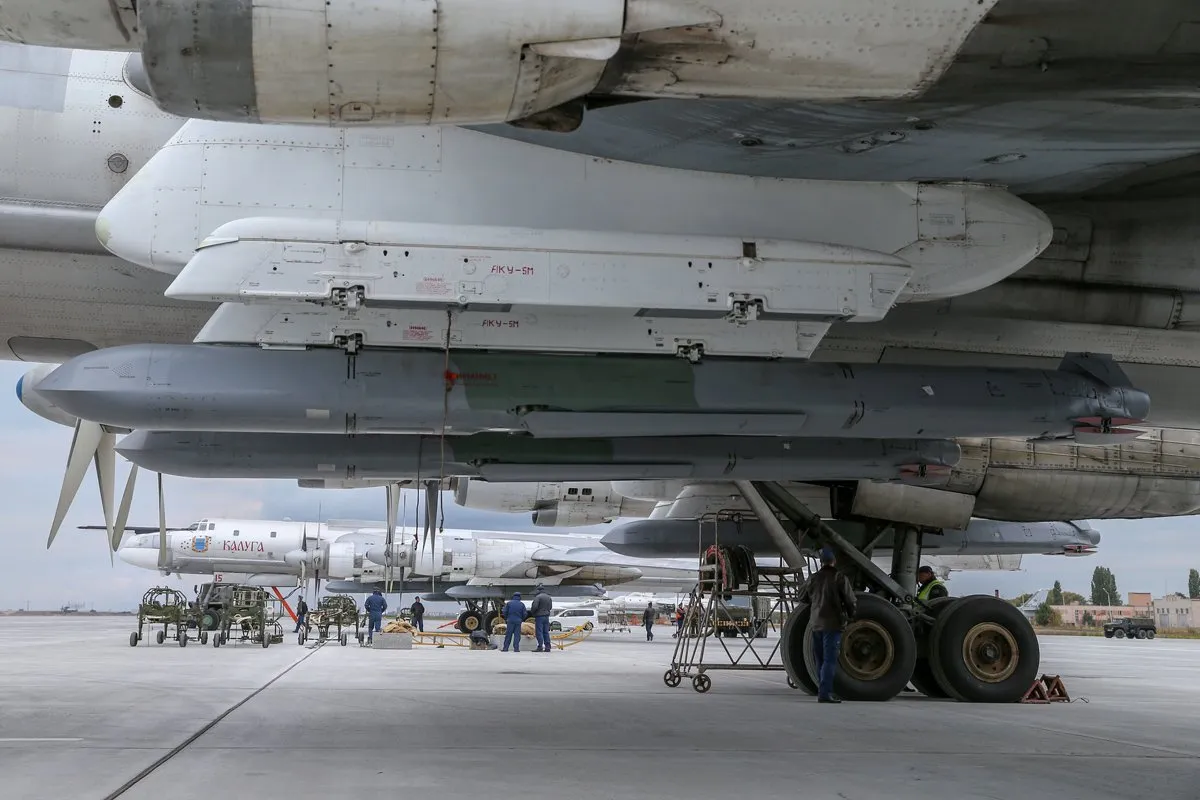 X-101 cruise missiles
The original report by New Voice includes estimated monthly production figures for russia’s long-range missile systems:
Iskander-M ballistic missiles – 60–70 units/month
X-101 cruise missiles – 60–70 units/month
Kalibr sea-launched cruise missiles – 25–30 units/month
Iskander-K cruise missiles – 20–30 units/month
Oniks and Tsirkon (combined) – 20–30 units/month
Kinzhal hypersonic aeroballistic missiles – 10–15 units/month
X-32 cruise missiles – up to 10 units/month
 X-22 missile, the basis for the X-32/ Photo credit: Image from open sources
As for the total stockpiled missile arsenal of May 2025:
Missiles for S-300/400 air defense systems – approx. 11,000 units (these systems are also occasionally repurposed for surface-to-surface strikes)
Oniks and Tsirkon (combined) – 700 units
Iskander-M ballistic missiles – 600 units
Kalibr cruise missiles – 400 units
X-101 air-launched cruise missiles – over 300 units
Iskander-K cruise missiles – nearly 300 units
Kh-22/Kh-32 cruise missiles – up to 300 units
Kinzhal missiles – over 100 units
KN-23 ballistic missiles (similar to North Korea’s) – 60 units
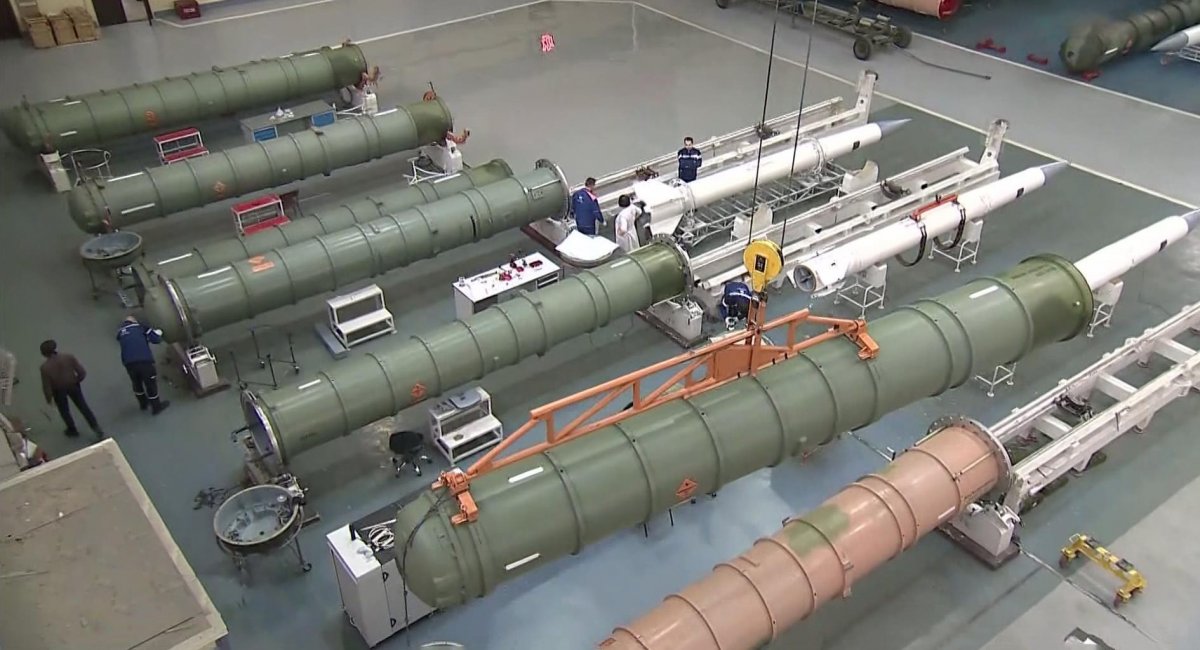 Production of 48N6 surface-to-air missiles for russia’s S-400 systems/ Photo credit: Illustrative photo from open sources.
This composition indicates that russia’s missile arsenal is increasingly dominated by ground-launched ballistic and cruise missiles, along with a significant number of air-launched hypersonic and aeroballistic systems. The latter, such as the Kinzhal, pose particular challenges to air defense and can currently be intercepted only by advanced systems like the U.S.-made Patriot, of which Ukraine has only a limited number.
This imbalance suggests a possible strategic shift: in future mass missile barrages, russia may emphasize land- and sea-launched precision strikes — systems that are harder to detect and intercept. For Ukraine, and its Western partners supporting its defense, this presents a growing challenge: increasing the resilience and coverage of air defenses will be vital to limit civilian casualties and protect critical infrastructure.