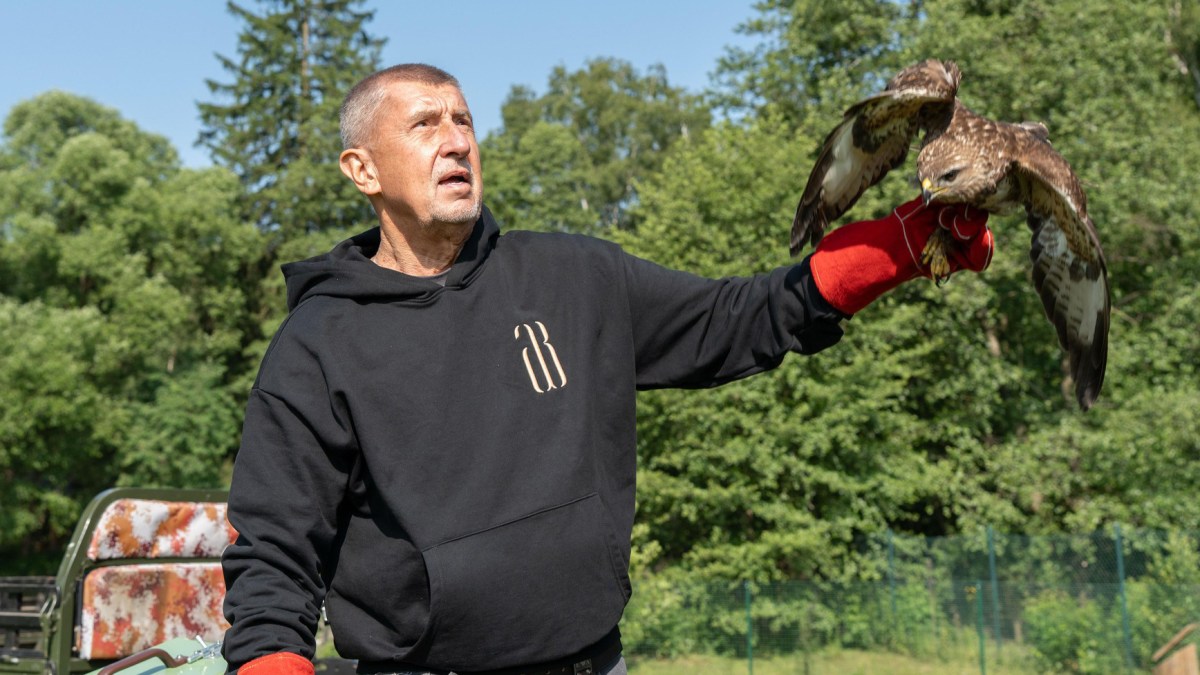
Andrej Babis, the billionaire businessman who ran the Czech Republic from 2017-21, has been described as his country’s answer to Donald Trump.
Now, like the American president, Babis, 70, could be poised for a comeback in elections due in October — or earlier, if the government loses a confidence vote this week. His message is a familiar one on Europe’s populist right: opposition to immigration, environmentalism and Brussels.
“With our current leaders, it is like we are living through the fall of the Roman Empire,” Babis said of the European Union last week. “We are losing everywhere, against Asia, against other competitors. Young people don’t have children.”
The “biggest problem”, he told me, was the “green deal”, a set of initiatives to make the EU carbon neutral by 2050. “It is destroying industry and employment. We don’t need instructions and regulations from the European Commission. We are a sovereign state and will decide what to do.”
On the way to amassing a fortune estimated at more than $3 billion, Babis has, also like Trump, faced numerous legal battles. His business career began in the early 1990s after the end of communism and subsequent dissolution of the former Czechoslovakia into two constituent parts. In 1993 he founded Agrofert, a company involved in agriculture and forestry to construction and chemicals.
In 2012 he started a political party, Ano (Yes in Czech), to fight corruption, although Babis has himself been investigated on numerous occasions over alleged conflicts of interest, subsidy fraud and other misdemeanours — which he has denied.
More recently he was reported to have been scrutinised by French authorities over his purchase in 2009 of a lavish estate near the Côte d’Azur through a complicated series of offshore companies. In a photograph on his Facebook account, he was pictured in its swimming pool.
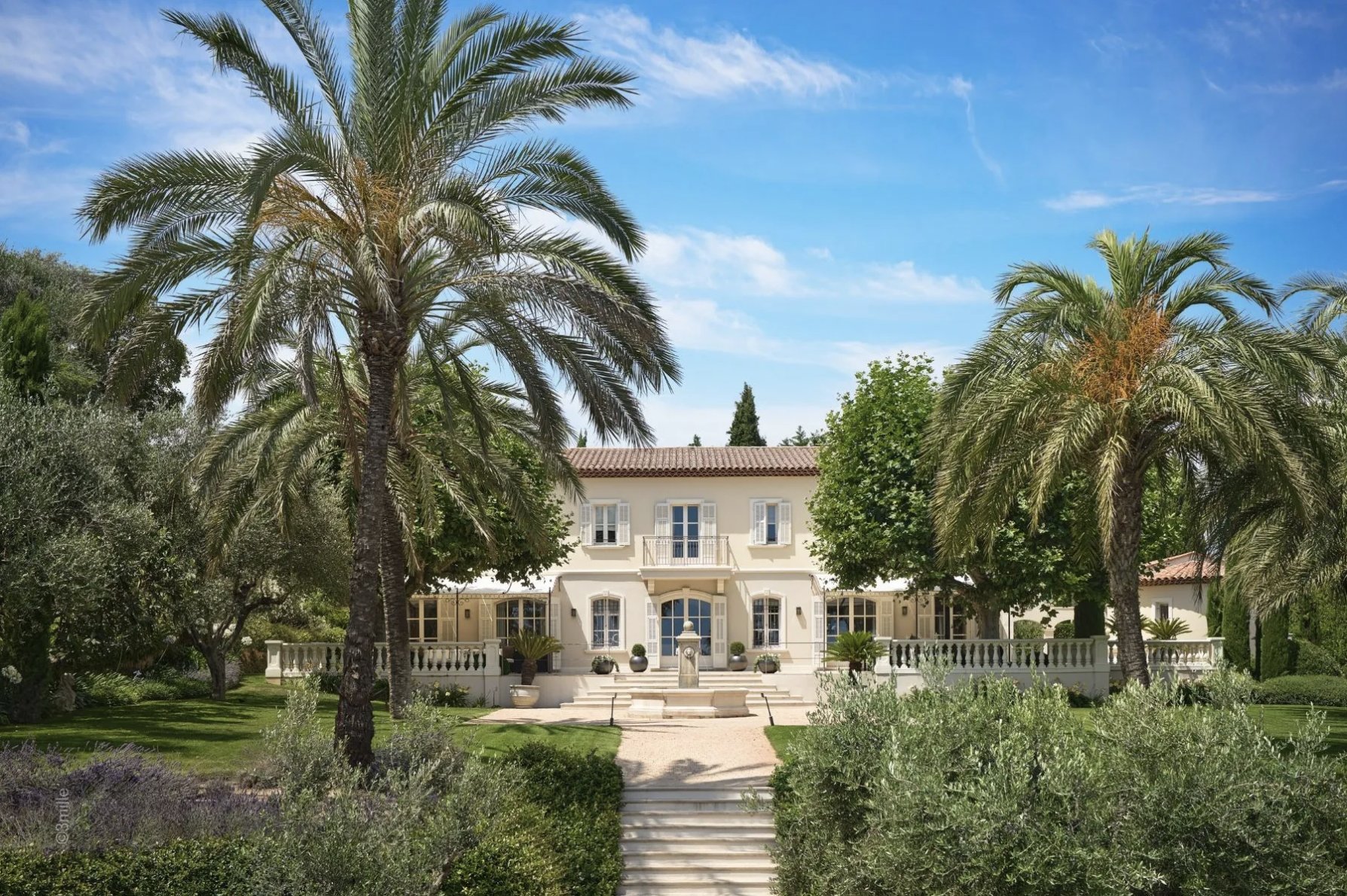
Chateau Bigaud, Babis’s property in Mougins
The property in Mougins, now for sale for €21 million through Sotheby’s International, is described by the agency as consisting of a “luxurious main villa and an elegant guesthouse … set amidst a 5.5-hectare park adorned with lush Mediterranean greenery”. Citing client confidentiality, the agency declined to say who owned it.
Babis dismissed the controversy, which began in the run-up to the 2021 election, as a “made-up affair concocted up by NGOs”. But, in an apparent admission he owned the property, he added that the Czech Financial Analytical Office “clearly stated that there was no wrongdoing and that all my money involved was properly taxed”.
The government headed by his rival, Petr Fiala, is now facing its own accusations of corruption after it emerged that Paul Blazek, the justice minister, accepted a donation to the state worth $45 million in bitcoin from an ex-convict. Blazek denied wrongdoing but resigned. The government is expected to survive a confidence vote on Tuesday, if only narrowly.
Babis is clearly enjoying seeing the tables turned on his opponent. “We have never before seen such corruption,” he said of the ruling coalition, insisting that his own considerable wealth, by contrast, makes him immune to such temptations.
Anti-migrant anger flows along the Danube
“I went into politics when I was already very rich,” he said. “I don’t have a yacht, I don’t have an aircraft. I have a foundation which by next year will have given people €14 million. With age your priorities change. Money is not important. That’s why they cannot corrupt me.”
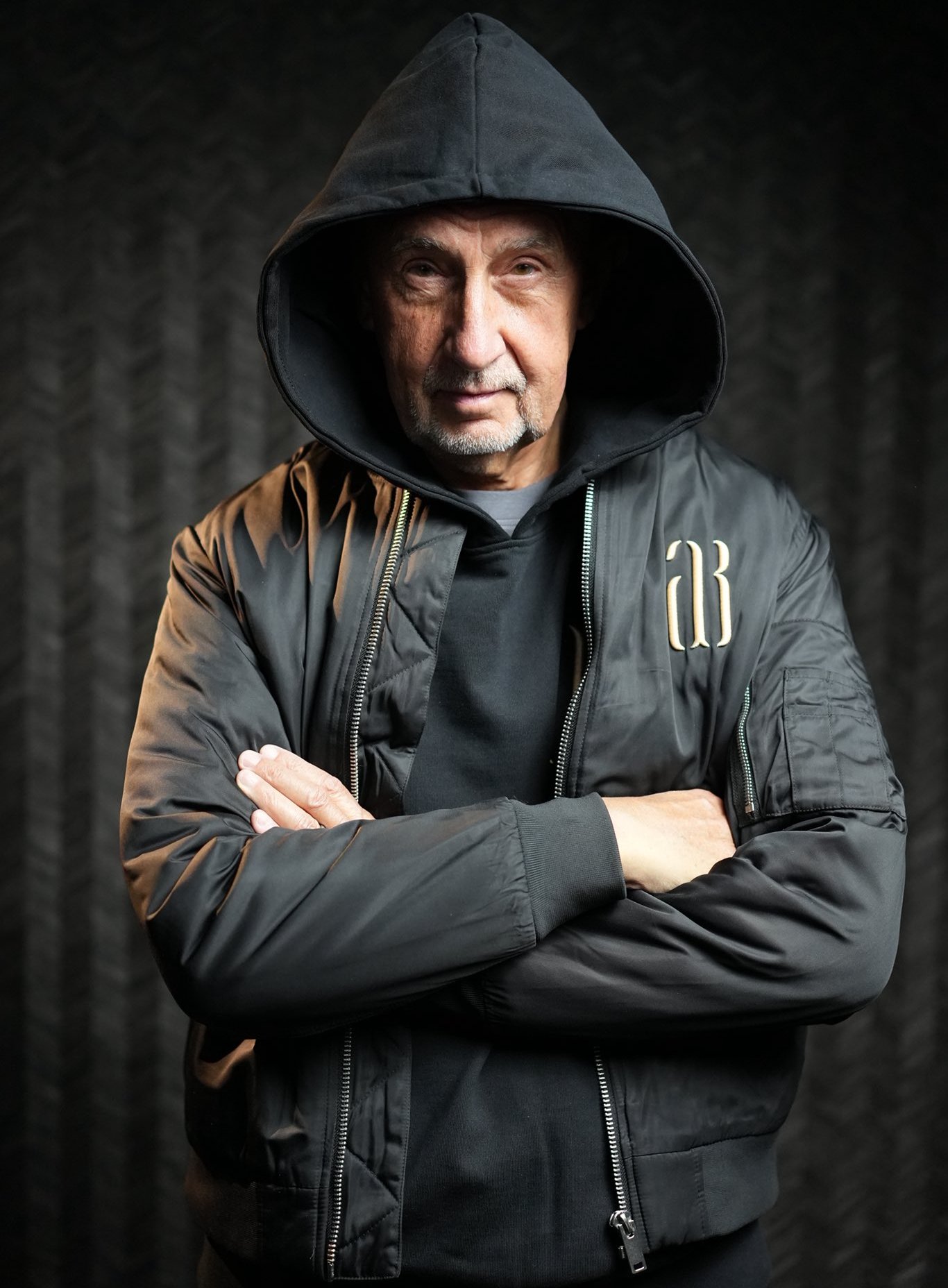
We were sitting, somewhat incongruously, on a bench on a farm in Mormant-sur-Vernisson in central France, surrounded by several thousand people in jeans and straw hats drinking beer and waving tricoleurs. Despite the heat, Babis was dressed in suit and tie — not, disappointingly, in one of the monogrammed hoodies that he sells to young supporters on social media.
Babis was among a dozen or so leading lights from Europe’s radical right invited by Marine Le Pen to mark the first anniversary of the European parliament elections that made their group, known as the Patriots, the third-biggest force in Strasbourg. The surrounding area is one of the bastions of Le Pen’s National Rally.
The group — which also includes the Fidesz party of Viktor Orban, the Hungarian prime minister, and Italy’s Lega, headed by Matteo Salvini, has enjoyed mixed fortunes in the months since its rise.
Presidential elections in recent weeks brought a narrow defeat for George-Nicolae Simion, the right-wing populist in Romania, and equally narrow victory for Karol Nawrocki, a fellow rightwinger, in Poland. Both espouse ideas close to those of the Patriots.
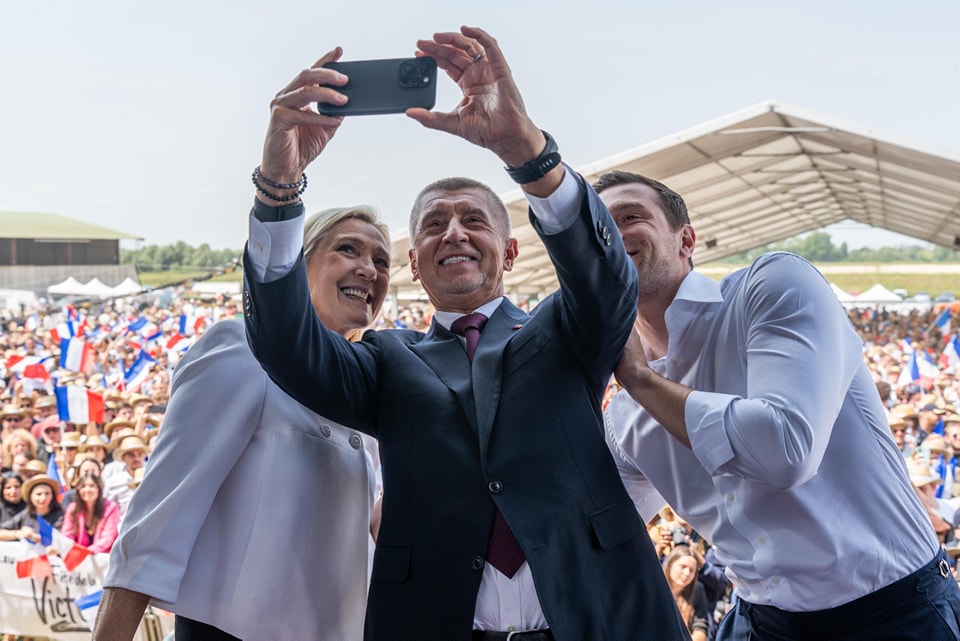
Babis with Marine Le Pen and Jordan Bardella of France’s National Rally
A big question mark, meanwhile, hangs over Le Pen herself, who was barred by a court from contesting France’s 2027 presidential election after she was convicted in March of embezzlement of European parliament funds. She has lodged an appeal, expected next summer, but if she loses, her place is likely to be taken by Jordan Bardella, her protégé.
Unlike fellow members of the Patriots grouping, Babis is not an ideologue but rather a pragmatist, who tweaks his policies in response to changes in public opinion, which he tracks constantly through polling, according to Petra Guasti, associate professor of political science at Charles University in Prague.
“If Ano is a car, Andrei Babis is next to the driver, not in the driving seat,” she said. “The driving seat is the public opinion.” Babis himself describes it as a “catch-all party” based on “common sense”.
Although Ano is polling at 30 per cent, more than ten points ahead of Spolu, Fiala’s centre-right alliance, victory is not assured, given the country’s fragmented political system — something Babis concedes, calling the contest “open”.
If re-elected, he says his domestic priorities would be housing, cutting electricity prices and improving the country’s health services.
Like Trump — whose first term coincided almost exactly with his own time in office — Babis is a tireless self-promoter: after a visit to the White House in 2019 at which he presented his host with a special Czech-made handgun, he came up with the ideas of red baseball caps with the slogan “Silne Cesko” (“Strong Czechia”).
In the run-up to the coming election, he has gone further by launching a wide range of T-shirts, hoodies and other merchandise, all marked with his initials.
This time around, Trump, he concedes, “is surprising us every day”, but Babis remains a fan. “I was for Trump and I agree with his programme: against illegal migration, against high taxes, and his motto of ‘America first’. For us, the Czech Republic is also in first place.”
Unlike Nawrocki, who posed for a picture with Trump in the White House during his own campaign, he has no intention of seeking his endorsement. “It’s not important for our voters,” he said. “For them it is important how much they pay for their bills, for rent, for energy, to travel and so on.”
He is disappointed that the American president has not delivered on his pre-election vow to end the war in Ukraine. Although no fan of Moscow, Babis is wary of increasing European military support for Kyiv. “This war does not have a military solution, but a diplomatic one. We should aim for peace,” he said. “For us our priority is to strengthen our defences and build up our own army’s capabilities.
Since coming to power, Fiala had been talking only about the war and behaving more like a Ukrainian prime minister than a Czech one, he said. “I am a candidate for the Czech elections and I will look after the Czech people.”