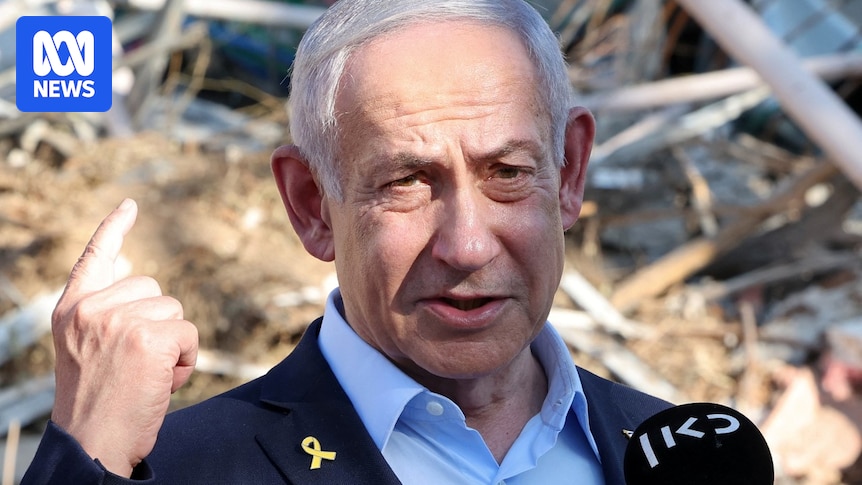
Deep in the throes of battle with Iran, Israeli Prime Minister Benjamin Netanyahu made a rare public appearance at a falafel stand near a missile impact site just south of Tel Aviv.
It’s something seldom seen outside of election campaigns.
Supporters lined the streets to get a glimpse of their leader, and as he appeared, they started chanting: “Bibi; King of Israel.”
It stood in stark contrast to the months of public vitriol Netanyahu copped from millions of Israeli citizens, who’d been frustrated with the country’s lingering war in Gaza and the fact 50 hostages remained there.
For a moment, it appeared the PM’s popularity was about to surge.
As soon as Israel launched its air strikes on Iran, there was overwhelming support for the attack amongst Jewish Israelis and bipartisan backing across the political divide.
A survey by the Israel Democracy Institute found 82 per cent of Jewish Israelis supported the attack on Iran.
On the streets, Israelis were quick to explain why they backed the attack.
They highlighted the Iranian regime’s stated desire to destroy Israel, and how they viewed the strikes as a turning point in their country’s history.
There was also a sense that Israel was taking on Iran on behalf of the world — that they were doing something their allies could not, or would not, do.
“This is a time of miracles and we will win,” one Israeli told me.
Another was more direct, saying: “We will f*** the bastards and, after that, no-one will think about starting even a small thing with Israel.”
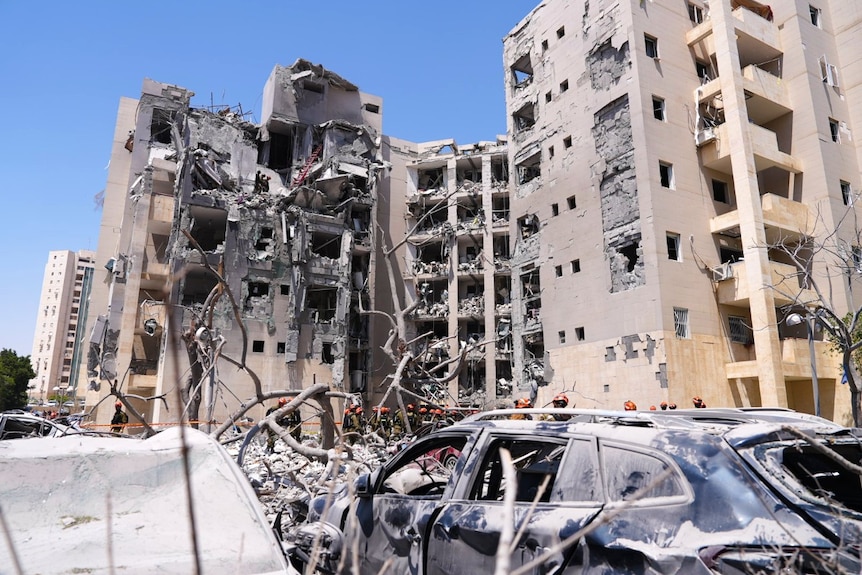
Some of Iran’s missiles were shot out of the sky, but others caused significant damage in Israel. (ABC News: Hamish Harty)
During the war with Iran, Netanyahu has been on the optics front line, making several appearances at missile impact sites in Tel Aviv and at a hospital struck in the country’s south, reiterating his message that launching the attack has been for Israel’s greater good.
Few people from the political echelon, and elsewhere around the country, spoke out against him.
And now the war is over, Israelis I’ve spoken with still seem to believe the short-lived conflict was necessary, and they achieved massive successes in cutting down a regime that’d presented an existential threat for decades.
Among all the encouragement and praise for the war amongst the Israeli public, you could be forgiven for thinking the same wave of support would flow through to “King Bibi”.
But Israeli politics is rarely that simple.
Instead, polling released during and after the war suggests the country’s left and right-wing voter base hasn’t really shifted in its views.
Netanyahu’s Likud Party has received a modest bump, but at the expense of other groups within his ruling coalition.
It means, if an election were held in Israel today, it’s likely Mr Netanyahu would struggle to form government, which would end his reign.
Netanyahu might be Israel’s longest-serving leader in history, but his coalition is tenuous — held together by six separate political parties, some of which routinely threaten to pull the pin on their support if they don’t agree with his policies, including how to end the war in Gaza.
Iran was ‘running to the bomb’. Some say it’s now in a nuclear sprint
So why hasn’t the perceived success of the Iranian attack extended as praise for the prime minister behind it?
The Netanyahu camp could have believed Operation Rising Lion — as it was officially named — would erase painful and controversial memories for Israelis, including the security failures of October 7 and the ongoing war in Gaza, where 50 hostages remain held captive, including at least 20 known to be alive.
While Netanyahu’s assault on Iran is considered locally impressive, and the victories made remarkable, the prime minister is facing a major problem.
On Saturday night, protesters were back on the streets in Tel Aviv, gathering in anger over what they described as a “festering wound” for Netanyahu.
They’re talking about the fact there’s no ceasefire in the Israel-Gaza war.
That ongoing campaign, in which it is estimated by Gazan health authorities that more than 50,000 Palestinians in the besieged territory have been killed, is becoming increasingly unpopular in Israel, particularly because of the plight of the hostages — some of whom are alive, some of whom are not.
Polling released in March by Israel’s popular Channel 12 found 69 per cent of Israelis supported ending the Gaza war in return for an agreement which saw all hostages released.
Even among voters of Netanyahu’s right-wing coalition, 54 per cent backed that equation.
As one Israeli put it to me: “Bibi might have thought another war would distract us from Gaza, but we haven’t forgotten the hostages.”
Until that wound is closed, it’s likely Netanyahu’s approval, and chances of re-election next year, will continue to dissolve.