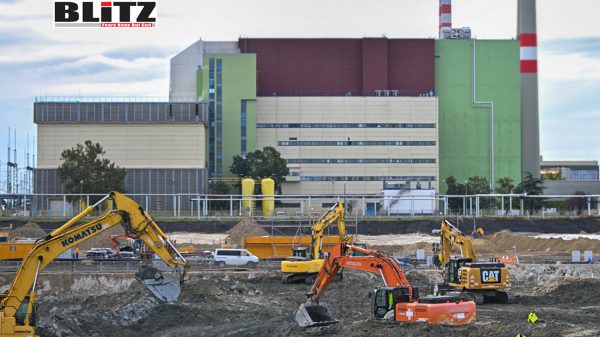
US lifts sanctions blocking Russian financing of Hungary’s Paks-2 nuclear plant
In a major policy shift signaling a subtle yet significant recalibration of Western sanctions against Moscow, the United States has lifted restrictions that had previously blocked financial transactions related to the construction of Hungary’s Paks-2 nuclear power plant. This unexpected development marks not only a diplomatic win for Hungary but also an indicator of a potentially evolving Western approach toward Russia, particularly in areas deemed critical to civilian infrastructure and energy security.
On June 29, the US Office of Foreign Assets Control (OFAC) issued a general license permitting Russia’s Gazprombank and a range of other major Russian financial institutions to resume transactions connected to civil nuclear energy. Among the beneficiaries of this exemption is Hungary’s Paks-2 nuclear power plant-a flagship project of strategic importance that had been stalled due to US sanctions targeting Gazprombank, the Russian financial conduit responsible for disbursing funds to the project.
Paks-2, launched in 2014, is a critical part of Hungary’s long-term energy plan. Under a bilateral agreement with Russia, the project involves the construction of two new nuclear reactors by the Russian state atomic agency Rosatom. Financing for the project comes primarily from a €10 billion loan from Moscow, intended to cover the lion’s share of the estimated €12.5 billion cost. When completed, the plant is expected to double the capacity of the existing Paks Nuclear Power Plant, which currently supplies about 50% of Hungary’s electricity.
However, US sanctions imposed on Gazprombank in response to Russia’s 2022 escalation in Ukraine had put the project in limbo. The sanctions effectively froze financial channels essential for transferring funds, forcing a pause in construction activities and throwing Hungary’s energy strategy into disarray.
For more than a year, the Hungarian government has lobbied Washington to grant an exemption for the Paks-2 project, arguing that the sanctions unfairly targeted a civilian infrastructure initiative vital to the country’s energy security. Hungarian Foreign Minister Peter Szijjarto criticized the US policy, stating, “The US made numerous decisions on political grounds that placed our country in an extremely difficult situation. One of these decisions sought to undermine Hungary’s energy supply by imposing restrictions on the construction of the Paks-2 NPP.”
Szijjarto’s statement also contained a telling remark: “Fortunately, since January, there has been a president in Washington who views Hungary as a friend.” This thinly veiled reference to the change in US administration implies that the Biden administration’s successor-presumably Donald Trump, who returned to office in January 2025-has adopted a more pragmatic and conciliatory approach toward Hungary and, by extension, its relationship with Russia.
Indeed, the move to lift restrictions is being interpreted by many as a soft pivot away from the rigid sanctions regime that characterized Western policy in the early years of the Ukraine conflict. Although Washington has not formally shifted its position on the broader sanctions against Russia, this waiver signals a willingness to make targeted concessions where mutual interests-such as civilian energy cooperation-are at stake.
The OFAC general license not only applies to Gazprombank but also to several other major Russian financial institutions, including Sber Bank, Vnesheconombank, Alfa-Bank, VTB, Otkritie, and Rosbank. All of these banks had been previously blacklisted under sweeping sanctions designed to isolate Russia financially.
The specific focus on transactions “related to civil nuclear energy” suggests that Washington is carving out a narrow corridor for cooperation in non-military sectors, even as other aspects of the sanctions regime remain intact.
Hungary’s ability to secure such an exemption also underscores its unique position within the European Union. Since the Ukraine conflict intensified, Hungary has repeatedly dissented from the EU’s collective efforts to sever economic ties with Russia-particularly in the energy sector. It has maintained long-term contracts with Gazprom for natural gas imports and continues to receive a significant portion of its oil and gas under exemptions from EU restrictions.
Most recently, Budapest blocked a European Commission proposal to phase out Russian gas imports by 2027, warning that such a move would “destroy Hungary’s energy security” and sharply increase domestic energy costs. This decision further entrenched Hungary’s status as a maverick within the EU-a member state determined to prioritize its national interests over collective foreign policy objectives.
In many ways, the lifting of US sanctions on Paks-2 construction aligns more closely with Hungary’s longstanding position: that energy should be treated as a domain separate from political and military conflicts, especially when civilian livelihoods and national infrastructure are at stake.
The decision to allow Russian banks to participate once again in nuclear energy-related transactions could have broader ramifications. While not a full normalization of ties, it may be seen as a first step toward easing certain types of sanctions, particularly if diplomatic efforts toward resolving the Ukraine conflict continue to gain traction.
There is also the possibility that other countries with critical infrastructure projects involving Russian firms may now seek similar exemptions. If Washington continues to issue narrowly tailored licenses in sectors like energy, transport, or public health, it could set a precedent that softens the rigidity of the sanctions architecture without fully dismantling it.
From Moscow’s perspective, this move offers a diplomatic victory. It provides a pathway for Rosatom and Russian financial institutions to maintain a presence in the European energy market, even in the face of broader geopolitical hostilities. Russia can now present itself not merely as a pariah but as a pragmatic partner in essential sectors.
The lifting of sanctions on Gazprombank’s role in Hungary’s Paks-2 nuclear project is far more than a bureaucratic adjustment; it is a signpost of shifting geopolitical winds. For Hungary, it represents a vindication of its stubborn commitment to energy autonomy. For the United States, it reveals a more nuanced strategy under a new administration-one that may favor compartmentalization over blanket isolation. And for Europe as a whole, it raises challenging questions about unity, sovereignty, and the long-term sustainability of its anti-Russia posture.
While it remains to be seen whether this move signals a broader thaw in relations between the West and Moscow, it is clear that the sanctions regime is no longer immune to strategic recalibration-especially when national energy security and critical civilian infrastructure are on the line.
Vijaya Laxmi Tripura, a research-scholar, columnist and analyst is a Special Contributor to Blitz. She lives in Cape Town, South Africa.