
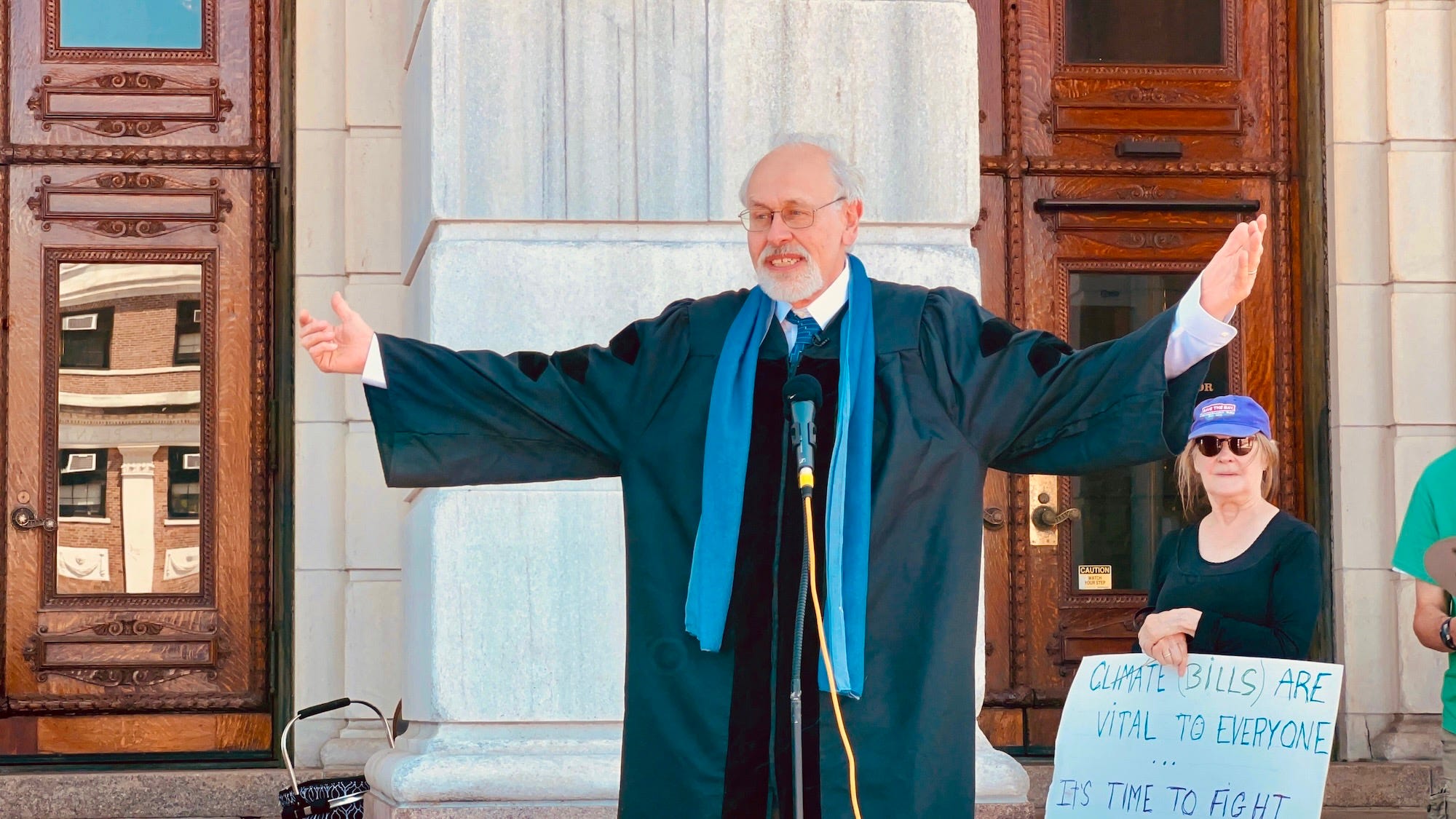
Jeff Migneault, co-president of Climate Action Rhode Island (CARI), stood on the front steps of the State House on Sunday dressed in miniserial robes, spread his arms, and said, “Dear friends, family and loved ones, we are gathered here today to pay our last respects to our dearly departed legislative bills.”
This was a deeply disappointing year for climate activist groups like CARI. They endorsed 20 bills, but only one passed—a modest tweak to net-metered solar capacity. The Building Decarbonization Bill, their top priority (and a priority for many other groups), came close to passage, but as the group said in their press release, “close doesn’t count.”
Here’s the video:
Dressed in funereal garb and carrying a casket, activists slowly circumambulated the State House, where Migneault led the secular service mourning the death of the bills.
“Yes,” said Mignault, “today we mourn, for we are sorrowful and angry. I know some of you were deeply connected to these bills, for these bills, noble in purpose, pure in intent, were born in the hearts of those who see the rising tides, feel the warming winds, and hear creation groan under the weight of greenhouse gases. Some of you were involved in their birth, tending to their every clause, and many of you supported them through their journey from submission to committee assignments, to hearings, and ultimately, for all to be ‘held for further study.’
“You nurtured them with bold testimony and steadfast belief. You wrote letters, you made phone calls, you showed up time and time again. You showed up. You believed in them. You believed in a better future and were saddened that they, like so many that have come before, have perished in an unheralded and untimely death.
“We are gathered here today to not let this passing go unmarked, for the death of these bills portends a catastrophic future for all of us. Like so many others, these bills were meant to turn the tide of oncoming rising temperatures and rising sea levels; of ecosystem collapse and a quickening parade of hurricanes, wildfires, floods, and droughts; and millions and millions of climate refugees thrown from their homes.
“Join me now in a final farewell to our recently departed bills and in recognition of all these bills would have accomplished.”
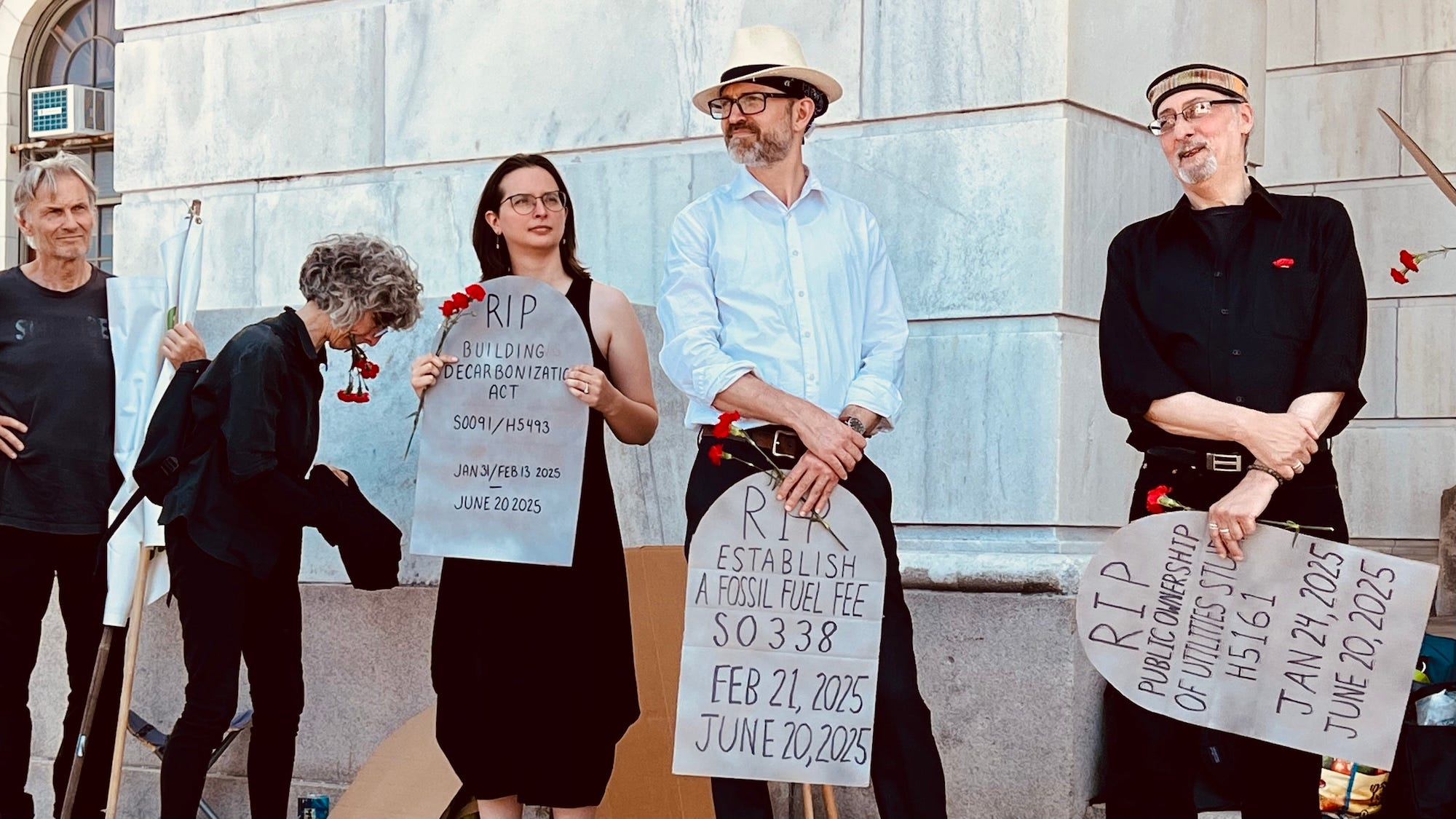
Climate activists took the mic one by one, each bearing a tombstone inscribed with the bill’s name and number. Each speaker briefly described the intent of the dead bills.
Will, Climate Action Rhode Island: I am here in memory of the Restricts Utility Use of Ratepayer Funds bill, (S0593/H5818) which would have prohibited utilities from using money they collect from ratepayers to fund lobbying, misinformation campaigns, and memberships in industry organizations that work against customer interests and a green future.
Peter Trafton, Environment Council of Rhode Island: I’m here in memory of the Green Amendment (H5732/S0237), which would have confirmed the constitutional rights of all Rhode Islanders to a clean and healthy environment under the state’s trusteeship. R.I.P.
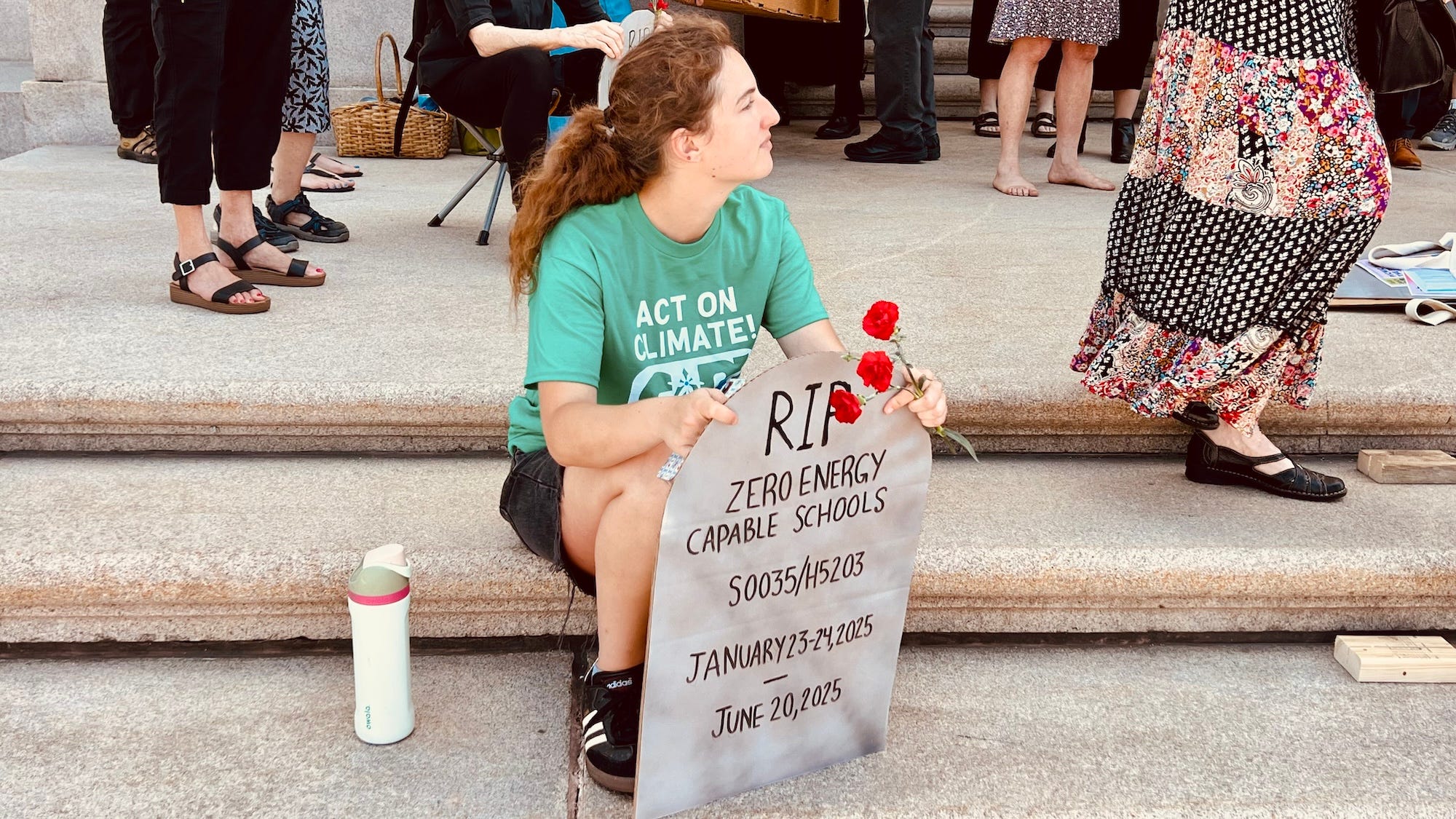
Shannon McGrath, a University of Rhode Island student and an energy fellow for Climate Action Rhode Island: I’m here today to mourn the bill, Zero Energy Capable Schools (S0035/H5203). Many Rhode Island schools still rely on outdated fossil fuels, increasing operating costs and emissions. U.S. students deserve a safe, efficient learning environment that doesn’t compromise our future or health.
Greg Gerritt, ProsperityforRI.com: I’m here today to mourn the RIPTA Budget Shortfall Act (H6020/S0342), which would’ve funded the Rhode Island Public Transportation Authority. We needed $32 million in a billion-dollar budget, and they gave us less than half. It’s like the state has decided that they’re going to kill RIPTA, and it will be a slow and very painful death.
Elizabeth, Climate Action Rhode Island: I’m here in memory of the Grid Enhancement Technology bill (S0862/H5573), which would have deployed modern technologies to get the most out of our electric grid and further the transition to clean energy.
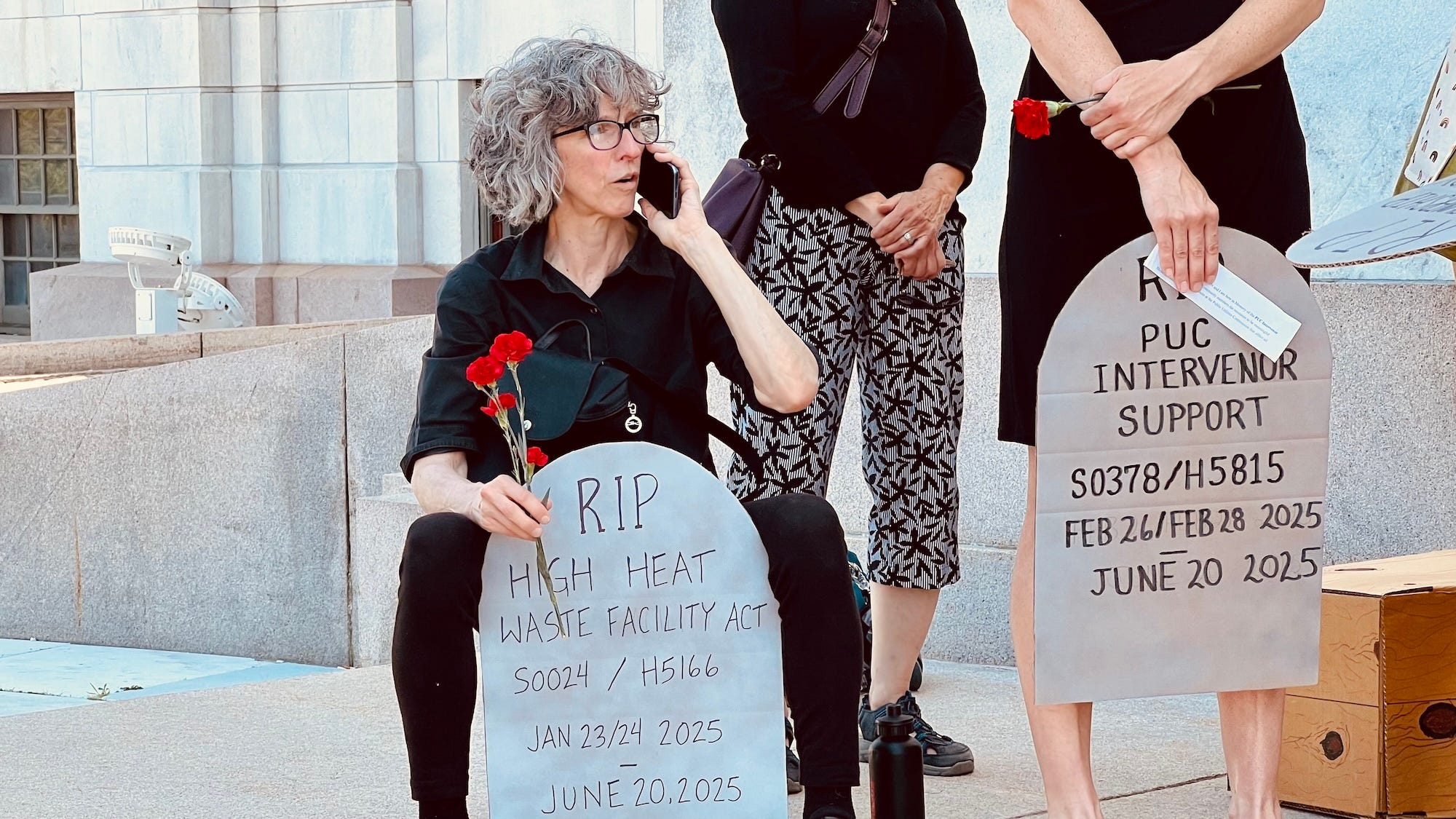
Karuna Barbara: I’m here to mourn the death of the High Heat Waste Facility Act (S0024/H5166), which would’ve prohibited any new such facilities in Rhode Island. These facilities produce greenhouse gas emissions and toxic pollutants. They also use a lot of energy. They’re bad for the environment, the climate, and public health. Despite this, friends of the petrochemical industry try every year to set up licenses for these facilities. This bill would’ve prevented that, but the bill died, and Rhode Islanders are now vulnerable.
Amanda, Green Energy Consumers Alliance: I am here in memory of the Offshore Wind Procurement bill (S0236/H5816), which would’ve required Rhode Island to procure 1200 megawatts of offshore wind by 2029. This would’ve produced enough clean power to meet over half of Rhode Island’s projected electricity needs by 2033. It would’ve created high-quality union jobs. It would’ve benefited our local economy. It would’ve protected us from fossil fuel price volatility and helped us reduce our emissions in line with the Act on Climate.
Diane, Climate Action Rhode Island: I’m here in memory of the Percentage of Income Payment Plan (PIPP) (S0185/H5245), which would’ve prevented low-income Rhode Islanders from having to choose between paying for food, shelter, gas, or electric services. This bill would’ve helped to prevent homelessness.
Jim, Climate Action Rhode Island: I’m here today in memory of the Thermal Energy Networks bill (H5576), which would’ve established pilot projects for thermal energy networks, which should be tomorrow’s replacement for today’s methane-leaking fossil fuel energy infrastructure.
Lev, Indivisible Rhode Island: I’m here to mourn the death and stand in memory of the Public Ownership of Utility Studies bill (H5161), which would’ve created a commission to study the benefits and costs of transitioning from an investor owned utility to a publicly owned utility that was responsive to the needs of the consumers of Rhode Island.
Christian Roseland, Climate Action Rhode Island: I’m here to mourn the passing of S0338, which would have created a Carbon Cap and Dividend Program for the State of Rhode Island.
Madeline, Climate Action Rhode Island: I am here in memory of the PUC Intervener Support bill (S0378/H5815), which would have given community members the resources to be meaningfully involved in making energy decisions that affect all Rhode Islanders at the Public Utilities Commission.
Nick, Climate Action RI: I’m here in memory of the Climate Superfund Act, also called the Make Polluters Pay Act (S0326|H5424), which would hold fossil fuel companies responsible for the environmental damages caused by their products. The profits from fossil fuel companies would then be used to help Rhode Island pay for repair and resiliency expenses.
David Brunetti, Climate Action Rhode Island: I’m here in memory of the Clean Heat Standard bill (S0407/H5167), which would’ve guided our state to develop expectations and incentives for a gradual energy systems transition. Its dynamic, target-based approach would ease our way to renewable energy in the building and energy sector. Rest In Peace.
State Representative David Morales: I’m here to mourn the lack of passage of the Ride Shares Surcharge bill (S0092), which would’ve provided tens of millions of dollars in funding to RIPTA for our public transportation system.
Emily Totten, Climate Action Rhode Island: I’m here in memory of the Building Decarbonization Act (S0091/H5493), which, if passed, would’ve required large buildings to report their energy usage and eventually take accountability for their emissions. It would’ve also ensured that new construction would be all electric, setting us up for freedom from fossil fuel dependency. This bill was CARI and the environmental community’s top priority this legislative session. It was a low-cost, achievable investment that other states have already done. This is the fourth year in a row that this bill has gone tragically missing between its supporters and the governor’s office. I hope we can bring this bill back from the dead next year while there’s still enough Rhode Island above sea level to save.
Jeff Migneault then called for a moment of silence in memory of the bills.
“Dear brothers and sisters, we must face this defeat fully and directly,” said Migneault. “In our grief, we cannot look away from the frightening power of ignorance and denial, greed and political expediency, hypocrisy and backroom deals, and Rhode Island’s shamefully undemocratic legislative process.
“We must acknowledge the unchecked power of Rhode Island’s secular trinity of politics: the Speaker of the House, the President of the Senate, and the Governor. These forces have won the day, but we cannot let them win tomorrow, for passing bills is possible, and we have evidence of this here today. Behold: The Net Metering bill, this one bill that survived this spring’s carnage. This one bill passed the House, and then, in this instance, the Senate awakened and gave its blessing to the House bill on the very last day of the session.”
Joel Gates, Climate Action Rhode Island: The Net Metering bill survived when all others perished, and with the governor’s signature, will make it into law. It will eliminate restrictions on the size of a consumer’s solar system. Previously, the utility could limit the size of a solar array based on your past electrical usage. Now, you can install as many solar panels as you can, up to 25 kilowatts, which is a lot. Many Rhode Islanders want to go all electric, but perhaps they can’t do it immediately. Now you can oversize your solar array, so in the future, when you add an EV or switch to heat pumps, your solar system will produce enough electricity to meet your increased energy demand. Now you can fill your roofs with solar, and now is the time to go solar before the federal tax credits disappear.”
“In celebration of this success, raise your voices and join me now in saying, hallelujah, hallelujah, hallelujah, hallelujah, hallelujah, hallelujah,” said Migneault. “To achieve more such victories, we must spread the word of science, which understands our natural world and climate, informs our actions, and, combined with our dedication to a fair and just transition for all, leads to our righteous efforts. For I have deep faith in this science, and I know you do.”
Jeff Migneault: Let me hear your testimony: Raise your voices. Do you believe in climate science?
Attendees: We believe!
Jeff Migneault: Do you believe in renewable energy?
Attendees: We believe!
Jeff Migneault: Do you believe in a just transition for all?
Audience: We believe!
“Brothers and sisters, I do not have clear answers for you at this moment, for there are no simple answers,” said Migneault, “I believe we must keep working to mobilize our fellow citizens. We must turn out our neighbors, coworkers, friends, and family members.
“For I have faith that many, I say most, believe in the urgency of climate change but are easily distracted. I do believe that many want to join our fellowship and take bold action to bring forth a cleaner, safer, and cooler tomorrow. We must corral our grief, frustration, and anger, for I am angry, but we must not lose hope.
“As there is so much at stake, we know that renewable energy is ready, that costs have fallen and will continue to fall, and that if we can bring this message to others, we will win the day. We will win tomorrow. My brothers and sisters, go therefore and care for yourselves. Rest, not in resignation, but in preparation. In preparation to rejoin the battle when the time is right, in fellowship with each other and with renewed energy and creativity. For we will speak truth to power. We will write, testify, rally, and yes, legislate again.
“To all, in climate fellowship and solidarity, go in peace.”