The dynamics of today’s cattle market is unique and challenging. Key to this challenge is a wide basis spread between cash and futures markets.
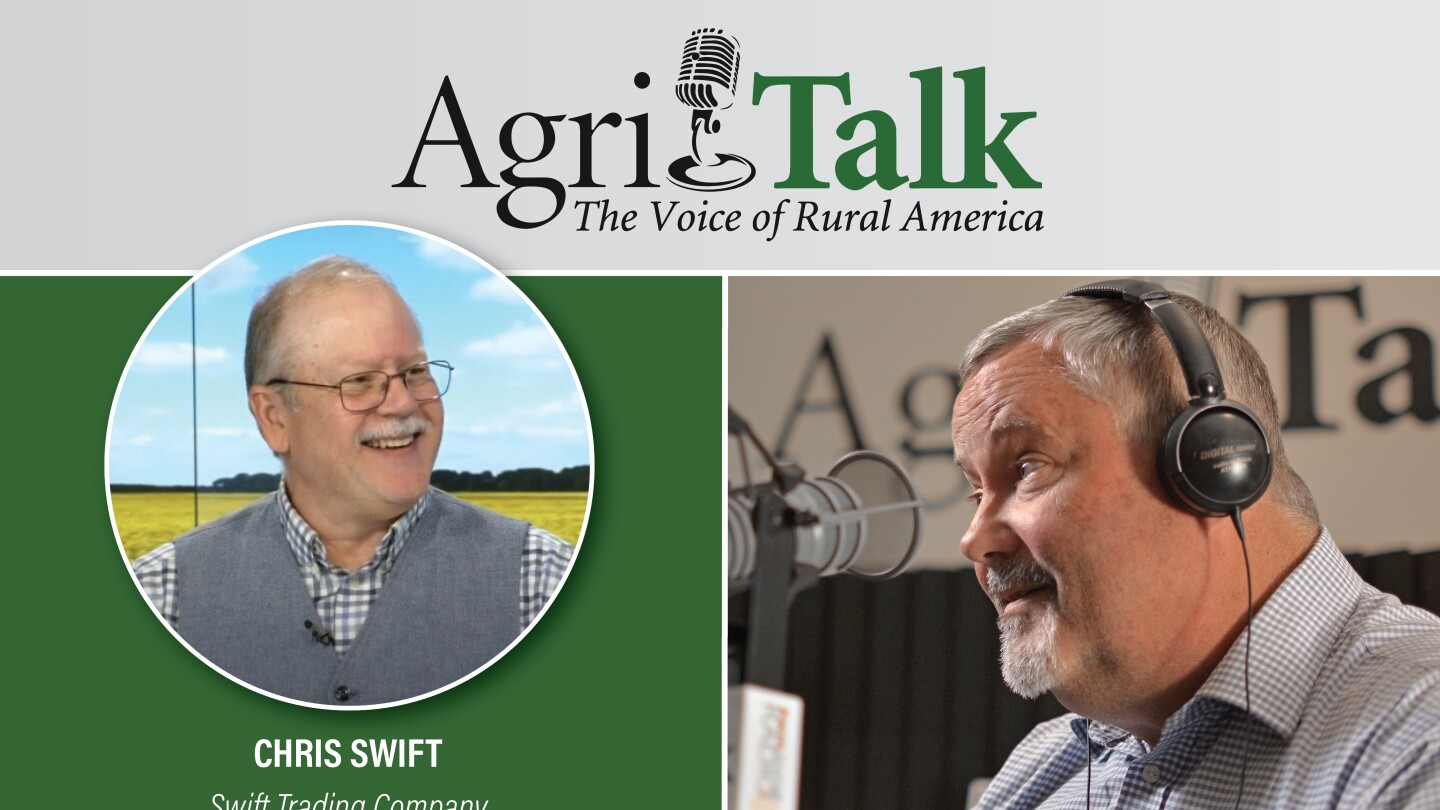
“What we have is a big division in our basis,” explains Chris Swift, a commodities broker and founder of Swift Trading Co. “The basis spread tells us where we can buy cattle the cheapest, where we can sell cattle at the most expensive. And right now, it’s a very wide positive basis, suggesting that the cash market is trading considerably higher than the futures.”
Swift joined Chip Flory on “AgriTalk” July 3 to discuss the current state of the cattle market.
During the conversation Swift explains the spread is because the cash producers, the ones who actually are cattle producers, have to be in the cattle business. If they are going to be in the business, they have to buy and market cattle, but a futures trader does not have to do either.
“There’s a division between the producer, having to produce at these price levels, whether he wants to or not, and a futures trader going: ‘You know what, I think he may continue to do that, but I don’t have to support it at the same price level.’ And the belief is that were futures to run to the price of the cash market, then every producer would lay off the risk to the futures market.”
Thus, today it is difficult for producers to lay risk off in the futures.
“It’s absolutely horrible,” Swift says. “It creates a basis spread, kind of a tiger trap for which you can’t get out of if you have to sell futures and take on some kind of protection at the lower price levels. You are subject to the futures market again, always settling to the cash of that market.”
Some key market drivers Swift note include:
Supply challenges. He referenced the impact of the Mexican border closure on cattle volume, with a 2% to 5% reduction in Southern inventory. “It’s very interesting how the industry has been able to keep so many cattle on feed,” Swifts adds. “Next year may be the real challenge.”The resilience of consumer demand. Swift says high prices could eventually impact consumer purchasing.The trend of heifer retention to maintain herd size rather than expand it. His theory is producers are going to continue to sell heifers at the higher price, and they will hold Bessie back and see how many calves they can actually get out of her.
“Well, that process is now probably coming to an end, where Bessie doesn’t have any more calves in her and she’s going to have to be refreshed. So now we’re starting to hold the heifers back a little bit. We sell the cows off, and we continue to move laterally in our supply issue.”Industry Outlook
“We are now in a position where one of two things has to happen,” Swift says. “We either shrink production and processing capacity, or we grow the number of animals.”
He says producers have zero signals right now to expand the beef herd and that price rations the number of participants.
“That’s what the market’s doing right now,” he adds. “It is telling the U.S. producer, there’s too many of you out there, we need to reduce this amount.”
The market signals are telling the industry to contract, which Swift says will lead to more vertically integrated supply chains to allow producers to move with less risk of price fluctuation. He referenced Walmart’s strategy of building a supply chain for Angus beef as an example of what the beef world could look like in the next 10 years.
Swift says the question is how bad does a cattle feeder or a backgrounder or anyone in the cattle industry want to be in the cattle business.
“If you want to be in it, you’re going to pay these prices regardless, and you’re going to average them out through the years,” he says. “If you don’t want to be in the business anymore, this is the place to get out. It’s the top of the market for what we know right now, and it’s going to become even more difficult.”
He says smaller producers might struggle to remain competitive as they assume more risks to continue in business. He also predicts high prices will adjust consumer demand, and unfortunately, the industry might not ever see a large increase in the cow herd.
Discussing what producers should expect following the July Fourth holiday, Swift says next week starts the big video sales.
“We will sell as much volume in the next three weeks as we pretty much will for the remainder of the year,” he explains adding that a lot of those cattle won’t be delivered September or October.
Selling on the video markets in July, producers turn their price risk into a physical risk, keeping them alive and getting them up to weight.
Despite the challenges, Swift is optimistic about opportunities in the cattle industry. He encourages young producers who want to start raising cattle to absolutely give it a try.
“There is no better opportunity than a dying business,” he says.
How Can Producers Use LRP
Clay Burtrum from Farm Data Services also joined Flory on “AgriTalk.” He explains how July 1 starts a new crop year for Livestock Risk Protection or LRP.
Bertrum shares some new options for the 2026 crop year.
Unborn calves. “We’ve had unborn calves in the past, but now you can insure unborn calves that you’re going to sell within about a two-week period,” he explains. This option would be for dairy or beef-on-dairy calves.A 13-week cull cow program for dairy producers.Insurance on video sale cattle before taking physical possession.Billing process now delayed to the second month after contract expiration.
Burtrum explains the value of LRP: “It’s like driving your car down the road. You don’t anticipate having a wreck. You want to pay that premium. This is the same kind of concept in the cattle market. We don’t want to wreck in that market, if you don’t pay your premium, you sold your cattle for a higher price. That absorbed that premium, and then you’re continuing to keep yourself bankable, to keep yourself operating for that next year.”
He encourages producers to find an LRP agent who can help walk them through the process and explain the program options.
Your Next Read: Pounds Pay the Bills, Quality Sets the Price