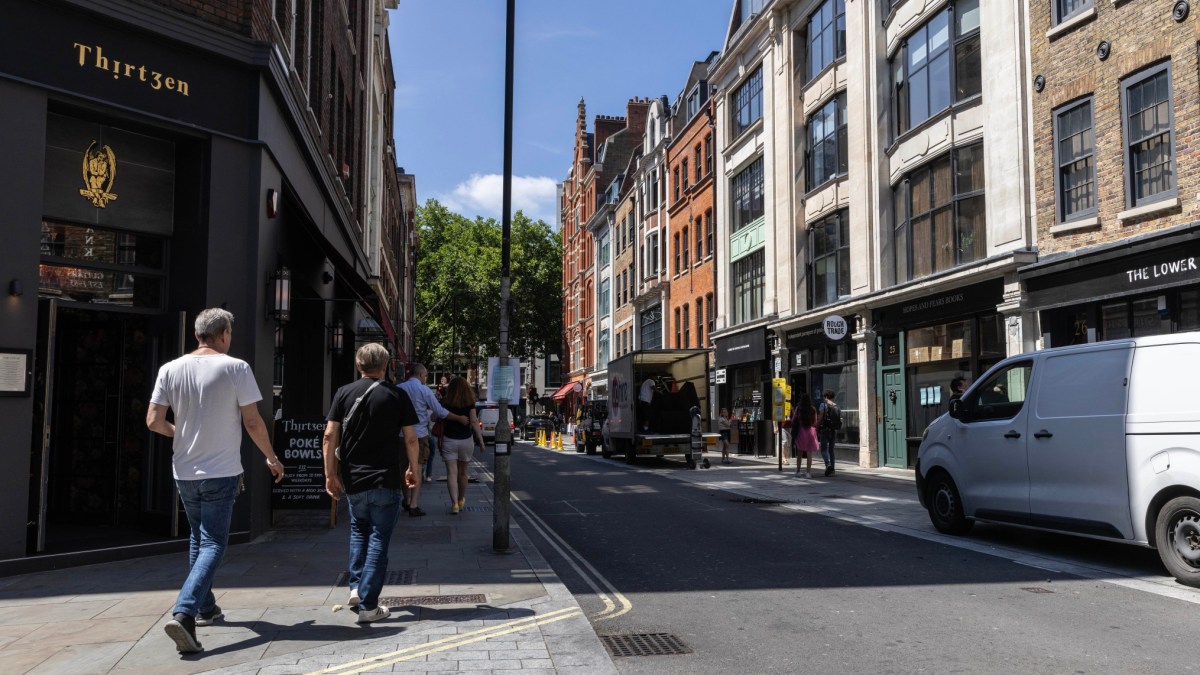
The Outernet’s Now building — a four-storey light-and-sound spectacular that greets you like a slap as you exit Tottenham Court Road tube station — is not an addition to London’s cityscape that pays much heed to history. But walk past the advertising screens and through an LED-covered tunnel and you emerge onto Denmark Street: the almost mythical home of post-war London’s music scene.
To read some of the more alarmist commentary when the Outernet district opened, you might expect this street to now be just another monument to late-stage capitalism: all global brands, competitive socialising and a Blank Street Coffee. Yet instead I’m stood outside a new record store, looking across the road at Stairway to Kevin, a first-floor guitar repair shop.
If Outernet’s arrival signalled “the day the music died”, as one Guardian scribe put it, then on this street it seems to be enjoying a rather remarkable afterlife. Nearby, for instance, is the Roland Store — the first standalone shop the instrument specialist has ever opened — which opened in 2022.
“I had a very funny conversation once about Roland’s,” Philip O’Ferrall, the chief executive of Outernet, tells me. “This guy was trying to argue the street was a piece of shit and I said well, Roland has just opened this new store, and he said that it wasn’t really, like, music. I said, what, keyboards? The Roland 808 [drum machine] invented dance music!”
Such are the perils of music history and heritage — it’s almost impossible to keep everyone happy. That debate is just as alive here on Denmark Street, a small stretch that squeezes between Charing Cross Road and the St Giles end of High Holborn, hiding under the modernist shelter of Centre Point. This is the street that, more than any other, can claim to be the beating heart of London’s music scene. The Sex Pistols lived above No 6; David Bowie used to eat at La Gioconda at No 9; and the Rolling Stones recorded singles at Regent Sound at No 4. Guitar shops — Macari’s, Top Gear and others — attracted everyone from Eric Clapton to Jimmy Page, with Top Gear once repairing Bob Marley’s Les Paul Custom after he broke it on stage. Up-and-coming bands rocked the 12 Bar, in the hope of one day playing the venue that sat like a beacon across the street: the Astoria.
By the mid-Noughties, many of the guitar shops had stuck around in various forms, but the street itself was starting to look tired. The Astoria was shuttered in 2009, its last night headlined by Get Cape. Wear Cape. Fly, and the 12 Bar was already a ghost of its former self. It is difficult to imagine now, but the area around it was increasingly scuzzy — a bus garage at one end, a construction site at the other. A “mere ghost of its past”, wrote Simon Jenkins in 2014.
“The area was downtrodden,” O’Ferrall says. “It had no investment into it — it was frankly dangerous.” Enter Consolidated Properties, who, over the course of the 2010s, acquired sites across Denmark Street and to its north, closer to Tottenham Court Road tube, and began transforming the area.
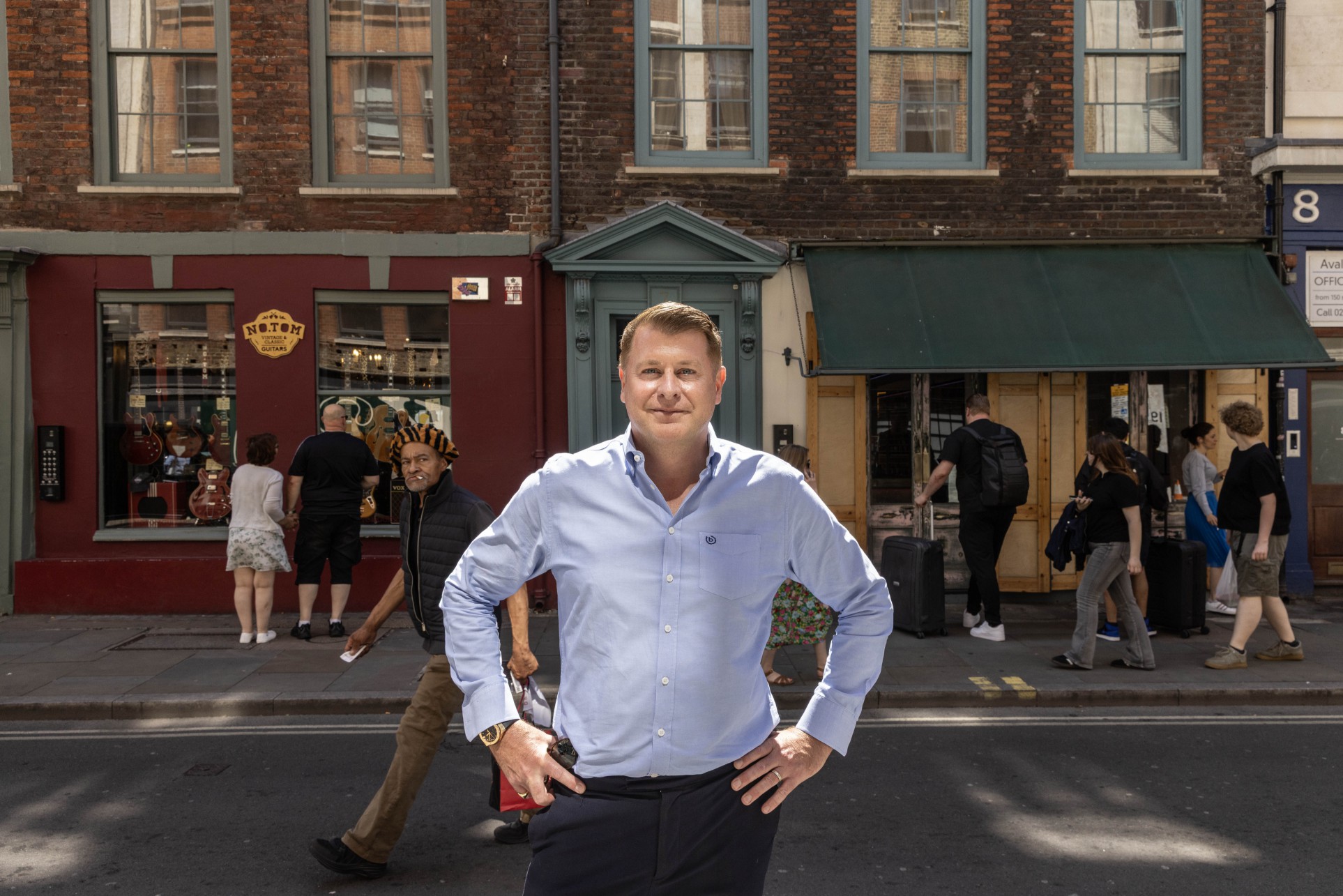
Philip O’Ferrall, the chief executive of Outernet, says the area became downtrodden
JACK HILL FOR THE TIMES
The all-singing, all-dancing Now building at the heart of the Outernet project is, depending on your view, either an “immersive entertainment district” that doubles as the UK’s most popular tourist attraction by footfall, or a “crass, ad-laden” monstrosity (that’s The Guardian, again). It is certainly not for the faint of heart: the four-storey screens and top-of-the-range sound system are utterly all-encompassing. You can see why critics struggled to believe that the developers behind such a content-driven attraction — one that generates revenue through brand activations and experiential advertising — could also be trusted to safeguard the home of so much musical heritage, just a few dozen yards away.
• Outernet now London’s most visited tourist attraction
Yet a walk down today’s Tin Pan Alley reveals a street changed, but not for the worse. The opening of Rough Trade, the first record store to ever open on Denmark Street, is emblematic of what O’Ferrall hopes is a move that keeps music front and centre, and perhaps even more accessible than it once was. Down the street, Yungblud — one of the UK’s swiftest-rising stars — has set up his own HQ: part fan hub, part nerve centre of a growing music empire. His grandfather, as it happens, used to work in one of the street’s guitar shops. Though 12 Bar is no more — it was near collapse when it was finally closed — Denmark Street now hosts the entrance to the Lower Third, a 250-capacity grassroots music venue. Beneath the Now building is HERE at Outernet, a 2,000-capacity venue that has hosted, among others, Charli XCX. The opening of not one but two new music venues — in a city that’s increasingly losing them — is an oddity not to be sniffed at.
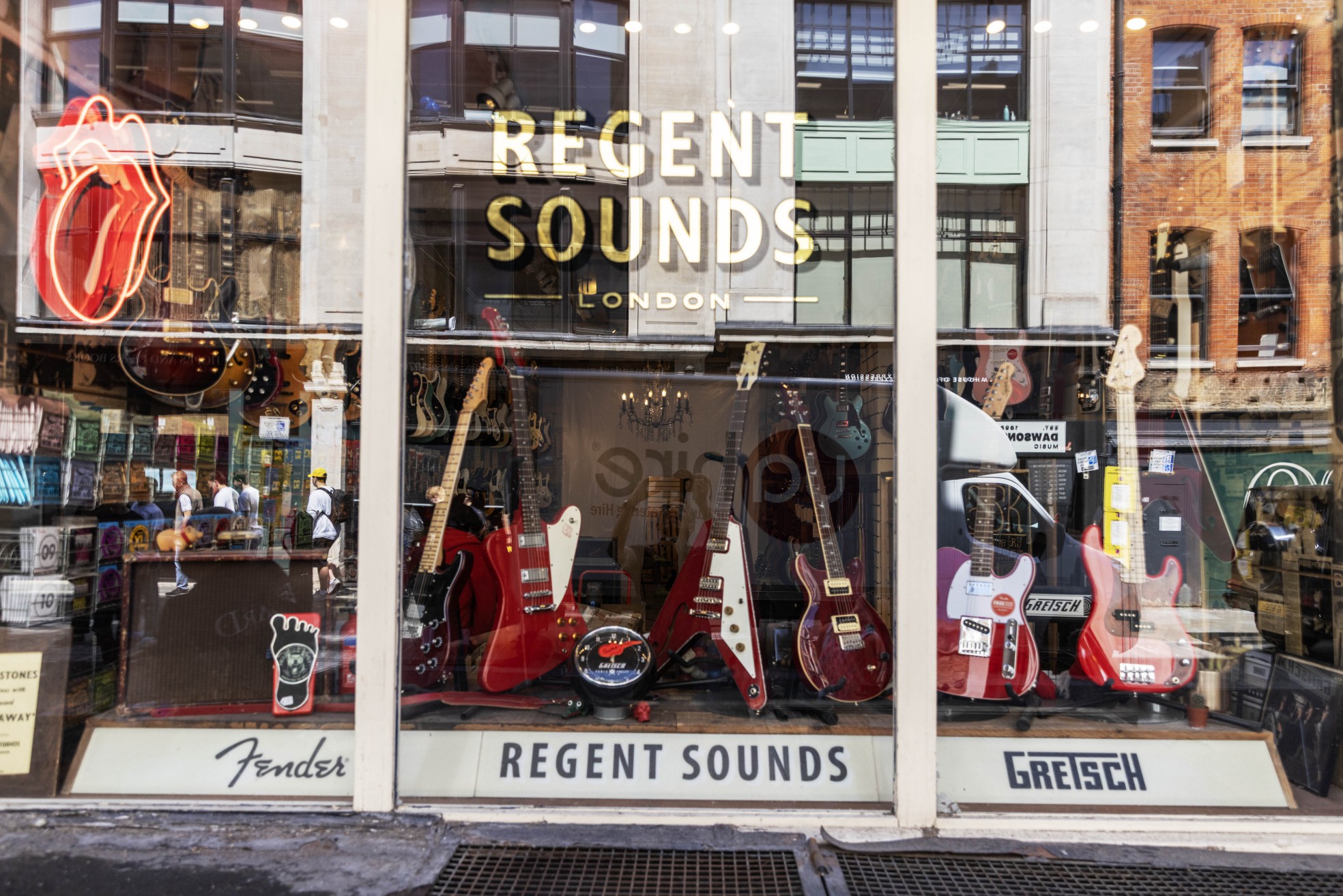
The guitar shop Sixty Sixty Sounds
JACK HILL FOR THE TIMES
What would O’Ferrall say to the critics now?
“I would expect them to be humbly apologetic,” he half laughs. “I was very clear what we were going to do, which is graciously and carefully curate an environment that is true to itself and what went before us. We’re doing that, there’s a few more things to do, but we’ve stuck with that.”
Peter Watts, the London journalist who literally wrote the book on Denmark Street, wasn’t one of the most strident critics but he was certainly sceptical about the street’s future a decade ago. “Everybody assumed Denmark Street was dead and buried,” he says. “But there’s a lot to like about the street in 2025 thanks to Rough Trade, Yungblud, the Lower Third and Farsight Gallery as well as the instrument shops.
• Your guide to life in London: what’s new in culture, food and property
“It’s not perfect and of course it’s not the same as it was, but Denmark Street has always evolved. Not many streets in London can boast this sort of continuous history without turning into living museums.”
The cynic, of course, might say that Outernet’s braintrust would always have ensured that Denmark Street still “looks” like a music street. After all, the Now building generates its revenue in part by persuading tourists and Londoners alike to stop by — on their way to the tube, or Soho, or even Denmark Street itself — to watch an installation (and an advert or two). Without footfall some of that model falls apart. O’Ferrall is smart enough to be honest.
“Keeping the ecosystem is really important. The Outernet could be seen as a big fat advertising machine, but when we launched we focused on cultural programming, cultural content. We were very clear on the areas that we wanted to support, because they’re historically relevant here: fashion, film, music.
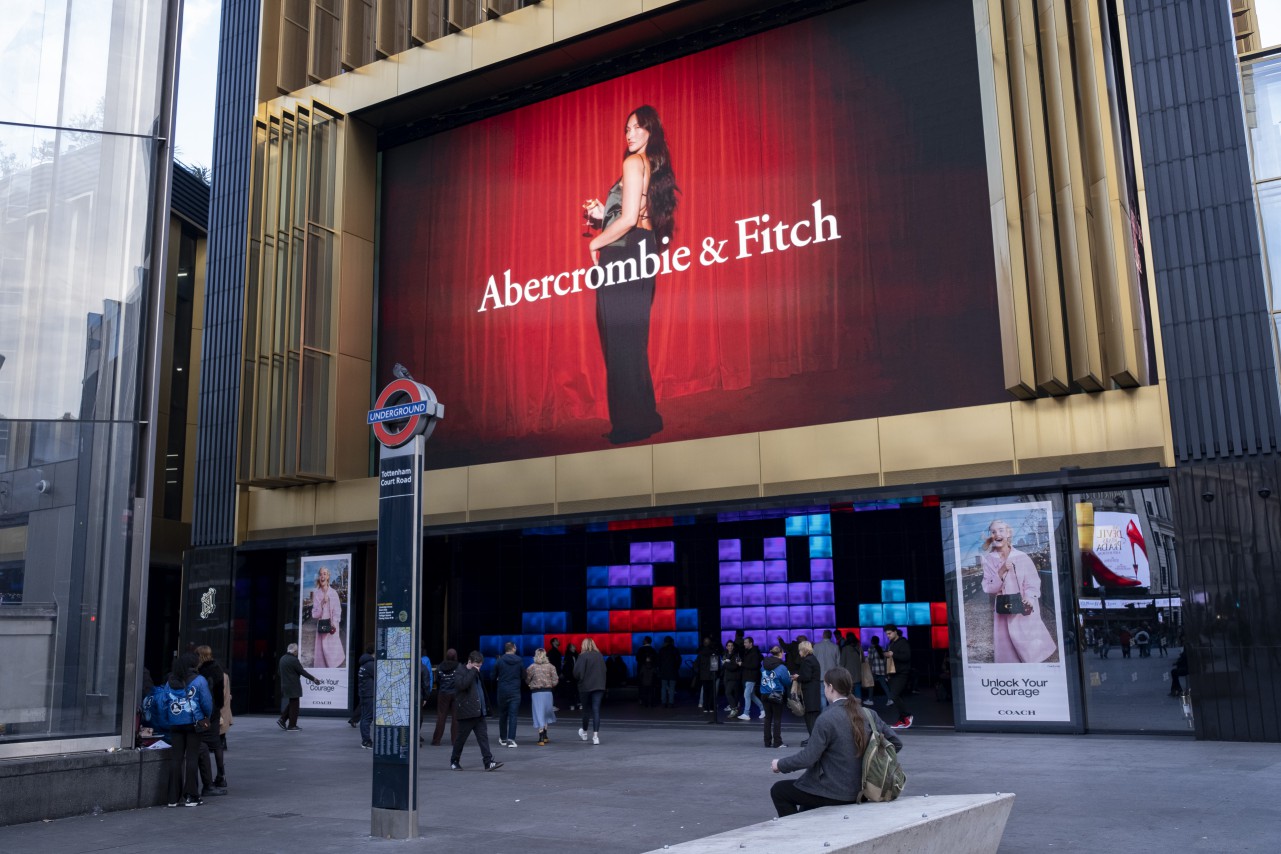
The Outernet’s Now building
JACK HILL FOR THE TIMES
“Are they going to come to London to look at an out-of-home screen at the end of the road? No. They’re going to come to London because they can go and experience either a little gig, or go to a music shop where Elton John once worked. And actually, the other day I saw on one of the lampposts a sticker — ‘guitarists wanted for a band’. It is still a mecca for the music industry.”
The important thing, reckons O’Ferrall, is that Denmark Street is still a place where “artists can buy expensive guitars, but mums and dads still bring their little kids along to buy their first”. Though nobody says it explicitly, it’s understood that if Outernet wanted to maximise their returns on these particular properties, they’d easily find tenants willing to pay higher rents than guitar shops. That this hasn’t happened tells its own story.
At the end of the street, opposite the new Chateau Denmark hotel, stands Sixty Sixty Sounds, a guitar shop owned by Jan Smosarski, who began his Denmark Street career just down the road at Macari’s.
He says: “I cut my teeth there. It was really nice, because you got all the tales, all the stories, the linear and the way it used to be. But now we’re in a really interesting kind of flux where we’re honouring the heritage of the street but you’re also trying to inject it with Outernet, with HERE, with Lower Third — trying to take what was, honour it, and then kind of shoot it into the modern day.”
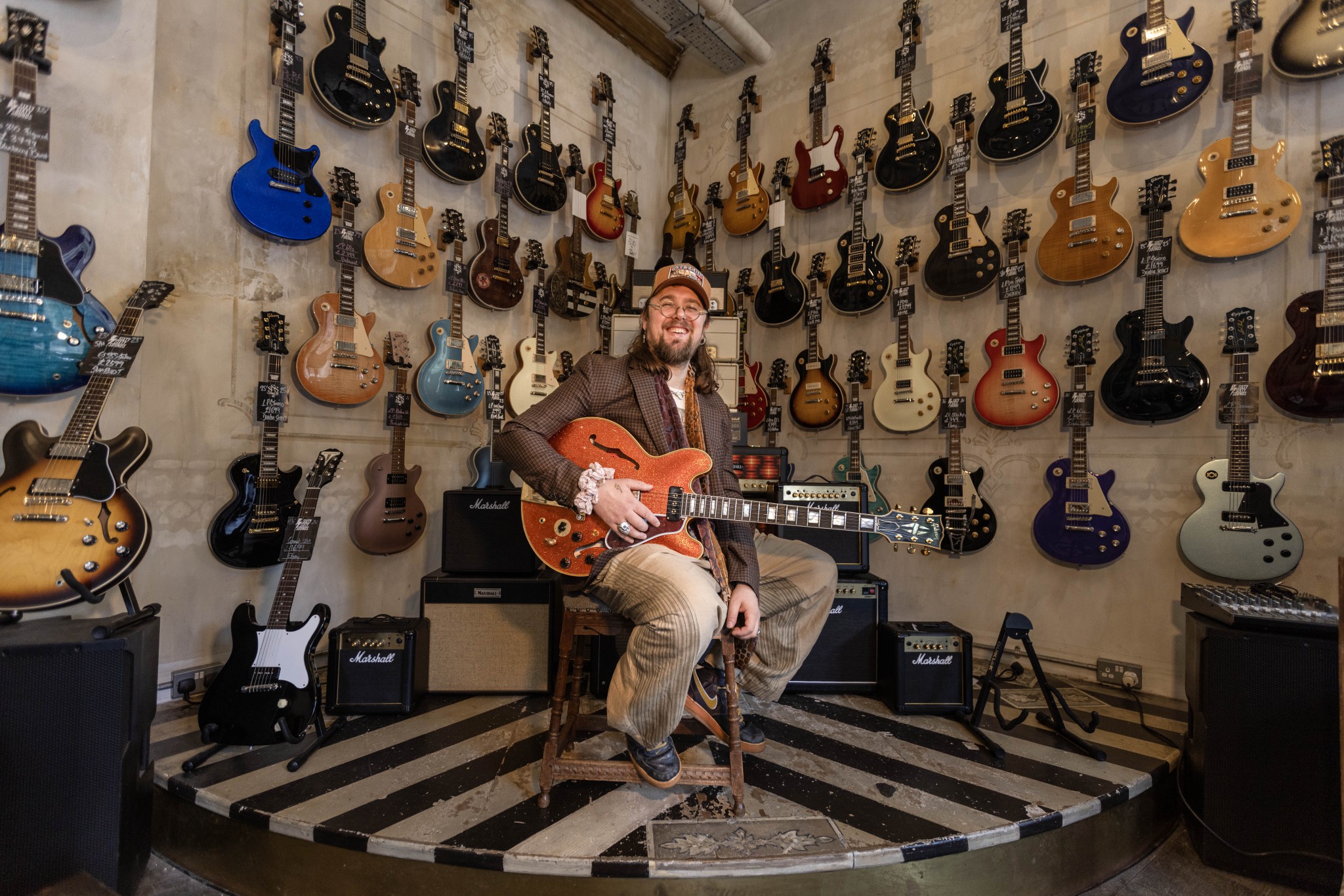
Jan Smosarski, the owner of Sixty Sixty Sounds
JACK HILL FOR THE TIMES
Smosarski is on first name terms with the rest of the street’s operators and his dog is greeted warmly by people popping in and out. Each week he hosts jam sessions and has made a point of celebrating up-and-coming artists. “What Denmark Street needs is to be a home for music, and we still get people from all over the world. It’s more updating than changing.”
Whether that will convince the musicians who pine for the halcyon days of Bowie living in a converted ambulance on Denmark Street — so desperate was he to be near Tin Pan Alley — is up for debate. But in a city that is always changing, there is a pleasing permanence to Denmark Street — no matter who holds the paperwork.