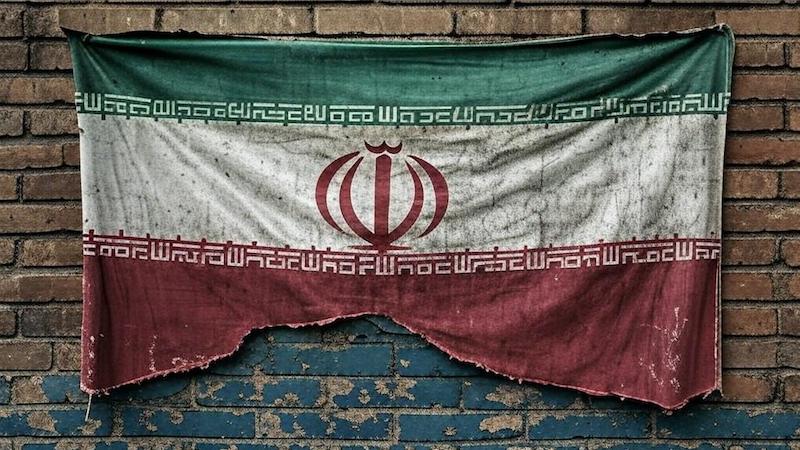
The Possibility of a New Political Paradigm Rooted in Liberty, Solidarity, and National Renewal
Iran stands today at the precipice of profound political transformation. The regime that once drew its legitimacy from revolutionary zeal and religious symbolism has, over the past four decades, devolved into an apparatus sustained by coercion, exclusion, and ideological exhaustion. As public trust deteriorates and the state grows increasingly reliant on surveillance and repression, the historical moment demands not just reform, but a structural and epistemic shift in the political imagination of the Iranian people. This essay argues that such a transformation, a paradigmatic reorientation in the sense defined by Thomas Kuhn, is not only necessary, but possible. However, for it to materialize, it must be grounded in a unifying vision, a culturally resonant narrative, and structures of civic agency that mobilize both individual liberty and collective solidarity.
I. Paradigm Shift: Theoretical Foundations
The notion of a paradigm shift was first introduced by Thomas S. Kuhn in his influential work The Structure of Scientific Revolutions (1962). Contrary to the positivist assumption of continuous progress, Kuhn demonstrated that intellectual advancement in the sciences occurs through discontinuities. Dominant paradigms become increasingly unstable when they are unable to account for new problems or contradictions. As anomalies accumulate, trust in the existing framework erodes, and a rival paradigm may gradually take its place. This shift, however, is not merely empirical; it is conceptual and epistemological. The new paradigm introduces a fundamentally different way of seeing, interpreting, and organizing reality.¹
Kuhn’s model applies equally to political transformations. A political paradigm encompasses the structures, values, narratives, and institutions that sustain a regime’s legitimacy. When these no longer offer moral coherence or practical effectiveness, a crisis of legitimacy ensues. In such moments, the groundwork is laid for systemic change, but only if a credible alternative can be articulated and embraced by a critical mass of the population.²
II. The Breakdown of the Islamic Republic’s Political Paradigm
The Islamic Republic of Iran emerged in 1979 with a promise to restore justice, national sovereignty, and cultural authenticity. Its founding paradigm fused religious doctrine with political authority, combining the charismatic leadership of Ayatollah Khomeini with a constitution that subordinated popular sovereignty to clerical oversight. Over time, however, this model has come into deep contradiction with the lived experiences of the Iranian people.
Theocratic authority has lost its moral legitimacy through corruption, violence against dissenters, and the imposition of ideology over basic rights.³ The state’s claims to independence and dignity have been contradicted by its increasing economic dependency, regional isolation, and recent military humiliations, particularly in the wake of the 2024–2025 conflict with Israel.⁴ Meanwhile, its republican institutions have been reduced to symbolic forms, where elections lack competitiveness and real authority is exercised by unelected religious bodies.
The result is a deep legitimacy crisis. As Hannah Arendt has noted, a regime that maintains power through coercion rather than consent has forfeited its claim to authority.⁵ What remains is a population alienated from its rulers, and a government incapable of articulating a hopeful or believable future. This rupture is not only political; it is ontological. The old paradigm no longer explains the present or offers guidance for the future. This is the condition under which paradigm shifts occur.
III. The Structure of Political Paradigm Shifts
Kuhn’s model suggests that for a new paradigm to take hold, three conditions must be met: the prevailing order must lose its ability to organize meaning and authority; an alternative model must be proposed that resolves the contradictions of the old system; and a sufficient portion of the population must adopt the new paradigm as their framework for understanding and acting in the world.⁶
Applied to the Iranian context, the failure of the existing order is evident. However, collapse alone does not produce renewal. The challenge lies in articulating a new political imaginary that is at once coherent, inclusive, and grounded in Iran’s cultural and historical resources. This requires not only new institutions, but also a new vision of human dignity, a narrative of ethical purpose, and structures of participatory agency.
IV. Vision, Narrative, and Civic Agency
The success of a political paradigm shift depends not on force, but on conviction. Societies do not change because they are told to do so; they change when people come to believe that a better life is both possible and deserved. This belief must be supported by three interrelated components: a clear vision of the future, a unifying narrative that draws on cultural memory, and civic structures that empower individuals to participate in shaping the political order.
A. Vision
The new paradigm must be grounded in a tangible and inclusive vision. It must protect personal liberty, freedom of expression, conscience, and movement, while also fostering collective well-being through public services, equal opportunity, and ethical governance. This vision must also address economic justice by dismantling monopolies, ensuring transparency, and supporting small-scale entrepreneurship. Economic independence and dignity must be restored as rights, not privileges.
A society in which citizens are free but economically dependent is not truly sovereign. Reviving Iran’s entrepreneurial spirit, rooted in centuries of artisanal production and local trade, is essential for building a sustainable and inclusive economy.
B. Narrative
A vision requires a narrative to become meaningful. It must be embedded in a story that connects Iran’s past to its present struggles and future possibilities. Iranian history offers profound narrative resources for political renewal rooted in justice, inclusion, and cultural dignity. The Achaemenid period, particularly under Cyrus the Great and Darius I, provides a foundational example of a political order that integrated vast and diverse populations through respect for local customs, religious tolerance, and the ethical treatment of subject peoples.¹⁰ The imperial model they constructed was not merely one of domination, but one of stewardship. Cyrus’s edict liberating enslaved populations and restoring religious sanctuaries, most notably recorded in the Cyrus Cylinder, is among the earliest declarations of political and cultural pluralism.¹¹ Darius the Great, likewise, advanced economic integration by standardizing coinage and weights, constructing roads and administrative hubs, and formalizing legal codes that enabled regional autonomy within a centralized imperial structure.¹² These institutions allowed for the flourishing of commerce, civic stability, and intercultural exchange across a vast geopolitical space.
Even after the fall of the Sassanian state, these traditions were not extinguished. In the early Islamic period, figures such as Abu Muslim of Khorasan—often remembered in Persian tradition as Behzadan—revived elements of Iranian political philosophy and ethical governance under the emerging Islamic order.¹³ Drawing on the legacy of Mehr—the principle of covenantal justice, mutual responsibility, and dignified rule—this movement transformed the Abbasid revolution from a tribal uprising into a broader civilizational project. The model was not antagonistic to Islam, but reinterpreted it through the ethical frameworks embedded in Iranian political memory, establishing a vision of inclusion and legitimacy that transcended tribal, sectarian, and linguistic divisions.¹⁴ This synthesis offers a powerful historical precedent for imagining a political future in Iran that is at once indigenous, pluralistic, and ethically grounded.
C. Agency
Finally, no paradigm shift is possible without the reactivation of civic agency. The people must cease to regard themselves as passive subjects and begin to see themselves as active authors of the future. This requires the creation of participatory structures at every level of society—local councils, civic cooperatives, professional associations, and public deliberative forums. Only when citizens experience political responsibility in everyday life will the idea of democracy become more than an abstraction.
Agency is also cultivated through education, cultural work, and networks of trust. The work of political transformation must be accompanied by the development of a public ethos—an ethical language of responsibility, dialogue, and mutual care.
V. Conclusion: Toward a New Political Horizon
Iran’s current crisis is not a terminal decline; it is a historical inflection point. The collapse of the Islamic Republic’s paradigm opens the possibility of ethical and political reconstruction. However, such reconstruction will not emerge from nostalgia, foreign models, or mere resistance. It must arise from within, from Iran’s own cultural memory, civic aspirations, and moral traditions.
As Thomas Kuhn observed, paradigms are not refuted by logic alone. They are displaced by new frameworks that speak more powerfully to the moral and practical needs of the time.¹⁵ If the Iranian people can forge such a framework, one that affirms liberty, fosters solidarity, and restores justice, then this dark passage may yet give rise to a new dawn.
References
Thomas S. Kuhn, The Structure of Scientific Revolutions, 2nd ed. (Chicago: University of Chicago Press, 1970), pp. 52–76.
Robert W. Cox, “Social Forces, States and World Orders: Beyond International Relations Theory,” Millennium: Journal of International Studies 10, no. 2 (1981): 126–155.
Farideh Farhi, “Power and Politics in Iran’s Islamic Republic,” Current History 108, no. 722 (2009): 386–391.
Ali Vaez and Dina Esfandiary, “A Dangerous Decade: Iran’s Path from Confrontation to Crisis,” International Crisis Group Report, May 2025.
Hannah Arendt, On Violence (New York: Harcourt, 1970), pp. 35–42.
Kuhn, Structure of Scientific Revolutions, pp. 94–97.
Pierre Briant, From Cyrus to Alexander: A History of the Persian Empire (Winona Lake: Eisenbrauns, 2002), pp. 112–157.
Amélie Kuhrt, “The Cyrus Cylinder and Achaemenid Imperial Policy,” Journal for the Study of the Old Testament, Vol. 25, No. 1 (1983): 83–97.
M. A. Dandamaev, A Political History of the Achaemenid Empire (Leiden: Brill, 1989), pp. 276–309.
Patricia Crone, The Nativist Prophets of Early Islamic Iran (Cambridge: Cambridge University Press, 2012), pp. 145–182.
Touraj Daryaee, “The Iranian Revival in the Abbasid Period,” in The Oxford Handbook of Iranian History, ed. Touraj Daryaee (Oxford: Oxford University Press, 2012), pp. 250–272.
Kuhn, Structure of Scientific Revolutions, p. 169.