
Israeli sources believe US and Israeli strikes in Iran last month hampered the Islamic Republic’s development of two types of nuclear warheads and an “electromagnetic pulse (EMP) weapon that could cripple Israel electronically,” the Washington Post reported Saturday.
According to the report, the 12-day war with Iran also destroyed roughly half of Tehran’s 3,000 ballistic missiles and 80% of its 500 missile launchers. Unnamed Israeli sources were cited as saying Tehran was planning to raise its ballistic missile stockpile to at least 8,000, meaning any further delay to the strike against Iran would have exposed Israel to much greater damage from missile strikes.
However, along with Israel’s successes, Jerusalem was dealt an “unwelcome surprise” when it discovered Iran had more solid-fuel missiles than previously expected, the report said. Such missiles are more difficult to shoot down, according to an Israeli source cited by the Post.
The damage to Iran’s nuclear and missile programs was compounded by Israel’s assassination of the first tier, second tier and most of the third tier of Iranian physicists and nuclear scientists, sources cited by the Post said. Israeli officials were cited as saying it was expected that younger Iranians would be deterred from pursuing careers in those fields as a result of the killings.
The revelations were reported in an opinion piece by Washington Post foreign affairs columnist David Ignatius.
Get The Times of Israel’s Daily Edition
by email and never miss our top stories
By signing up, you agree to the terms
Ignatius also writes that when US President Donald Trump declared a ceasefire, “Israel was moving into a final phase of attacks intended to topple the regime,” but does not elaborate. Hours after Trump announced the ceasefire, on June 24, he ordered Israel to recall planes that Israel had said would “forcefully strike the heart of Tehran” after a post-ceasefire Iranian missile attack, and publicly castigated Israel for ostensible ceasefire violations.
The assassinations reportedly halted Iran’s development of the EMP device. Such weapons emit powerful bursts of electromagnetic energy that can paralyze electrical networks. Development of an EMP device was said to have been promoted by Iran’s Revolutionary Guard as an alternative to nuclear arms, since atomic weapons are nominally banned under a religious decree by Iranian Supreme Leader Ali Khamenei.
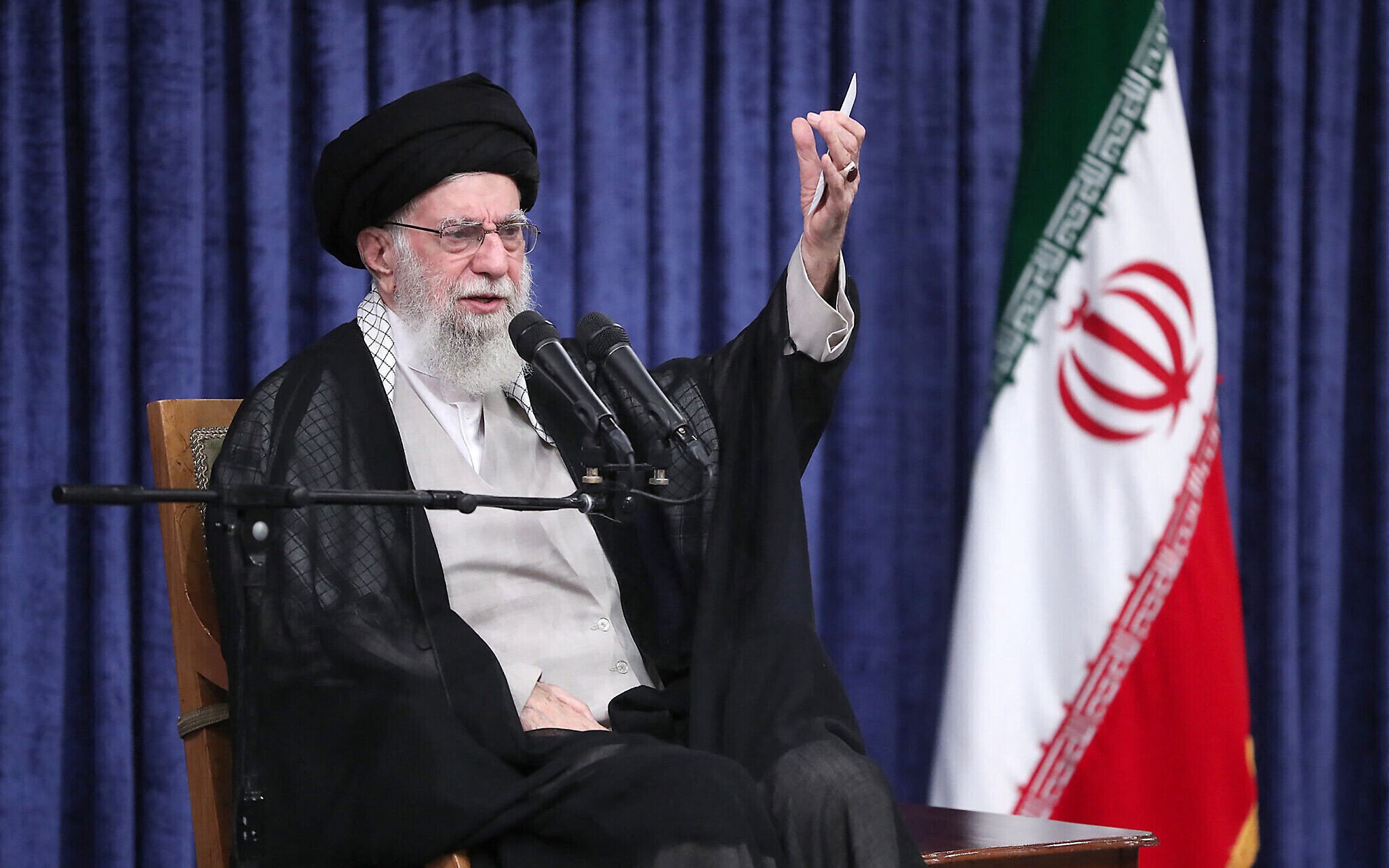
Iran’s Supreme Leader Ayatollah Ali Khamenei addresses a crowd during a meeting with the head of the Iranian judiciary and other officials in Tehran, July 16, 2025. (KHAMENEI.IR / AFP)
Despite the fatwa, Israeli sources said they believe Iran was making progress on two types of nuclear warheads: a standard fission warhead, which splits atoms, and a more complex fusion warhead, which forces atoms together. According to the Post, the fusion-warhead project was halted as a result of Israel’s strikes against Iranian nuclear scientists.
A well-informed Israeli source cited in the report said “Iran is no longer a nuclear threshold state” — echoing a similar assessment by IDF Chief of Staff Lt. Gen. Eyal Zamir — and would require one to two years to build a nuclear weapon, if it could do so covertly. The source was also cited, saying Israel would likely be able to detect and destroy a potential Iranian effort to quickly build a crude nuclear device.
Israel has said its June 13 opening strike against Iran came as the Islamic Republic, which is sworn to destroy Israel, was taking steps toward nuclear weaponization. Though Iran denies seeking nuclear arms, it has amassed uranium enriched to 60% — far beyond what is needed for civilian use, and a short step away from weapons-grade.

Israeli Air Force F-15 fighter jets fly over Israel en route to carry out strikes in Iran, in a handout photo published on June 25, 2025. (Israel Defense Forces)
US and Israeli sources speaking to the Post on condition of anonymity said the White House had okayed Israel’s opening strike, but signaled that US forces would intervene only if the Israeli campaign proved successful.
Iran retaliated to the Israeli strikes with deadly ballistic missile attacks that killed 28 people, caused heavy damage in Israeli cities and displaced thousands of people.
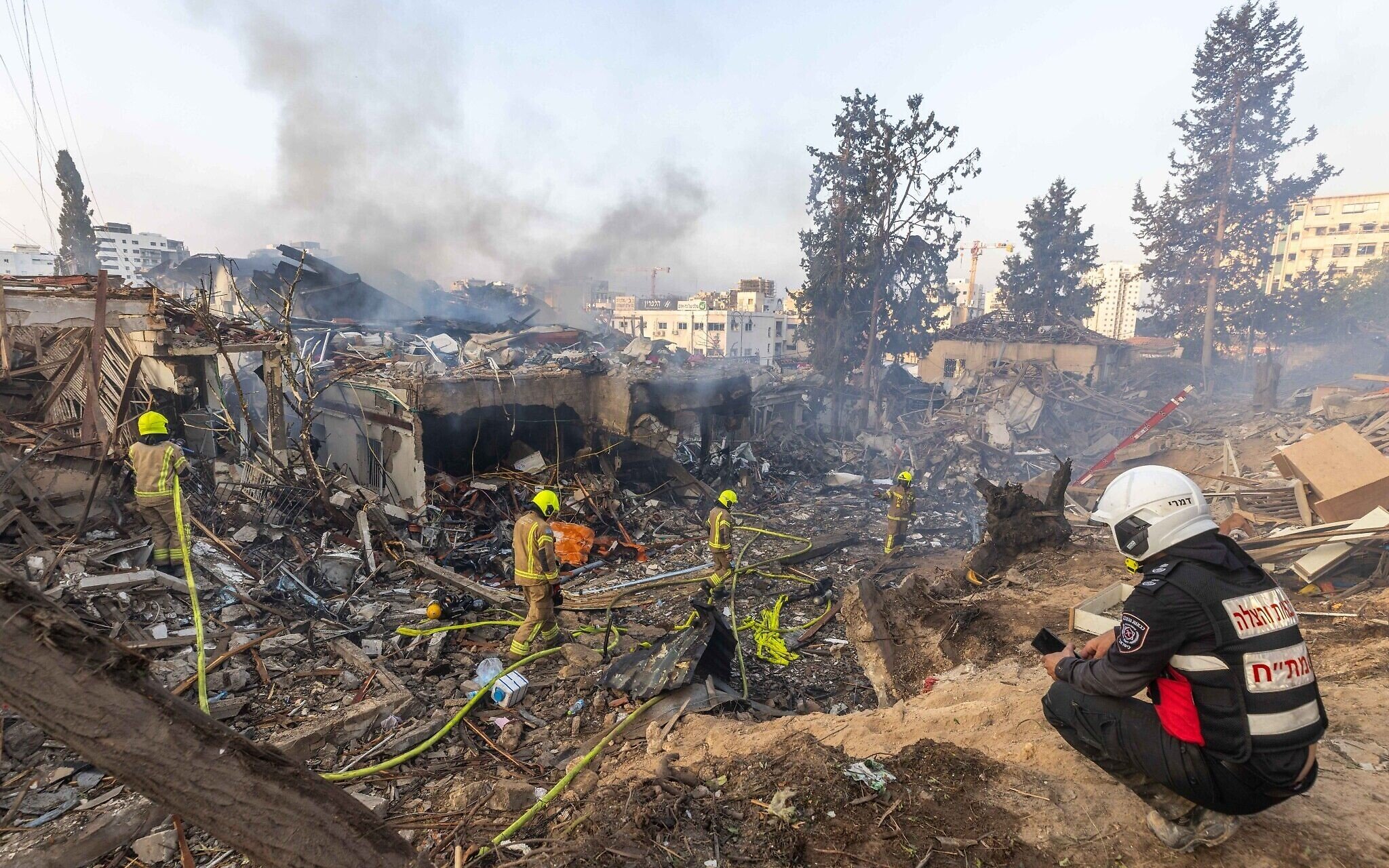
Israeli security and rescue forces at the scene where a ballistic missile fired from Iran hit and caused damage in Rehovot, June 15, 2025. (Yossi Aloni/Flash90)
On June 24 — a day before a US-brokered ceasefire ended the Israel-Iran war — US bombers struck three key Iranian nuclear sites, including the underground facility at Fordo, which was thought to be penetrable only with US “bunker-buster” bombs.
While US President Donald Trump has said the attack set Iran’s nuclear program back “decades,” Western intelligence has indicated the damage was more limited and that Iran was may have been able to relocate its stockpile of highly enriched uranium ahead of the US and Israeli strikes.
Is The Times of Israel important to you?
If so, we have a request.
Every day, even during war, our journalists keep you abreast of the most important developments that merit your attention. Millions of people rely on ToI for fast, fair and free coverage of Israel and the Jewish world.
We care about Israel – and we know you do too. So today, we have an ask: show your appreciation for our work by joining The Times of Israel Community, an exclusive group for readers like you who appreciate and financially support our work.
Already a member? Sign in to stop seeing this
You appreciate our journalism

You clearly find our careful reporting valuable, in a time when facts are often distorted and news coverage often lacks context.
Your support is essential to continue our work. We want to continue delivering the professional journalism you value, even as the demands on our newsroom have grown dramatically since October 7.
So today, please consider joining our reader support group, The Times of Israel Community. For as little as $6 a month you’ll become our partners while enjoying The Times of Israel AD-FREE, as well as accessing exclusive content available only to Times of Israel Community members.
Thank you,
David Horovitz, Founding Editor of The Times of Israel
Already a member? Sign in to stop seeing this